





Traditional Kurdish Bidjar Rug
A traditional kurdish bidjar rug delivers the dense weave and heavy handle that weavers in the western mountains achieved.
Traditional Kurdish Bidjar Rug
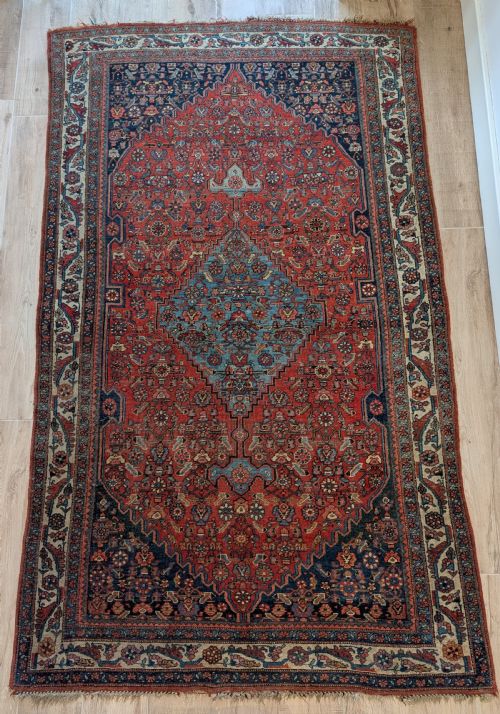
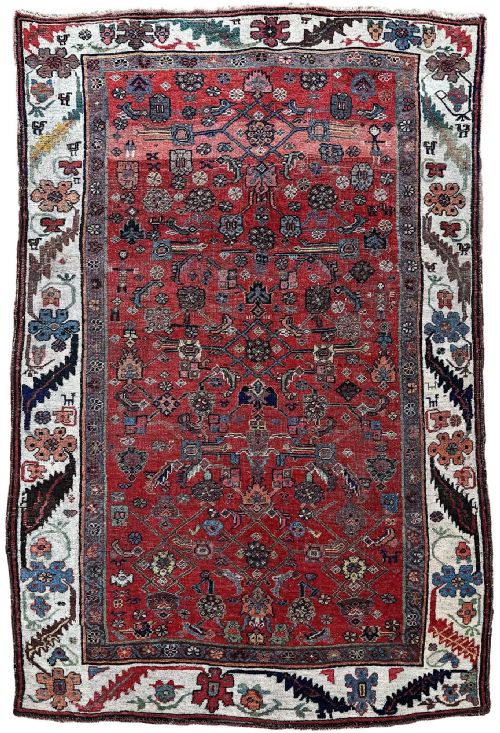
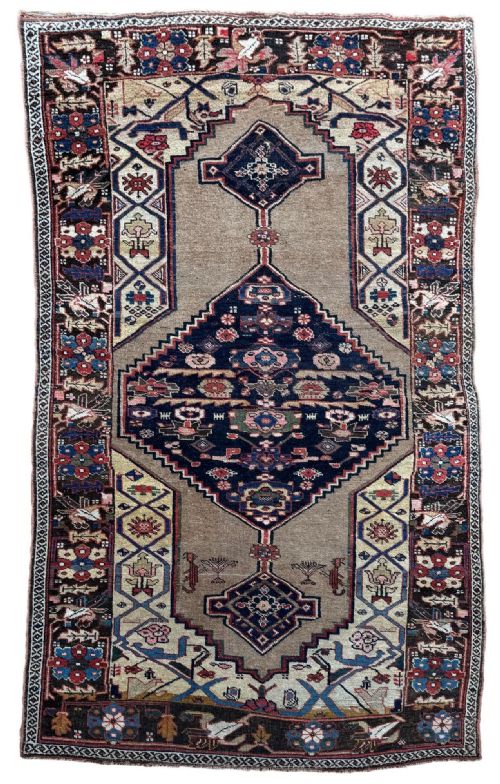
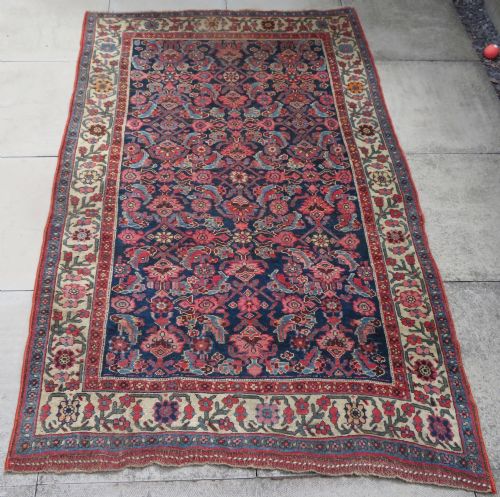
A traditional kurdish bidjar rug represents the heavy village and tribal weaving of western Persia. These floor coverings emerge from Kurdish workshops and regional centres, spanning formats from scatter sizes to long kelieh runners.
The pieces available here cluster primarily around the late nineteenth and early twentieth centuries, specifically between eighteen seventy and nineteen thirty. Buyers encounter room-size formats, long runners, and smaller village carpets bearing traditional Kurdish patterns.
Persian tribal influences shape the visual vocabulary of these works, uniting geometric field arrangements with robust floral motifs. Their dense construction suits heavy footfall, distinguishing them from finer urban Persian weaving.
How they were made
Weavers constructed these rugs using wool for both the pile and the foundational structure, often paired with cotton for warps and wefts. The traditional technique involves heavy compaction of the weft threads during knotting, which creates a rigid and unyielding handle.
This dense packing method secures the wool upright, giving the pile exceptional durability under daily use. Natural dyeing traditions supplied the rich tones seen across lemon ground variations and deep field colours.
Traditional Kurdish Bidjar Rug Retail Price Guide 2026
Typical asking prices for traditional kurdish bidjar rug among the pieces listed under this phrase on Sellingantiques today, from the lower quarter to the upper quarter. They describe what is for sale here now, not the wider market.
An unusually bright lemon ground colour occasionally interrupts the darker palette of these sturdy mountain weaves.
What varies in quality
Quality in these floor coverings rests upon the tightness of the knotting and the resulting weight of the handle. Superior examples demonstrate a remarkably stiff foundation achieved through rigorous beating of the weft during production.
Visual balance across the Kurdish motifs and the clarity of regional colour combinations further separate finer village weaving from standard utility pieces. The presence of distinct ground colours, such as lemon hues, adds character to individual examples.
The Traditional Kurdish Bidjar Rug Glossary
- Bidjar
- A town and carpet-producing region in western Persia known for heavy, durable village and tribal rugs. These pieces earned the moniker of the iron rugs of Persia due to their dense construction.
- Kelleh
- A long rectangular carpet format traditionally utilised in Persian interiors for narrow spaces or hallways. These proportions sit between standard area sizes and full runners.
- Warp
- The lengthwise parallel threads stretched upon a loom that form the skeletal foundation of the textile. Fringe ends typically display these visible foundation threads.
- Weft
- The horizontal threads passed alternately over and under the warp threads to lock the knots in place. In this tradition, heavy beating of these elements creates the characteristic stiff handle.
Traditional Kurdish Bidjar Rug: Frequently Asked Questions
How do I clean a traditional kurdish bidjar rug?
Professional dusting and surface washing preserve the heavy wool pile without weakening the structural foundation. Avoid harsh chemical treatments that strip natural oils from the fibre.
Regular gentle vacuuming without a rotating brush bar prevents dirt accumulation between the dense knots.
Can I place these rugs in high-traffic hallways?
The dense construction and heavy wool handle of these regional carpets suit busy entryways and corridors. Their robust manufacture stands up well to daily footfall.
Utilising a quality underlay prevents slipping and cushions the rigid foundation against hard flooring.
What defines the Kurdish style in these rugs?
Kurdish styling relies on robust geometric motifs, hooked polygons, and structured tribal medallions rather than delicate curves. These designs reflect regional village traditions of western Persia.
Strong colour contrasts and saturated grounds characterise the visual output of these weavers.
How do I identify a nineteenth-century piece?
Dating relies on wool quality, natural dye variations, and structural wear patterns consistent with production periods before nineteen thirty. Early examples often exhibit hand-spun wool with subtle abrash shading.
Examining the back reveals the dense knotting structure and characteristic rigidity of the heavier village weaves.