





Vintage Nautical Wheel
A vintage nautical wheel brings the functional grit of the sea indoors, offering solid teak, brass, and hardwood forms built to endure.
Vintage Nautical Wheel
When searching for a vintage nautical wheel, a buyer encounters authentic maritime steering helms and decorative desk items shaped by the sea. These pieces emerge primarily from the nineteenth and early twentieth centuries, spanning Victorian, French late nineteenth-century, and industrial styles. The listings on this page include full-scale wooden steering helms alongside specialised mantel clocks, barometers, and desk clocks framed by maritime motifs.
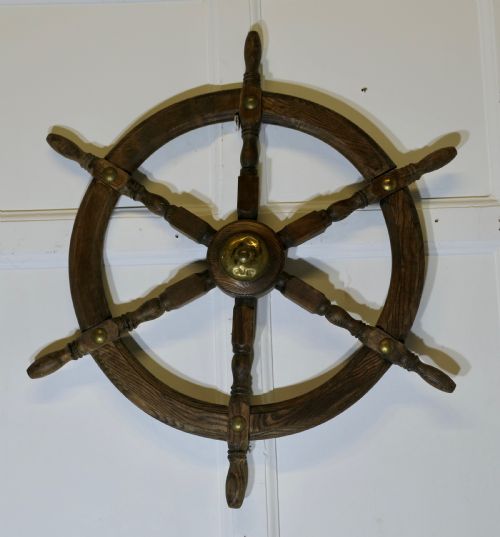
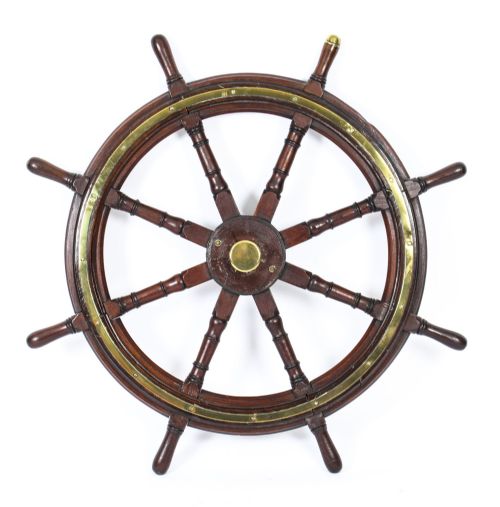
Large-scale steering wheels in teak and hardwood appear frequently, often featuring substantial diameters and multiple spokes. Smaller interpretations integrate brass, gilt brass, and chrome into desk accessories and bulkhead instruments. Alongside functional helms, French four-glass clocks and banjo clock barometers incorporate wheel designs into domestic timepieces.
Origins stretch from Welsh workshops in Carmarthenshire to French houses and American manufacturers like Benson Electric Co. Buyers find both utilitarian steering apparatuses meant for shipboard navigation and decorative mantel pieces designed for nineteenth-century interiors. Each version reflects the enduring influence of maritime trade and exploration on domestic design.
Materials and construction
Makers constructed these pieces using durable timbers like teak, oak, walnut, and unspecified hardwood, often paired with brass, gilt brass, and chrome fittings. Large steering helms rely on robust joinery to withstand heavy marine loads, while smaller desk clocks and mantel pieces utilise cast or turned metals. Enamel and glass components complete the faces of barometers and clock dials.
Surface treatments vary from untouched painted finishes in deep red to polished teak and gleaming brass. Metal elements are cast, turned, and sometimes gilded or chromed to resist corrosion and provide decorative contrast against dark wood. The combination of dense timber and heavy metal hardware defines the structural integrity of these objects.
Some wheels still carry the salty ghosts of Carmarthenshire tides and Cowes regattas.
Distinctions in quality
Quality rests in the precision of the timber turning, the heft of the brass and chrome hardware, and the integrity of the original finish. Superior examples display balanced spoke proportions and clean joinery on heavy teak frames, rather than loose joints or later replacement parts. The fidelity of the mechanism in clocks and barometers further separates standard decorative items from superior works.
Provenance and specific maker attribution elevate certain pieces, distinguishing unsigned workshop outputs from documented factory production. Untouched original surfaces hold greater integrity than pieces with heavy modern restoration or stripped timber. The weight and gauge of the metals used in hubs, rims, and bulkheads signal the level of craftsmanship invested at the bench.
Benson Electric Co USA·Gay Vicarino·Pascall Atkey of Cowes
The Vintage Nautical Wheel Glossary
- Bulkhead clock
- A timepiece designed to be mounted securely to a ship wall or cabin bulkhead. These clocks often feature heavy brass or chrome housings to protect the movement from moisture.
- Banjo clock barometer
- A wall-mounted instrument combining a time-keeping dial with a weather-measuring barometer in a vertical shape resembling a banjo. Victorian examples frequently utilise carved walnut.
- Four glass clock
- A mantel clock enclosed by glass panels on four sides, allowing the movement and pendulum to be viewed from multiple angles. Some nineteenth-century versions integrate ship wheel motifs into the brass framework.
- Steering helm
- The complete wheel and mounting mechanism used to control the rudder of a vessel. Large examples utilise teak and brass with multiple spokes for leverage.
- Gilt brass
- Metal treated with a thin layer of gold or gold-coloured wash to provide a decorative metallic sheen. This finish appears frequently on nineteenth-century French clock components.
Vintage Nautical Wheel: Frequently Asked Questions
How do I mount a heavy wooden wheel?
Large wooden steering wheels require substantial wall anchors or custom iron brackets to support their considerable weight and projecting spokes safely. Securing the piece directly into structural studs prevents movement.
Positioning the wheel at eye level allows the grain of the teak or oak and the detail of the brass hub to remain fully visible within the room.
Were these wheels used at sea?
Many large teak and hardwood helms served functional roles on nineteenth-century vessels, enduring salt air and heavy use before retiring to land. Other items, such as desk clocks and mantel pieces, were manufactured specifically for domestic interiors using nautical motifs.
Checking the wear on the rim and the condition of the central brass bore helps indicate whether a wheel saw active maritime service or spent its life ashore.
How do I care for teak and brass?
Teak benefits from occasional light conditioning with natural oils to prevent the wood from drying out in heated rooms. Avoid harsh chemical cleaners that strip the original patina.
Brass and chrome components can be gently dusted with a soft cloth. Leaving a natural tarnish on older brass often preserves the historic character of the piece.
How are nineteenth-century clocks maintained?
Clock movements from the nineteenth century require careful handling and occasional professional servicing to keep the gear trains and pendulums running accurately. Ensuring the clock sits level on a stable mantel or shelf prevents the movement from stopping.
Wind mechanical eight-day movements gently without over-winding the mainspring to preserve the internal components.