





Brass Ships Helm
A brass ships helm brings authentic maritime history into a room, offering tactile nautical character through heavy metal and timber construction.
Brass Ships Helm
A brass ships helm is a distinctive maritime object originating from nautical use, encompassing functional steering wheels, desk clocks, and binnacles. When searching for a brass ships helm, buyers encounter items dating from the nineteenth and early twentieth centuries, reflecting Victorian maritime and industrial styles.
The pieces appearing on this page span several specific forms, including large teak and brass steering wheels, mantel clocks styled as wheels, and industrial nautical timepieces. Examples range from monumental forty-inch steering wheels to compact desk clocks set within maritime housings.
Origins and periods represented include nineteenth-century pieces alongside early twentieth-century examples from 1910 and 1930. These objects bridge practical seafaring equipment and decorative maritime antiques utilised in domestic and office settings.
Materials and construction
These pieces rely on a combination of brass, teak, oak, and hardwood, paired with glass and iron elements. Structural components often feature robust timbers such as teak and oak shaped into spokes and rims, fitted with brass hubs and rims.
Timepieces within this category incorporate metal casting and gilding techniques alongside enamel dials and glass bezels. Larger steering wheels combine turned hardwood timber with brass mounts, whilst smaller desk clocks utilise detailed industrial metalwork.
Assessing quality
Quality in these objects is determined by the substance and weight of the materials used, particularly the gauge of the brass and the density of the hardwood. Superior examples display crisp casting details on metal components and sound joinery on timber steering wheels.
The distinction between standard decorative items and finer pieces lies in the integration of specialised mechanisms, such as French eight-day movements or signed clock dials. Untouched condition and original patination on the brass and wood further elevate the standing of a piece.
Guilmet Industrial Series·Benson Electric Co USA·Gay Vicarino·Pascall Atkey of Cowes
The Brass Ships Helm Glossary
- Binnacle
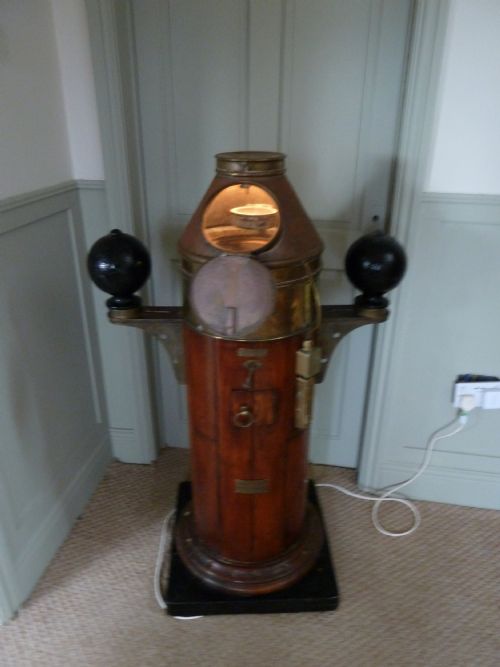
- A housing traditionally placed near the steering compass on a ship to hold navigational instruments. Nineteenth-century examples often incorporate heavy brass and glass construction.
- Teak
- A durable, dense tropical hardwood valued for its resistance to moisture and wear. It forms the primary timber structure for many larger steering wheels on this page.
- Gilded
- Covered with a thin layer of gold leaf or gold paint applied to metal surfaces. This finish appears on nineteenth-century clock frames to enhance visual richness.
- Enamel
- A glassy substance fused to metal dials through firing to create a smooth, durable surface. It provides a crisp background for clock numerals.
- Industrial
- A style characterised by utilitarian metalwork and machinery aesthetics. Pieces from this category reflect functional nineteenth-century engineering adapted for desk and mantel use.
Brass Ships Helm: Frequently Asked Questions
What is a ships binnacle?
A binnacle is a protective housing designed to hold a ship's compass near the helm. These brass and glass structures served a vital navigational purpose at sea.
Today, they survive as substantial decorative objects that highlight nineteenth-century maritime engineering and metalworking techniques.
How are wooden wheels constructed?
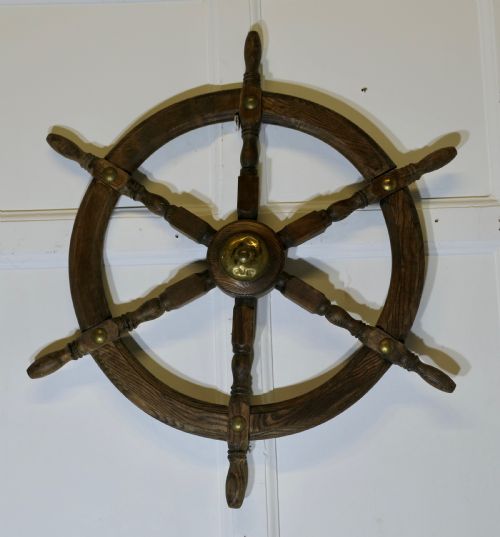
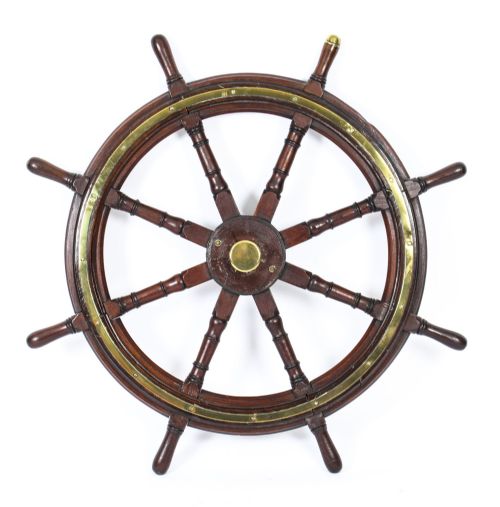
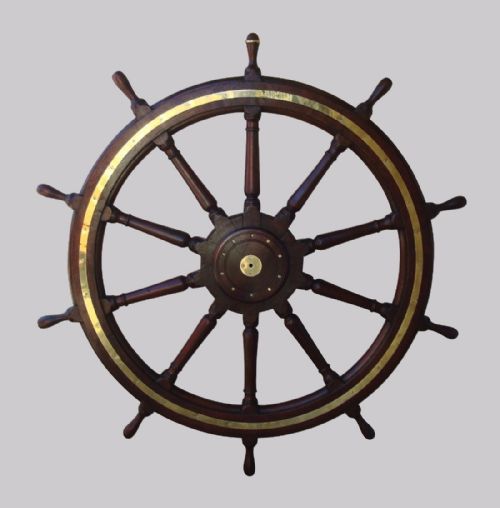
Large steering wheels are built using sections of dense hardwood like teak or oak joined around a central brass hub. Multiple spokes radiate outward to a circular wooden rim.
This robust construction allowed sailors to exert significant leverage when steering heavy vessels through rough waters.
Where were desk clocks placed?
Maritime desk clocks were typically utilised in cabins, offices, or study rooms by individuals with nautical interests. They brought functional timekeeping together with seafaring design.
Many incorporate miniature wheel frames or industrial brass housings reminiscent of shipboard instruments.
How do I date a piece?
Dating relies on identifying materials, manufacturing techniques, and any maker signatures present on the metal or dial. Nineteenth-century items often feature heavier brass castings and hand-painted enamel.
Early twentieth-century examples introduce different industrial styling cues and modified clock movements associated with later periods.