

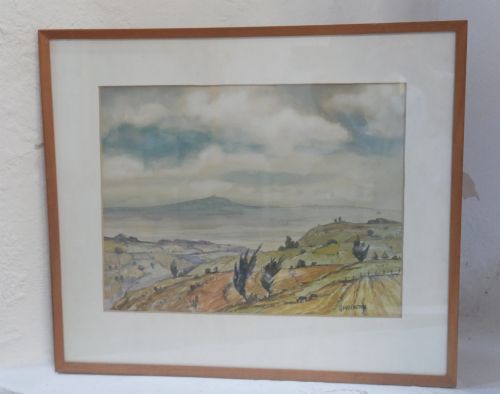
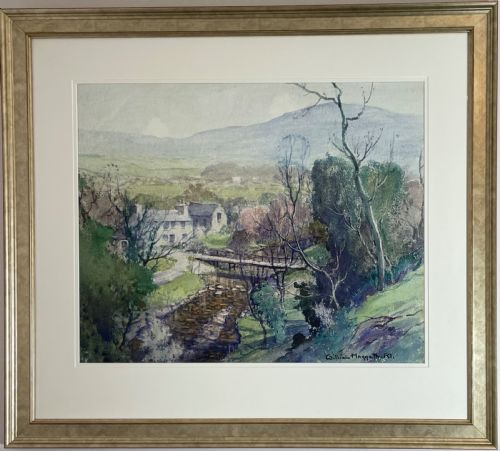


Vintage Mountain Art
Vintage mountain art captures rugged peaks and serene valleys through oils, watercolours and carvings across multiple centuries.
Vintage Mountain Art
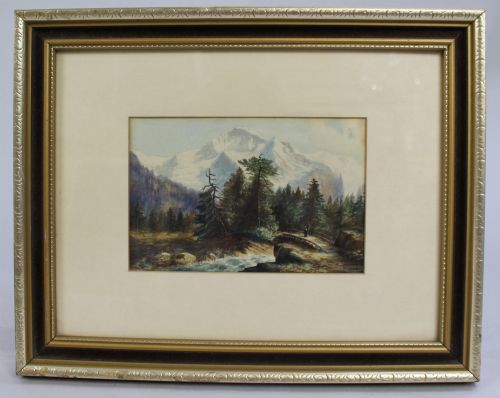
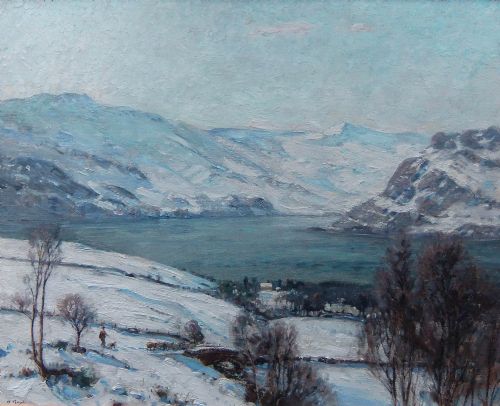
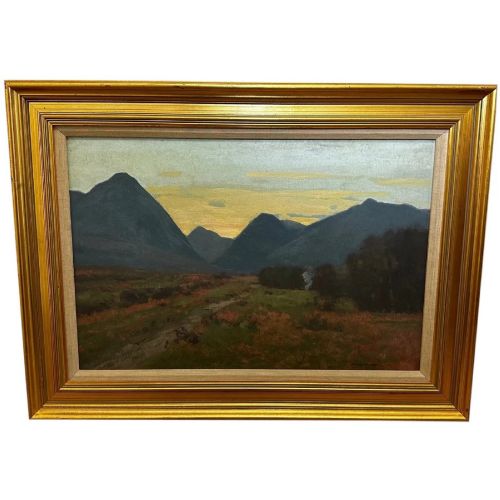
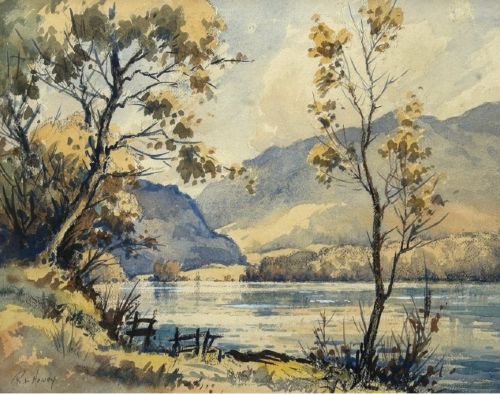
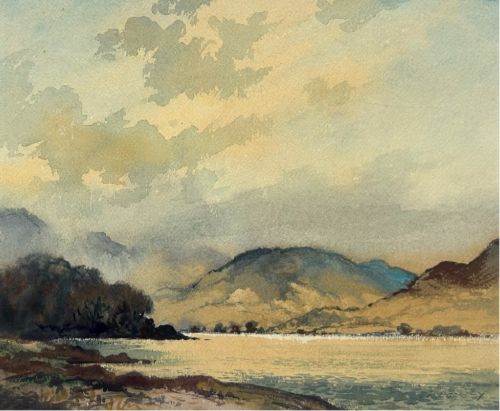
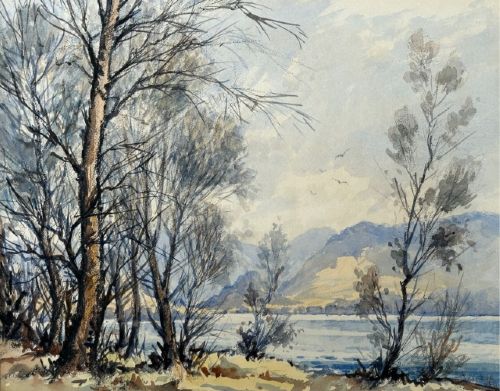
Vintage mountain art comprises paintings, watercolours, drawings and sculptures depicting highland landscapes, alpine views and rocky terrain. Buyers seeking these pieces encounter works spanning the Victorian era through the mid-twentieth century, capturing topography from Scotland and the Lake District to the Alps and beyond.
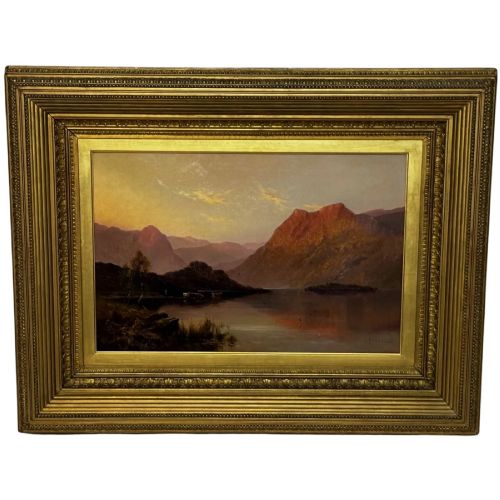
Watercolours and oil paintings dominate the selection, often framed and glazed to protect delicate paper or canvas surfaces. Subjects range from tranquil lochs and pastoral hillsides to snow-capped peaks and dramatic gorges, reflecting diverse regional British and European schools of landscape painting.
How they were made
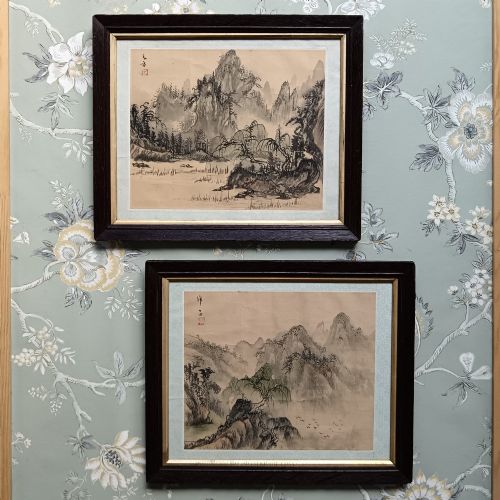
Artists utilised oil paint on canvas or board, watercolour and gouache on paper, and ink for pen-and-ink drawings to render these upland views. These traditional painting media allowed creators to capture subtle shifts in light, shadow and weather across rugged terrain.
Carved sculptures in jade utilise natural materials mounted on hardwood stands, demonstrating meticulous hand-carving techniques. Framed artworks frequently retain their original wood or gilt frames, preserving the piece within its period context.
Vintage Mountain Art Retail Price Guide 2026
Typical asking prices for vintage mountain art among the pieces listed under this phrase on Sellingantiques today, from the lower quarter to the upper quarter. They describe what is for sale here now, not the wider market.
Materials documented across the works include oil on canvas, watercolour, gouache, jade, wood and glass.
What varies in quality
Quality separates through the artist's command of atmospheric perspective, tonal balance and composition in capturing complex mountain light. Works by documented painters with established exhibition histories demonstrate superior draftsmanship and painterly confidence compared to anonymous amateur pieces.
The preservation of the medium, whether oil paint retaining its vibrant pigment or watercolour maintaining paper integrity without heavy foxing, dictates the overall standard. Original framing and signed provenance elevate the piece, anchoring it securely to a specific hand and period.
Herbert Royle·Alfred Fontville de Breanski Jr·Robert Leslie Howey·George Houston·William Hoggatt·Frank Hider·Giulio Cecchini·John Douglas Perrett·Edward Horace Thompson·Stanley Orchart·George Melvin Rennie·William Miller Frazer·George Turner·Alfred de Breanski Sr·Samuel Towers·Milton Drinkwater
The Vintage Mountain Art Glossary
- Watercolour
- A painting method in which the paints are made of pigments suspended in a water-based solution. These works typically appear on paper and require protective framing under glass.
- Oil painting
- Artwork created using pigments bound with a medium of drying oil, such as linseed oil. This technique allows for rich colour saturation and textured brushwork.
- Gouache
- An opaque water-based paint method that produces a heavier, more saturated surface than traditional watercolour. It often appears in works detailing sharp mountain crags and skies.
- Impressionism
- An artistic style focusing on accurate depiction of light in its changing qualities, seen in several regional British and European landscapes. Artists use visible brush strokes to convey the immediate visual impression of a scene.
- Provenance
- The chronology of the ownership, custody or location of a historical piece. Signed works and exhibition labels help establish this lineage.
Vintage Mountain Art: Frequently Asked Questions
What periods do these pieces date from?
The selection spans the nineteenth century through the mid-twentieth century, encompassing Victorian, Edwardian and mid-century British and European schools.
Dates are identified through signatures, inscriptions, framing styles and stylistic evidence recorded across the listings.
Are watercolours framed under glass?
Yes, works on paper such as watercolours, gouache paintings and pen-and-ink drawings typically require protective glazing.
This framing shields fragile paper surfaces from atmospheric moisture, dust and handling damage over time.
Which regions are depicted in the artwork?
The topographical subjects span British and international locations, including the Scottish Highlands, the Lake District, the Alps, New Zealand and China.
Artists often inscribed specific local views, lochs, valleys and mountain ranges directly onto the mount or verso.
How do I identify a signed piece?
Signatures generally appear in the lower corners of the canvas or paper in paint, pencil or ink. Many listings record the artist's name alongside exhibition details or regional school associations.