





Vintage Moorland Artwork
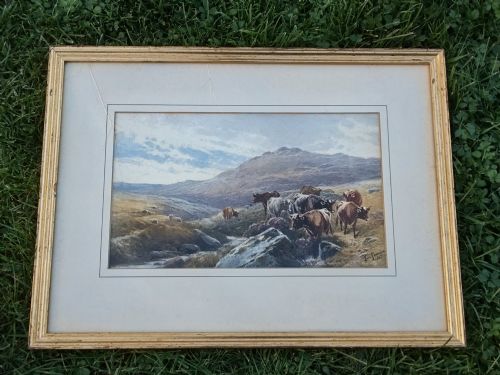
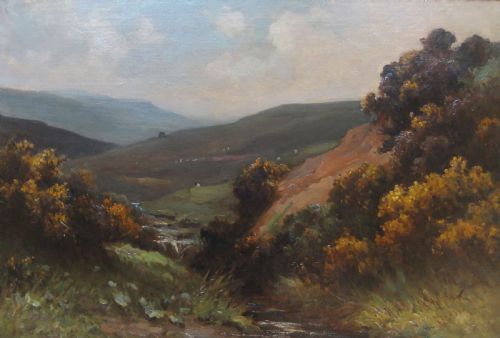
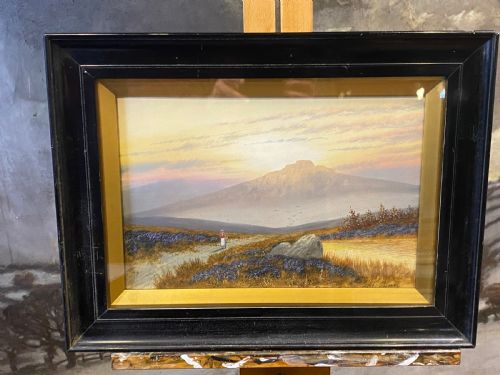
These vintage moorland artwork pieces capture wild British terrain in oil and watercolour, bringing atmospheric heather and open skies directly into your room.
Vintage Moorland Artwork
Vintage moorland artwork encompasses framed paintings and watercolours depicting British upland landscapes, most frequently showing rolling hills, pastoral scenes with sheep, and open skies. These pieces date from the Victorian period through to the mid-twentieth century, capturing regional character from Yorkshire to Dartmoor.
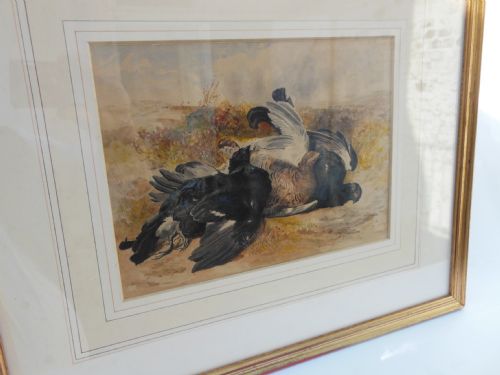
The selection on this page centres on traditional British and Scottish schools of painting, executed by named artists working in watercolours or oil paint. Subjects range from tranquil sheep grazing to sporting scenes featuring dogs and game, set against expansive stretches of remote countryside.
How they were made
Artists painted these moorland scenes using oil paint or watercolour applied to paper, canvas, wood panels, or oil boards. Oil mediums allowed for rich impasto textures on canvas, whilst watercolour works on paper captured the softer, translucent atmospheric light of the uplands.
Many of these works remain housed in their original gilt wood or timber frames, which complement the traditional painting techniques of the British School and Scottish School artists who recorded these landscapes.
Vintage Moorland Artwork Retail Price Guide 2026
Typical asking prices for vintage moorland artwork among the pieces listed under this phrase on Sellingantiques today, from the lower quarter to the upper quarter. They describe what is for sale here now, not the wider market.
Dartmoor ponies and diligent sheepdogs pop up regularly to supervise the wandering livestock.
What varies in quality
Quality in these landscape paintings rests upon the artist's ability to render light, weather, and atmospheric depth across an expansive terrain. Stronger works demonstrate confident brushwork and a balanced composition that draws the eye across the moorland foreground into the distant hills.
The sophistication of the palette and the preservation of the medium, whether oil on canvas or delicate watercolour on paper, distinguish the finer examples. Original framing and clear provenance from known regional painters further elevate individual pieces.
Thomas Rowden·Tom Campbell·F.J. Snell·Charles Walter Simpson·Owen Bowen·James Orrock·John A. Houston·Florence Hess·John Charles Tunnard·Ernest Higgins Rigg·Peter Jackson·Charles James Adams·Rowland Henry Hill·Robert Cleminson·Alfred Graham
The Vintage Moorland Artwork Glossary
- Watercolour
- A painting method in which the paints are made of pigments suspended in a water-based solution. This technique produces luminous washes well-suited to capturing misty upland weather and open skies.
- Oil Paint
- A slow-drying paint consisting of pigment particles suspended in a drying oil. This medium offers deep colour saturation and allows artists to build rich, textured surfaces on canvas or wood.
- Gilt Wood
- Wood that has been treated with a thin layer of gold leaf or metallic gilt paint. Such frames are frequently found enclosing traditional nineteenth and twentieth-century British paintings.
- Wood Panel
- A rigid flat piece of timber used as a structural support for oil paintings. This durable substrate was often utilised by artists painting outdoors on location.
- British Impressionism
- A late nineteenth and early twentieth-century painting style characterised by visible brushstrokes and an emphasis on natural light. Artists working in this manner sought to capture the immediate visual impression of a landscape.
Vintage Moorland Artwork: Frequently Asked Questions
What periods do these paintings cover?
The works span from the Victorian era and the nineteenth century through the early twentieth century, with examples extending into the 1960s. Painters working during these decades recorded traditional British rural life and upland scenery.
Styles range from formal Victorian pastoral compositions to looser British Impressionist and Scottish School interpretations of Dartmoor and Yorkshire landscapes.
What materials were used by the artists?
Artists utilised oil paint and watercolour as their primary mediums, applying them to canvas, paper, wood panels, and oil boards. These materials allowed painters to achieve both smooth atmospheric washes and textured impasto.
Many pieces are preserved in period gilt wood frames that match the construction era of the artwork within.
How do I identify a Scottish School piece?
Scottish School works typically focus on rugged Highland topography, featuring dramatic skies, moody lighting, and native livestock such as sheep or highland cattle. Artists from this tradition often combined detailed observation with broad, expressive brushwork.
Signatures, framing details, and regional subject matter help connect specific pieces to northern artistic circles active in the nineteenth and early twentieth centuries.
Where should I hang a moorland painting?
These landscape artworks suit traditional reception rooms, studies, or hallways where natural light complements the earthy tones of oil and watercolour. Placing them away from direct sunlight protects the paper and pigments from fading over time.
Pairing a framed landscape with neutral wall colours allows the natural palette of the heather, sky, and hills to stand out.