

Vintage Mirror Armoire
A vintage mirror armoire brings scale and reflection to a bedroom, combining substantial timber cabinetry with large glass panels.
Vintage Mirror Armoire
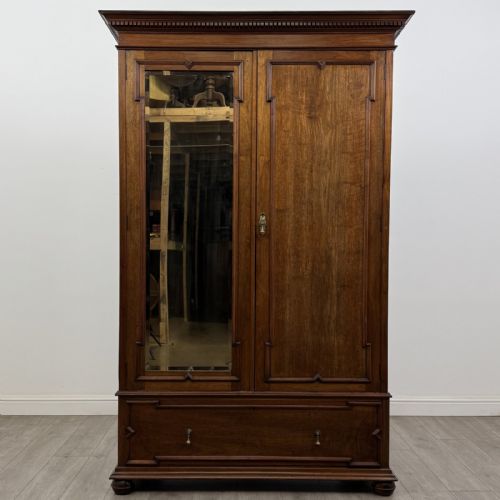
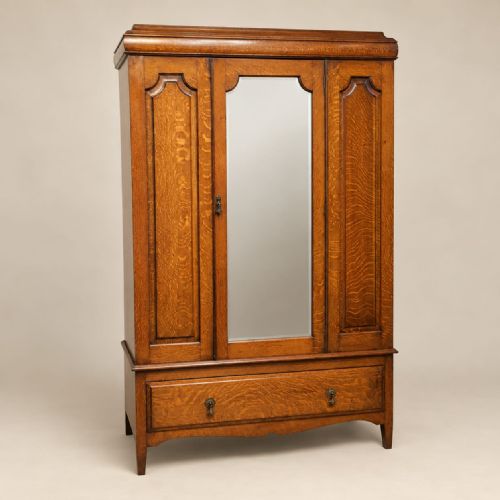
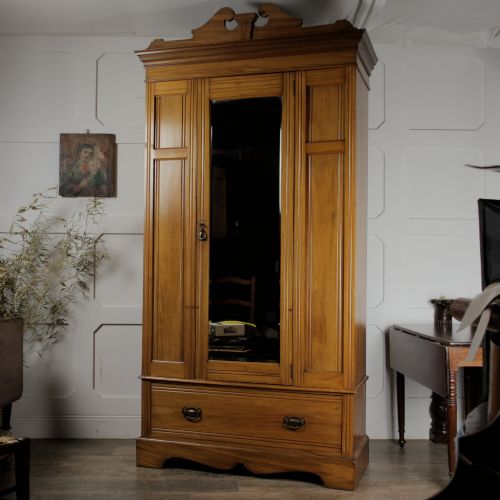
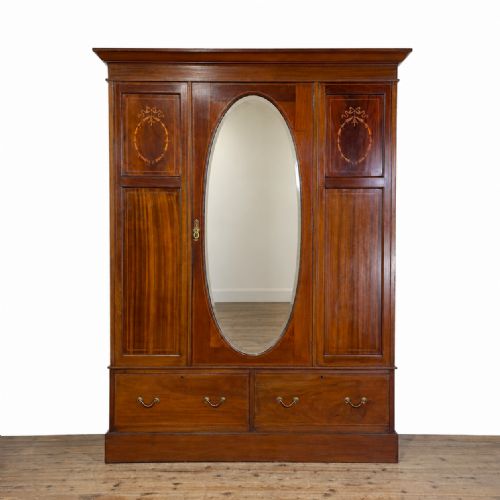
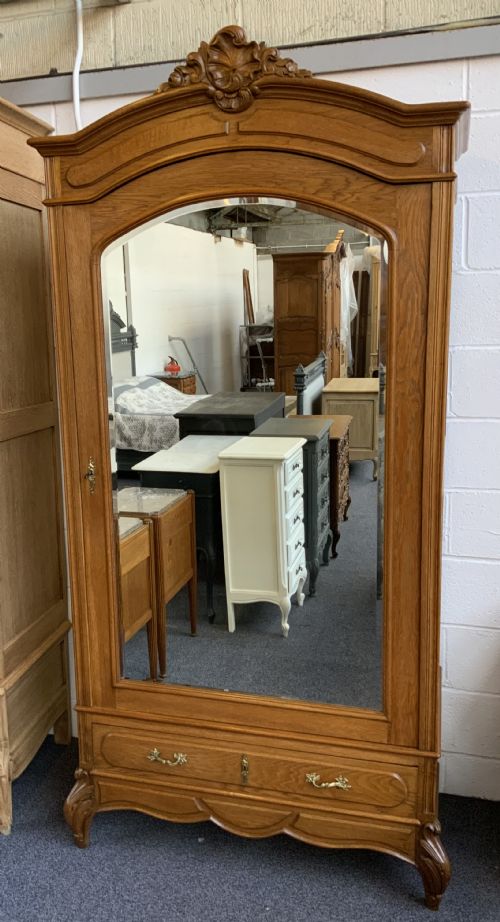
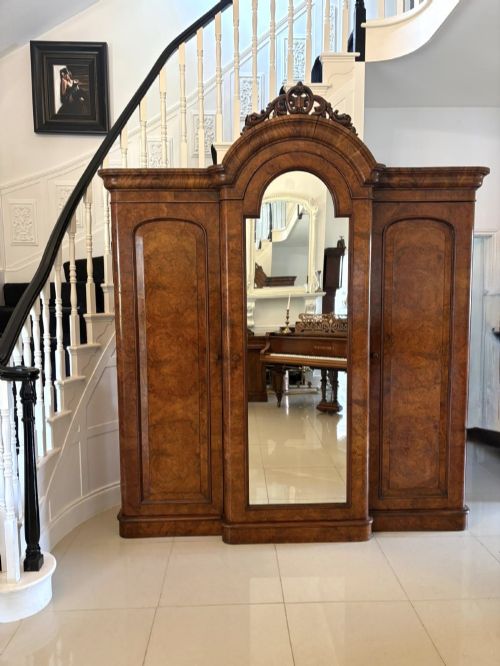
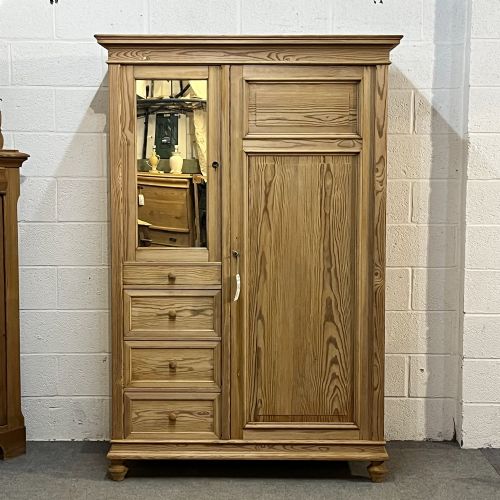
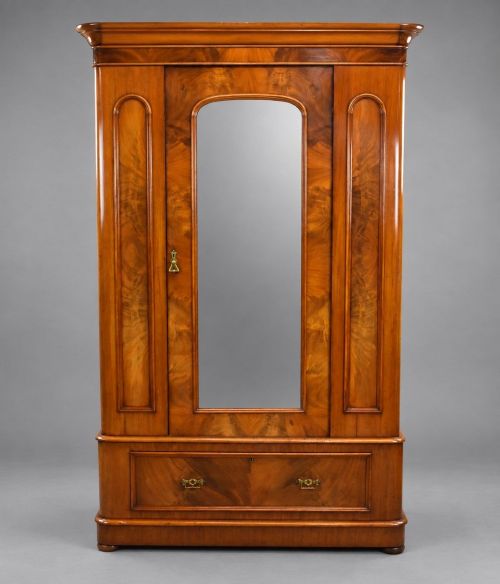
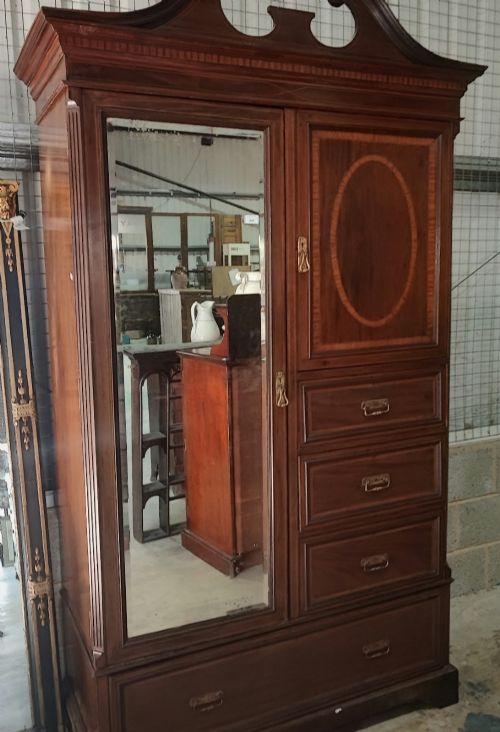
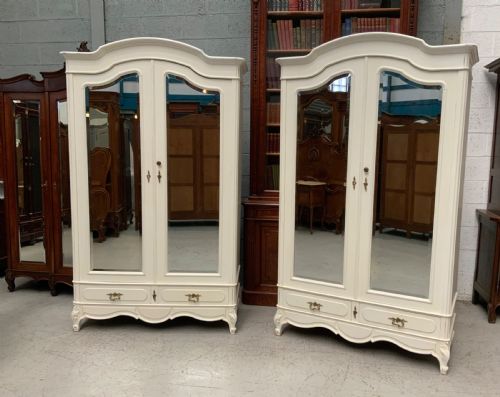
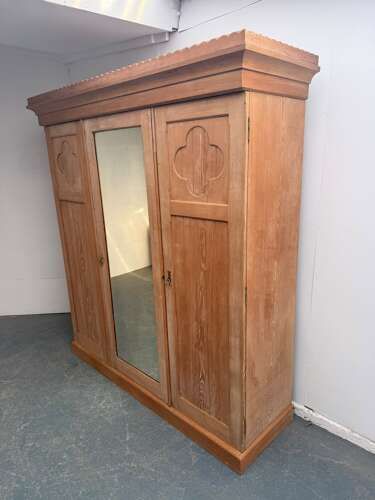
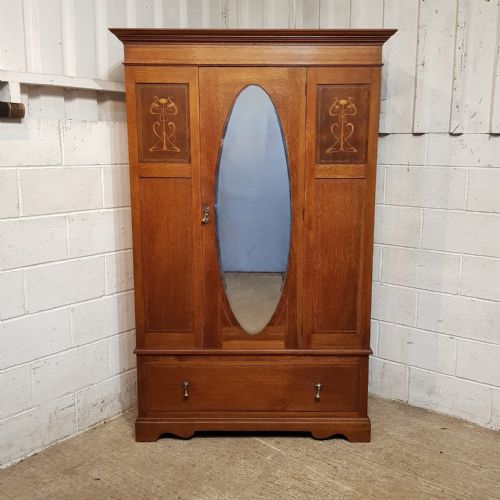
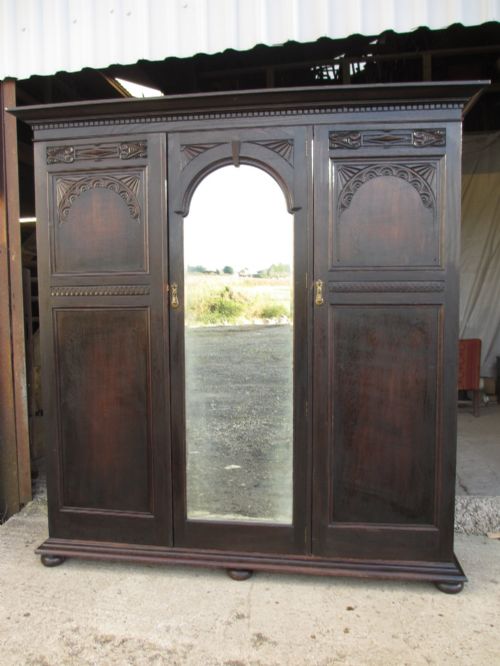
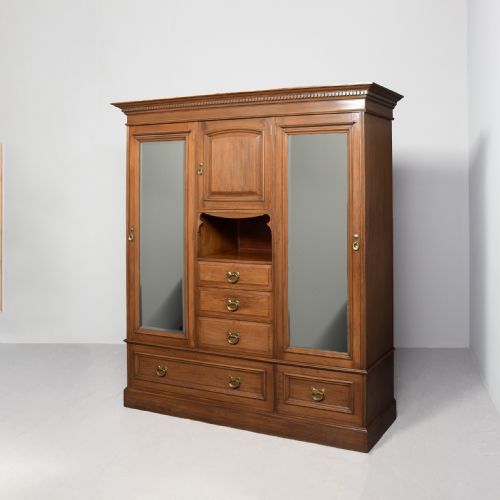
A vintage mirror armoire encompasses large freestanding bedroom storage pieces from the Victorian, Edwardian, and early twentieth-century periods, spanning oak, mahogany, walnut, and satinwood constructions. Buyers searching for a vintage mirror armoire will frequently encounter tall single, double, and triple door wardrobes, compactums, and bedroom suites outfitted with central reflective glass.
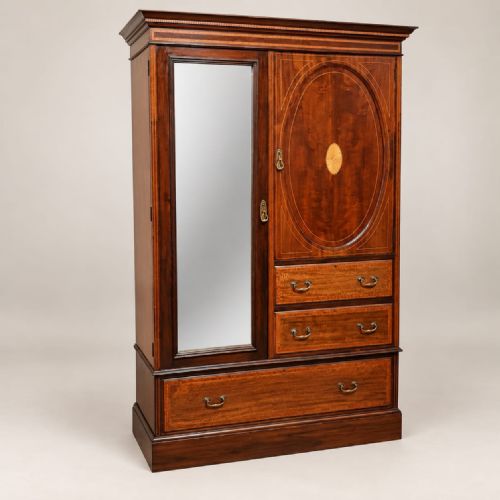
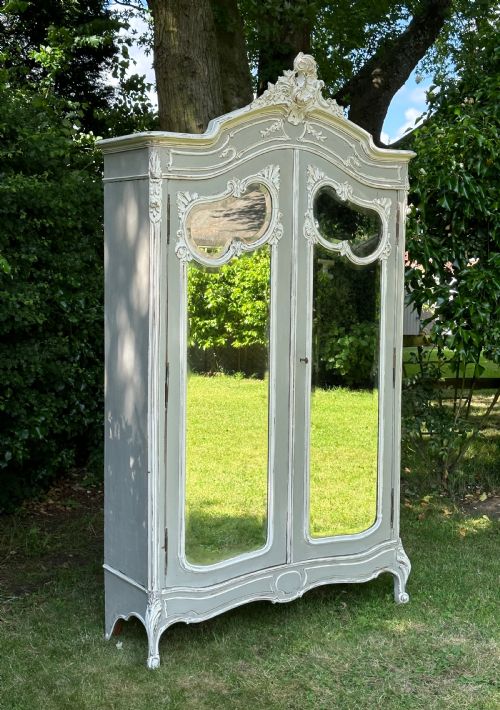
The selection ranges from British pieces in plain or inlaid mahogany and oak to French provincial armoires and revival styles such as Louis XVI, alongside movement-influenced designs like Arts and Crafts and Art Nouveau. These large storage items serve as functional bedroom furniture while introducing substantial mirrored surfaces to reflect light across the room.
Many examples incorporate internal hanging space alongside fitted drawers, shelving, and smaller compartments, sometimes forming part of a matching bedroom suite alongside dressing tables. The proportions are typically generous, requiring careful measurement of ceiling height and floor space prior to placement.
Materials and Construction
Construction relies on solid timbers and veneers such as mahogany, oak, walnut, satinwood, ash, and pine, joined using traditional cabinet-making techniques suited to heavy freestanding furniture. Large doors often house bevelled or flat mirror glass held securely within rebated wooden frames to prevent distortion.
Decorative elements include carved detailing, marquetry inlay, gilt bronze ormolu mounts, and painted surfaces, depending on whether the piece follows an Arts and Crafts, Art Deco, or French revival aesthetic. Interiors frequently utilise secondary woods for drawer linings and shelving, finished with brass or metal hardware.
Vintage Mirror Armoire Retail Price Guide 2026
Typical asking prices for vintage mirror armoire among the pieces listed under this phrase on Sellingantiques today, from the lower quarter to the upper quarter. They describe what is for sale here now, not the wider market.
Several wardrobes hide compact internal drawers behind their mirrors, ready to guard small treasures.
Craftsmanship and Proportion
Quality in a vintage mirror armoire rests on the choice of primary timber, the depth of figuring in burr walnut or mahogany, and the precision of inlaid woodwork or hand-carved ornamentation. Superior pieces demonstrate robust carcase construction that maintains door alignment without sagging under the weight of heavy mirrored glass.
The condition and clarity of the original mirror glass, the retention of matching brass or metal hardware, and the integration of functional internal drawers and hanging space differentiate standard production items from finer workshop pieces.
Edwards and Roberts·Lamb of Manchester·Heals
The Vintage Mirror Armoire Glossary
- Armoire
- A large freestanding cupboard or wardrobe, often of continental origin, featuring single or multiple doors enclosing hanging and shelf storage.
- Compactum
- A multi-functional wardrobe combining hanging space with internal drawers, shelves, and sometimes small cabinet compartments in a single unit.
- Biedermeier or Revival styles
- Design movements referencing historical periods such as Louis XVI, incorporating classical symmetry, restrained carving, and fine veneers.
- Ormolu
- Gilt bronze mounts and decorative fittings applied to furniture, frequently seen on French armoires from the nineteenth century.
- Inlay
- The technique of inserting contrasting pieces of wood or other materials into the primary timber surface to create decorative patterns.
Vintage Mirror Armoire: Frequently Asked Questions
How do I fit a large armoire in a modern bedroom?
Measure your ceiling height and floor space carefully before selecting an armoire, as these pieces were built for high-ceilinged period properties. Many larger wardrobe designs are modular or dismantle into sections to assist with transport and positioning.
Ensure doorways and stairwells along the delivery route offer sufficient clearance for large wooden panels and heavy mirrored doors.
What is the difference between a wardrobe and a compactum?
A standard wardrobe focuses primarily on vertical hanging space behind one to three full-length doors, occasionally featuring a single drawer beneath. A compactum integrates multiple internal configurations, combining hanging sections with banks of drawers, sliding trays, and shelving within the same footprint.
This multi-functional layout provides comprehensive clothing storage without requiring additional chests of drawers in the bedroom.
How should I care for the mirror glass and wood?
Clean the mirror glass using a soft cloth and a gentle glass cleaner, avoiding excessive moisture near the wooden frame to prevent water damage to the silvering or timber. Dust the wooden exterior regularly with a dry cloth and nourish polished surfaces periodically with appropriate wax.
Keep the armoire away from direct sunlight and strong heat sources to protect the veneers and prevent the timber from drying out or warping.
How can I date an antique wardrobe?
Examine the construction methods, secondary timbers, and surface finishes, comparing them against stylistic markers from periods like the Victorian, Edwardian, and Art Deco eras. Hand-cut dovetails, specific timber choices like satinwood or burr walnut, and maker labels offer reliable clues to the decade of manufacture.
Hardware styles and the presence of original bevelled mirror glass also help narrow down the production period.