




Vintage Millinery Display Head
These vintage millinery display head pieces are shop fittings and hat forms designed to hold hats and wigs, combining practical retail utility with sculptural presence.
Vintage Millinery Display Head
When you search for a vintage millinery display head, you encounter hat stands, hat stretchers, hat blocks, and mannequin busts used originally in shop windows and workshops. The forms range from simple wooden shapes to detailed advertising figures from the nineteenth and twentieth centuries.
You are most likely to meet wooden and painted plaster examples originating from the Art Deco period, along with Victorian and Edwardian pieces. These include French fruitwood stands, carved folk art styles, and heavy cast iron or wooden haberdashery items.
The objects serve primarily as structural supports for millinery, though many now function as sculptural decorative items in domestic interiors. Their origins span English and French workshops, utilising materials intended for rigorous commercial environments.
How they were made
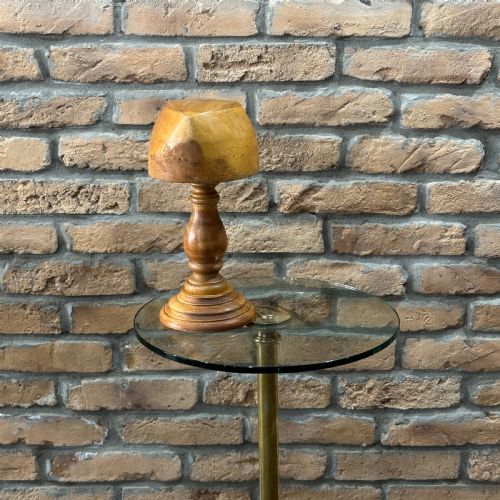
Maker construction relies heavily on carved wood, utilising solid beech, oak, walnut, and fruitwood shaped into blocks, stands, and busts. Artisans also employed plaster, painted surfaces, fabric, and metal components such as cast iron to build durable shop displays.
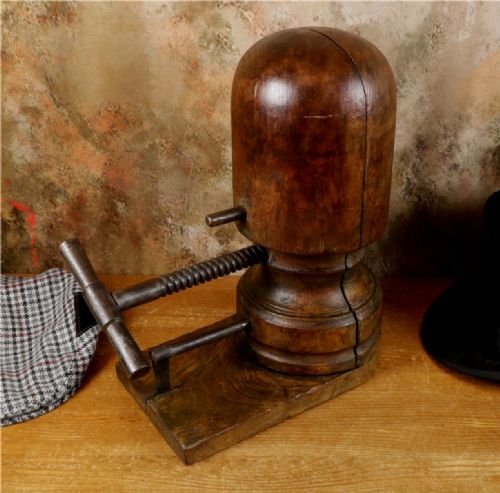
Techniques combine traditional woodworking, such as turned and carved wooden forms, with moulded plaster and painted finishes. Some pieces integrate adjustable mechanisms like wooden hat stretchers and sizers to alter the dimensions of the hat form.
Several items double as mechanical hat stretchers, meaning your display head might still possess the internal wooden screws designed to squeeze a stubborn bowler into submission.
What varies in quality
The integrity of the material matters, with dense hardwoods like oak, walnut, and fruitwood holding a better finish than softer woods or degraded plaster. Original advertising lettering and authentic period paintwork elevate the character of the object.
The Vintage Millinery Display Head Glossary
- Hat block
- A wooden form used by milliners to shape hats during manufacture. These solid wooden blocks often double as display pieces.
- Hat stretcher
- A mechanical device inserted into a hat to increase or maintain its size. They feature adjustable wooden segments operated by a central screw.
- Haberdashery
- Items connected to the trade of sewing and millinery. Industrial haberdashery includes the robust display fittings used in retail shops.
- Mannequin bust
- A truncated figure displaying upper body garments, hats, or jewellery. These range from functional shop counters to decorative French advertising pieces.
Vintage Millinery Display Head: Frequently Asked Questions
What is a millinery head used for?
These pieces were created to support hats, caps, and wigs in retail shops and maker workshops. They held the shape of headwear during storage and window display.
Today, collectors utilise them to display vintage hats or as standalone sculptural objects in home interiors.
How do I date a wooden hat stand?
Dating relies on stylistic markers such as Victorian turned wood details or 1930s Art Deco geometric forms. Material choices and construction methods also point to specific manufacturing eras.
Makers utilised solid hardwoods like oak, beech, and fruitwood across the nineteenth and early twentieth centuries.
Are these pieces English or French?
The inventory includes items originating from both English and French workshops. French pieces frequently reflect Art Deco advertising styles and fruitwood construction.
English examples often showcase traditional haberdashery, oak, walnut, and folk art carving traditions.