



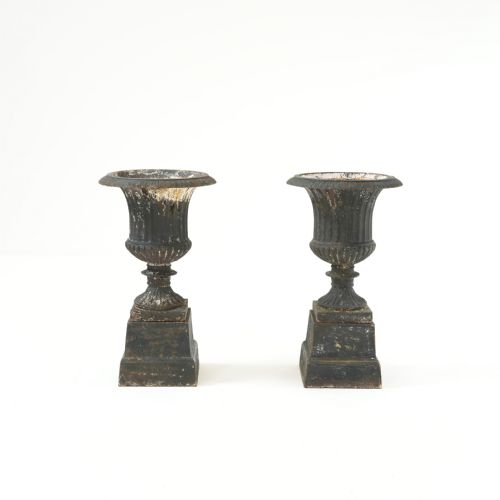


Vintage Metal Vase
A vintage metal vase brings weight and honest construction to a room, ranging from heavy cast iron urns to delicate cloisonné vessels.
Vintage Metal Vase
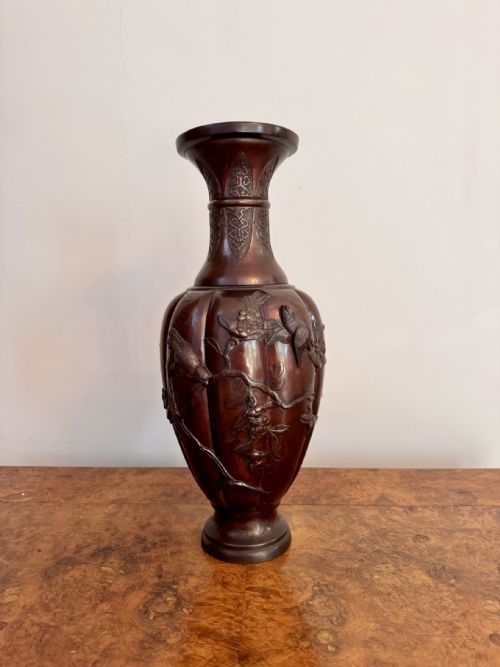
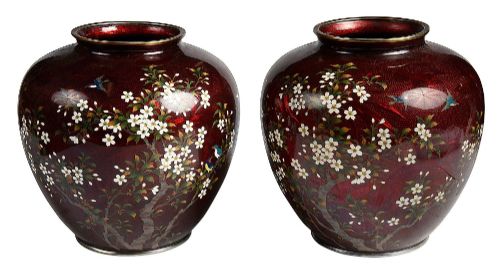
A vintage metal vase encompasses a diverse group of vessels designed for display, planting, or holding stems, shaped from materials ranging from humble cast iron to polished bronze. When searching for a vintage metal vase, buyers encounter forms that span nineteenth-century garden urns, Edwardian brass vessels, and intricate Japanese cloisonné pieces from the Meiji period.
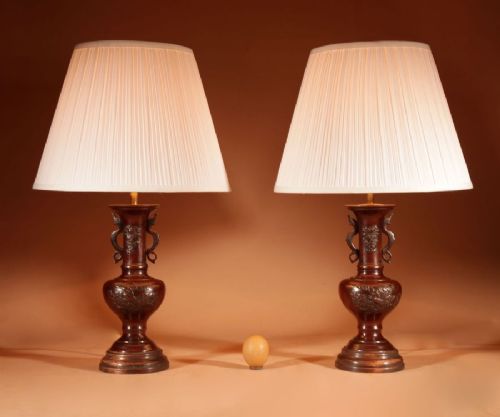
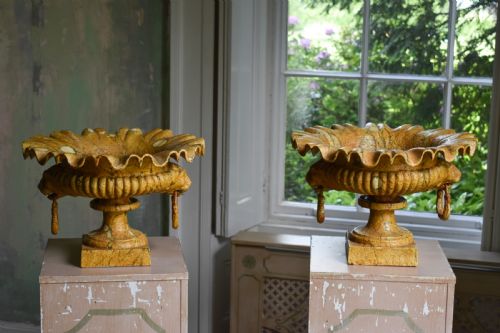
The selection frequently includes paired decorative objects, such as campana garden urns on plinths, alongside single statement pieces like French copper vessels and Chinese champlevé works. Domestic interiors often accommodate smaller table lamps, wall pockets, and centrepieces, while larger cast iron urns suit outdoor settings.
Materials and construction
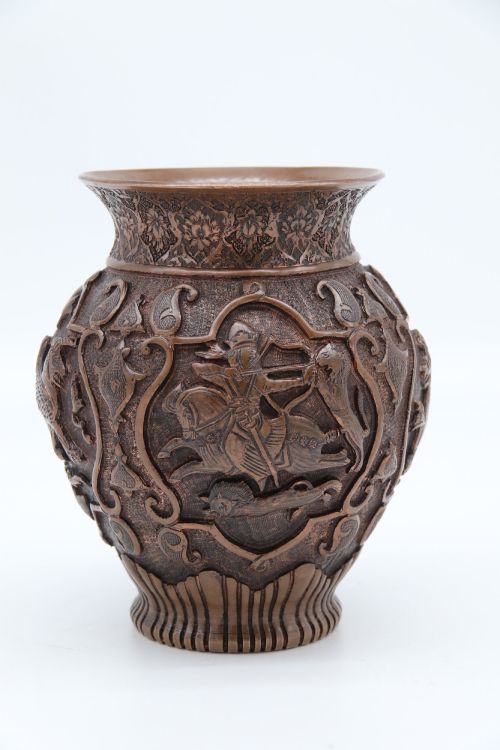
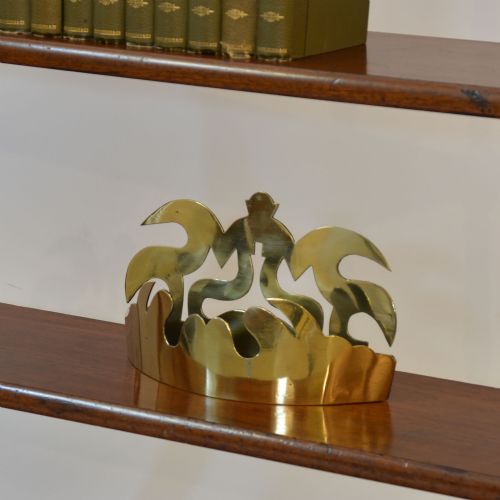
Metal vessels in this range rely on techniques such as casting, hammering, and repoussé work, where artisans pushed designs out from the reverse of copper and brass sheets. Cast iron examples take their form from moulds, resulting in sturdy garden urns and architectural ornaments with notable heft.
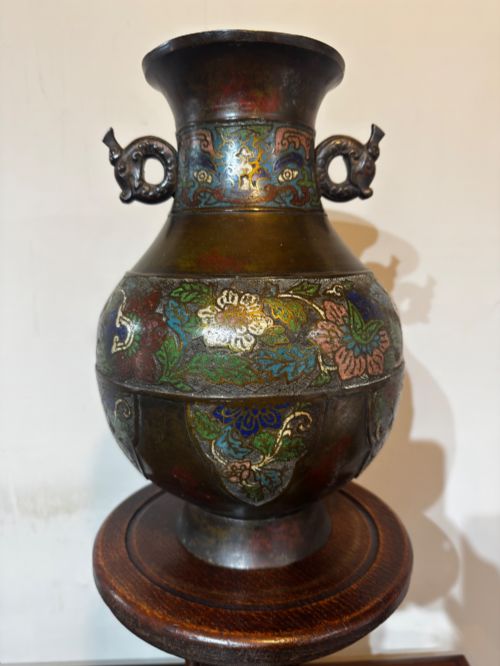
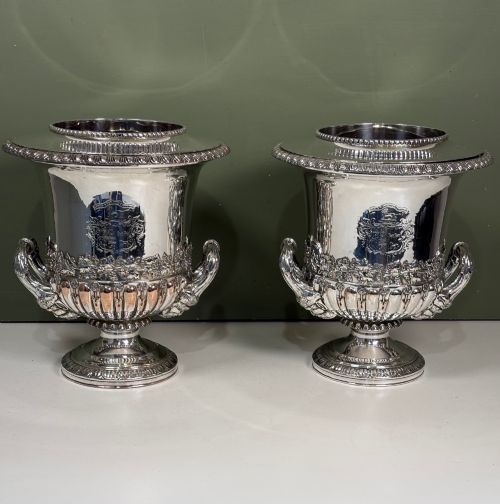
Surface decoration frequently involves cloisonné and champlevéing, methods that embed enamel within soldered wire compartments or recessed channels on bronze bases. Silver plating and pewter overlays provide alternative finishes, while patination develops naturally on exposed bronze and copper over decades.
Several heavy cast iron garden urns weigh enough to outlast both the gardener and the garden wall.
Distinctions in quality
Quality rests upon the crispness of the chasing and the complexity of the foundational metalwork, distinguishing heavy cast pieces with deep relief from simpler stamped alternatives. Artisanal precision determines the success of applied finishes, from tightly packed enamel cells on Japanese vessels to evenly distributed silver plate.
Condition and originality dictate desirability, particularly where patination, surface chased decoration, and maker marks remain undisturbed by aggressive cleaning. The presence of matching pairs and original bases or plinths elevates the status of garden urns and decorative vases.
The Vintage Metal Vase Glossary
- Cloisonné
- A metalwork technique where fine wires are soldered to a body to create cells that are filled with enamel and fired. This method produces intricate, colourful patterns across bronze and brass surfaces.
- Repoussé
- A method of shaping metal by hammering it from the reverse side to create a raised design in relief. Artisans utilise this technique on copper and brass vessels to achieve textured floral and abstract motifs.
- Campana Urn
- A bell-shaped garden or decorative vessel originating from classical antiquity, often cast in iron or bronze. These urns sit upon socle bases and frequently appear in pairs.
- Champlevé
- An enamel technique where troughs or cells are hollowed out of the metal surface and filled with vitreous paste before firing. The resulting designs contrast the gleaming metal outlines with coloured enamel fields.
- Spelter
- An alloy of zinc and lead often used as a substitute for bronze in decorative figures and vessels during the nineteenth century. It is softer and lighter than bronze, typically requiring a painted or bronzed finish.
Vintage Metal Vase: Frequently Asked Questions
How do I clean an antique metal vase?
Dust the surface regularly with a soft, dry cloth to prevent the accumulation of grime within engraved or chased details. Avoid harsh chemical polishes that strip historical patination, particularly on aged copper and bronze.
For silver plated or brass pieces, consult a specialist before applying cleaning agents to preserve delicate finishes and manufacturer marks.
Can cast iron urns stay outside?
Cast iron garden urns are manufactured to withstand outdoor environments, developing a stable layer of surface oxidation over time. Placing them on plinths prevents ground moisture from accelerating corrosion.
During severe freezing weather, ensure that trapped water inside the bowl is drained to prevent cracking.
What is the difference between cloisonné and champlevé?
Cloisonné involves soldering thin metal wires onto a bronze or copper base to form distinct compartments for enamel paste. These wire boundaries remain visible on the finished surface as delicate metallic outlines.
Champlevé carves the design directly into the thick metal body, creating sunken troughs that receive the enamel rather than relying on applied surface wires.
How do I date a nineteenth-century metal vase?
Examine the construction marks, assembly methods, and stylistic indicators such as Art Nouveau curves or Neoclassical motifs. Heavier castings and hand-chased details often point towards earlier nineteenth-century production.
Maker signatures, stamped registry numbers, and regional hallmarks provide further clues to the specific decade of manufacture.