



Vintage Metal Umbrella Rack
A vintage metal umbrella rack brings heavy industrial utility and sculptural form to a hallway, keeping damp walking sticks and wet canopies orderly.
Vintage Metal Umbrella Rack
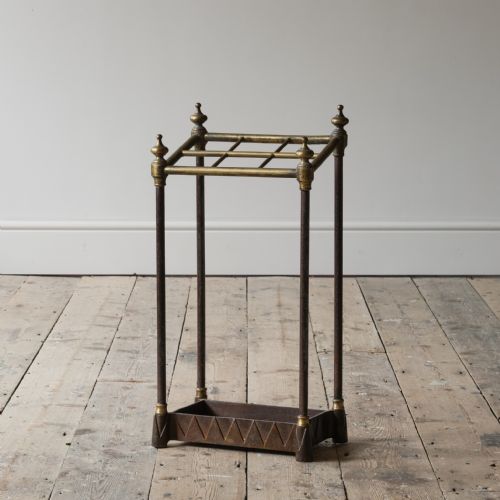
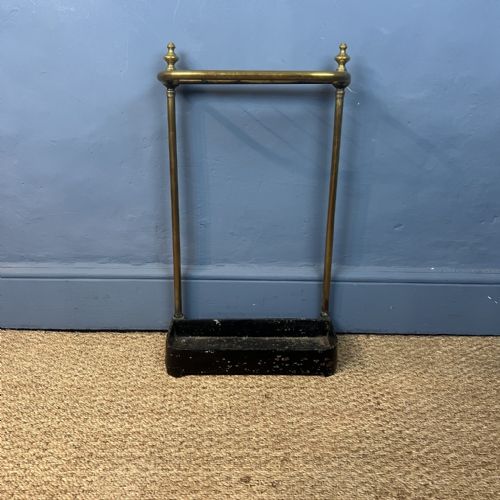
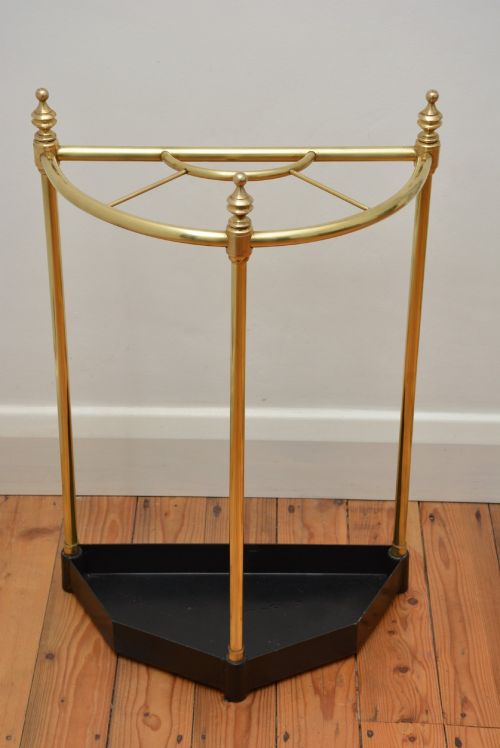
When searching for a vintage metal umbrella rack, a buyer encounters robust hallway furnishings primarily originating from the nineteenth and early twentieth centuries. These practical pieces range from compact semi-lune hall fittings to large, freestanding circular or oval structures designed to hold multiple walking sticks and wet canopies.
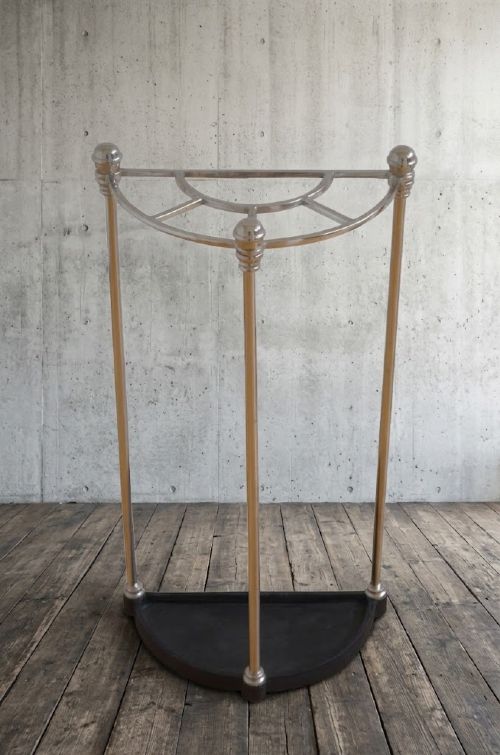
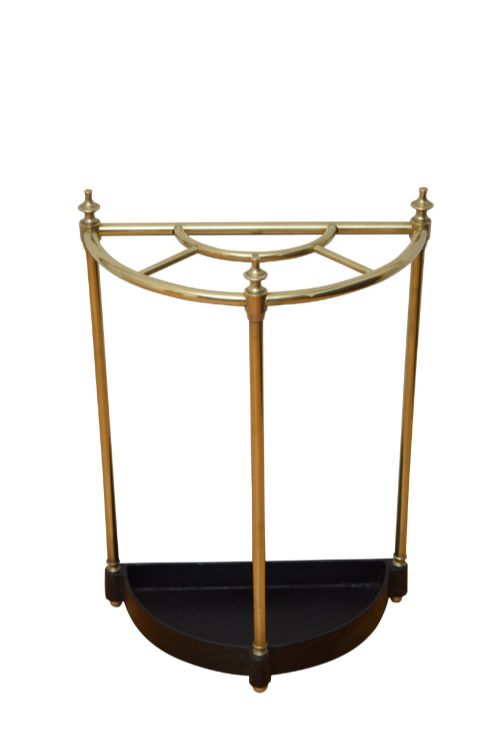
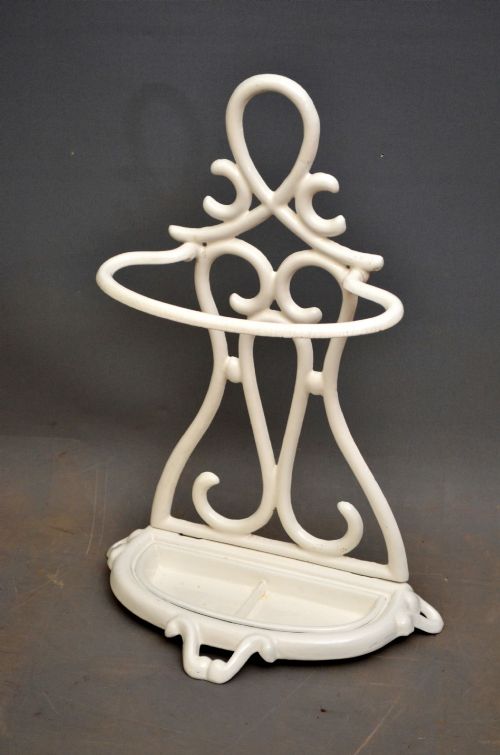
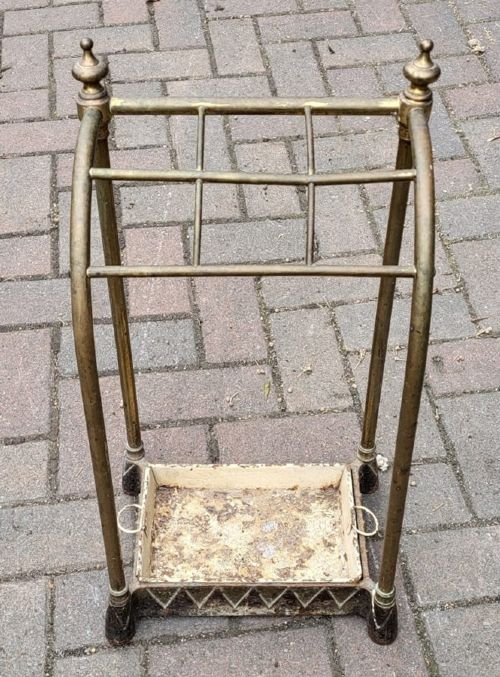
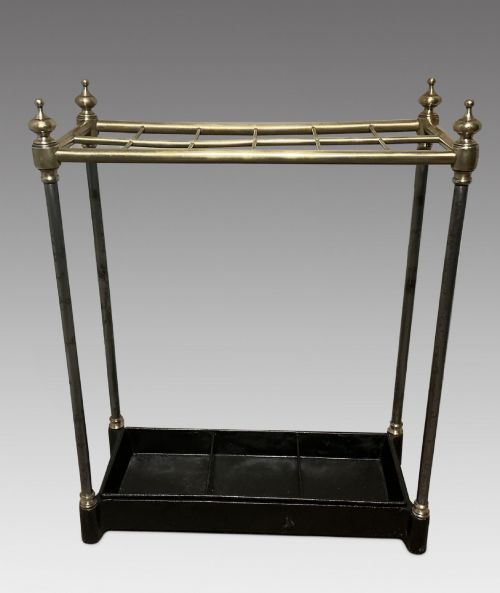
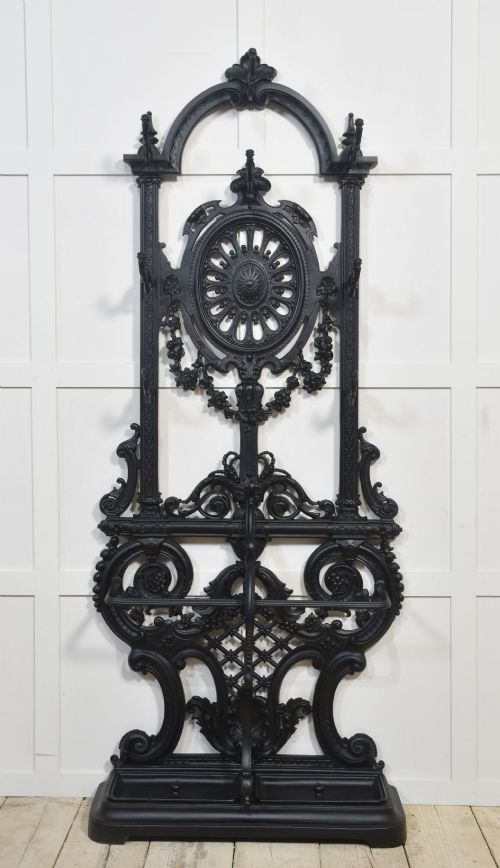
The version most commonly met on this page is the heavy cast iron stick stand from the Victorian era, often featuring openwork scroll patterns or water retention trays at the base. Alongside these iron forms, brass demi-lune stands and nickel-plated designs appear frequently, reflecting the decorative shifts toward Art Nouveau and Art Deco styles in later decades.
Materials and construction methods
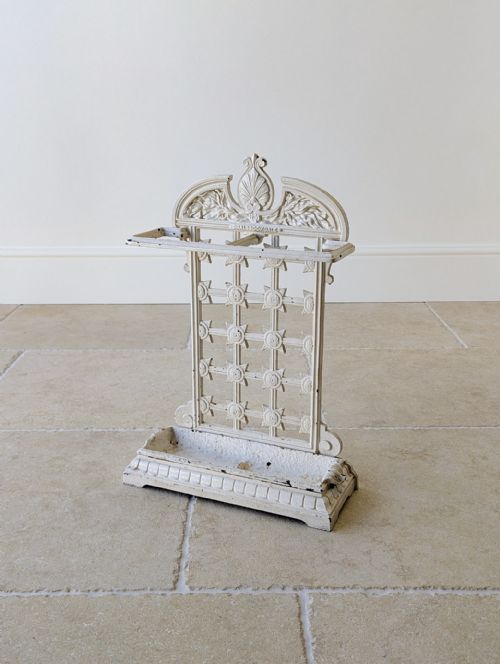
Makers utilised cast iron for its weight and strength, pouring molten metal into sand moulds to create intricate openwork patterns, lattice frames, and sturdy drip trays. This heavy medium allowed for complex Victorian Gothic and botanical motifs that could support wet timber and steel without tipping.
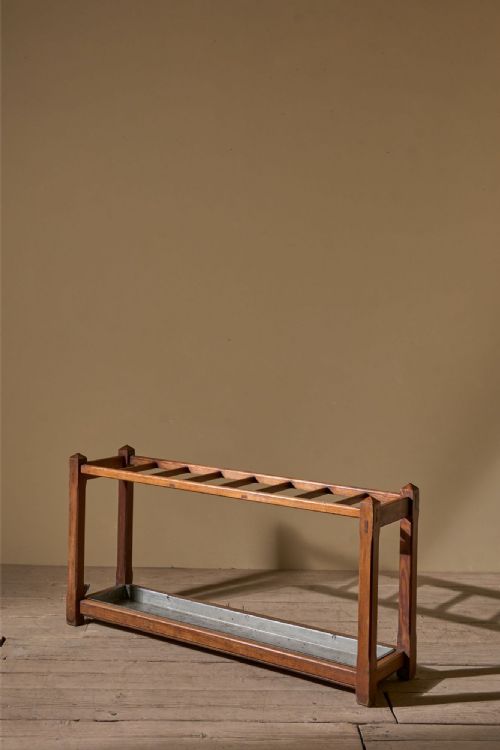
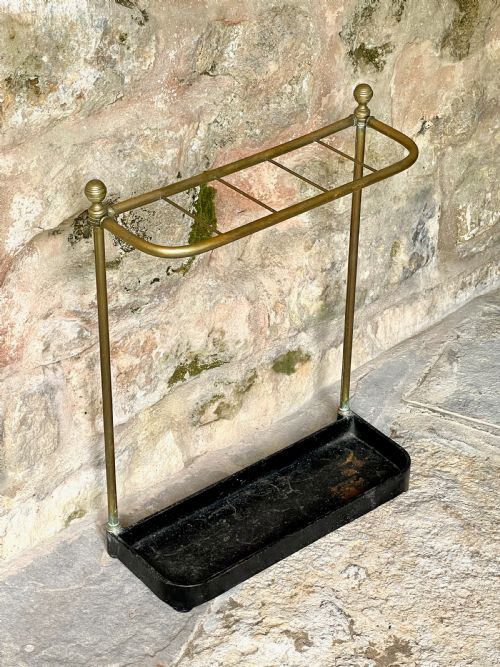
Brass and nickel plating provided a brighter, reflective finish favoured in later Edwardian and Art Deco designs, often shaped into semi-lune frames that sat flush against hallway walls. Combination pieces also paired these metals with oak, pine, or zinc liners to manage moisture from wet umbrellas.
Factors of design and build quality
Quality in these hall stands is determined by the crispness of the casting and the architectural ambition of the frame. Finer examples display deeply struck mouldings, clean relief work in the iron or brass, and well-integrated structural divisions that keep individual sticks upright.
The presence of original, matching drip trays at the base separates superior utilitarian survivals from those altered or missing their water retention components. Heavier gauge metals and thoughtful proportional balance further distinguish workshop production from plainer utility items.
Coalbrookdale
The Vintage Metal Umbrella Rack Glossary
- Demi-lune
- A half-moon shape designed to sit flat against a hallway wall. This configuration maximises floor space while accommodating several walking sticks.
- Cast iron
- An iron-carbon alloy poured into moulds to create rigid, heavy objects. It forms the structural core of most Victorian umbrella stands.
- Nickel plating
- A thin protective layer of nickel applied over base metals to impart a bright, corrosion-resistant silver finish. This technique is common in Art Deco hallway pieces.
- Drip tray
- A removable metal basin seated at the base of the rack to catch rainwater. It protects hallway flooring from moisture damage.
- Stick loop
- An upper metal ring or divider that keeps long umbrella shafts separated and upright. It prevents the rack from becoming untidy.
Vintage Metal Umbrella Rack: Frequently Asked Questions
How do I clean a cast iron rack?
Dust the surface regularly with a dry cloth and remove the lower drip tray to empty accumulated water. Avoid harsh chemical cleaners that might strip the historic finish.
For stubborn grime, apply a light coat of neutral wax using a soft brush, buffing gently once dry to protect the metal.
Were these stands only used for umbrellas?
These hallway furnishings were designed to hold both wet canopies and gentleman's walking sticks or riding crops. The division rings accommodated slender wooden shafts alongside thicker umbrella handles.
Many tall examples served dual purposes in grand homes, positioned near front doors for daily outdoor accessories.
How do I date a brass stand?
Examine the construction joints, fixings, and overall decorative style to establish the period of manufacture. Victorian examples often favour heavy castings with Gothic or naturalistic floral motifs.
Later Edwardian and Art Deco pieces lean toward sleeker geometric lines, lighter gauge brass, and polished nickel-plated finishes.