



Vintage Metal Table Gong
These vintage metal table gong pieces command attention on a sideboard, bringing resonant Victorian presence and rich decorative craft into a modern room.
Vintage Metal Table Gong
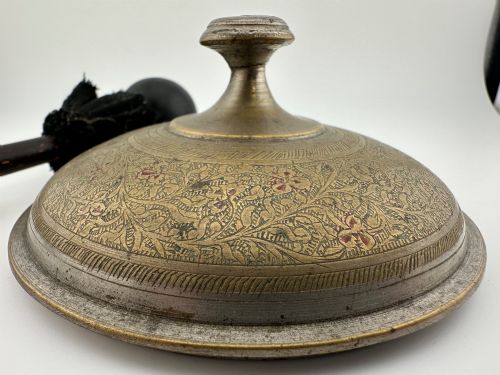
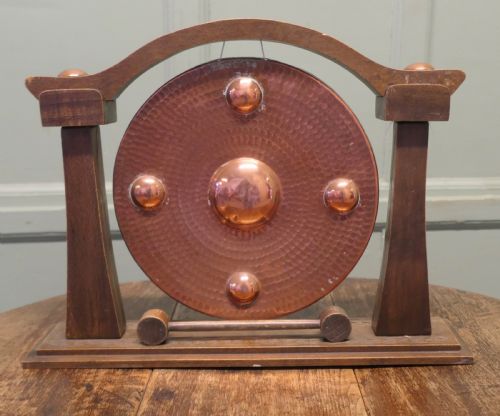
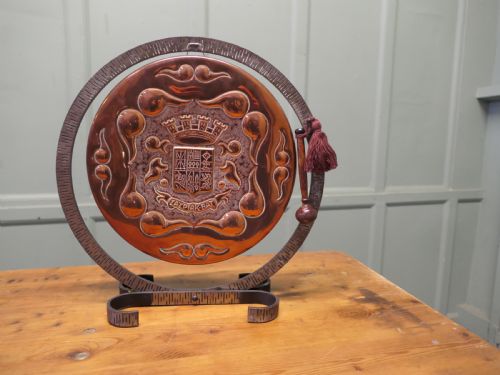
A vintage metal table gong forms a striking centrepiece designed to summon guests to dinner or punctuate a room with a resonant tone. The selection here spans the nineteenth century and early twentieth century, taking the form of table top gongs, dinner gongs, and temple bells.
Most examples you encounter on this page combine cast or hammered metals with fitted wooden mounts, including carved oak and hardwood frames. You will also find distinctive regional iterations such as Basque folk art and Chinese export pieces.
Makers utilised diverse stylistic idioms ranging from the fluid curves of Art Nouveau and the aesthetic movement to rustic Victorian designs. These objects served both a domestic function and a decorative role in period interiors.
How vintage metal table gongs were made
The metal components rely on traditional foundry and smithing techniques, utilising brass, bronze, copper, iron, and silver plate. Artisans shaped these materials through casting, hand hammering, and plating to achieve durable resonant plates and bells.
Wooden frames and mounts demand skilled joinery and carving, often employing oak or hardwood to support the suspended metal striker and gong. Some striking variations incorporate natural elements like cow horn alongside carved timber and metalwork.
Vintage Metal Table Gong Retail Price Guide 2026
Typical asking prices for vintage metal table gong among the pieces listed under this phrase on Sellingantiques today, from the lower quarter to the upper quarter. They describe what is for sale here now, not the wider market.
Elephants stand sentinel at the base of at least one bronze bell, ready to summon guests with a decidedly exotic chime.
What varies in quality
Quality rests in the weight and resonance of the metal plate or bell, alongside the depth and crispness of hand carving on the wooden frames. Superior pieces display harmonious proportions between the suspended gong and its structural mount.
The sophistication of the stylistic execution distinguishes standard examples from exceptional ones, particularly in works reflecting Art Nouveau or Arts and Crafts ideals. Patination and the integrity of silver plating also play significant roles in the visual character.
The Vintage Metal Table Gong Glossary
- Dinner gong
- A large freestanding or table-mounted bell designed for summoning people to meals. These typically feature a wooden frame from which a bronze or brass disc hangs.
- Silver plate
- A thin layer of silver applied to a base metal such as copper or brass. This technique offered the rich appearance of solid silver at a more accessible cost during the Victorian era.
- Art Nouveau
- A decorative style prevalent around nineteen hundred characterised by sinuous plant-inspired lines and organic forms. It heavily influenced the metalwork and mount designs of the period.
- Basque folk art
- Distinctive regional craftsmanship originating from the Basque region, often featuring hand-hammered copper and iron work. These pieces display robust local aesthetic traditions.
- Temple bell
- A sacred or ceremonial bell adapted for domestic display in Western interiors during the late nineteenth and early twentieth centuries. They frequently incorporate cast bronze and figurative bases.
Vintage Metal Table Gong: Frequently Asked Questions
How do I clean a metal gong?
Dust the wooden frame gently with a dry cloth and avoid harsh chemical polishes on aged metal surfaces. Preserving the natural patination maintains the historical character of the piece.
For silver plated elements, use a mild specialised cloth designed for plated items without applying excessive pressure.
What periods do these gongs date from?
The pieces available span the nineteenth century up to the early twentieth century, encompassing Victorian, Edwardian, and arts and crafts movements. Dating relies on stylistic markers and construction methods.
Most examples reflect late Victorian and nineteen-hundred design aesthetics across British, French, and Asian export origins.
Are these gongs meant to be struck?
These pieces were originally manufactured to be functional summoning devices for the dining room or hall. Striking them gently with an appropriate mallet yields a clear resonant tone.
Care should be taken depending on the age and mounting stability of the individual frame and striker.
What materials were used in their construction?
Makers combined various metals such as brass, bronze, copper, iron, and silver plate with wooden frames like carved oak and hardwood. Some unusual variants incorporate animal horn or detailed figural bronze bases.
This mix of materials allowed artisans to balance acoustic resonance with decorative cabinetry.