




Vintage Metal Shelving
These vintage metal shelving units bring industrial strength and utilitarian charm into modern rooms.
Vintage Metal Shelving
When you search for vintage metal shelving, you are looking at sturdy storage solutions originating primarily from the nineteenth and early twentieth centuries. These pieces were built for rigorous commercial, culinary, or agricultural environments rather than domestic display.
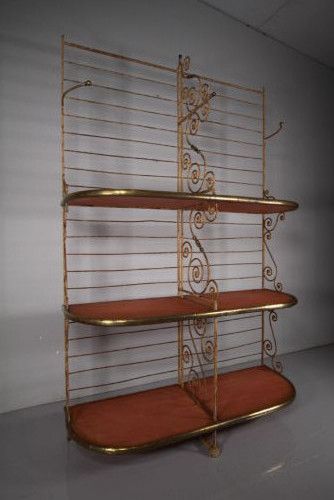
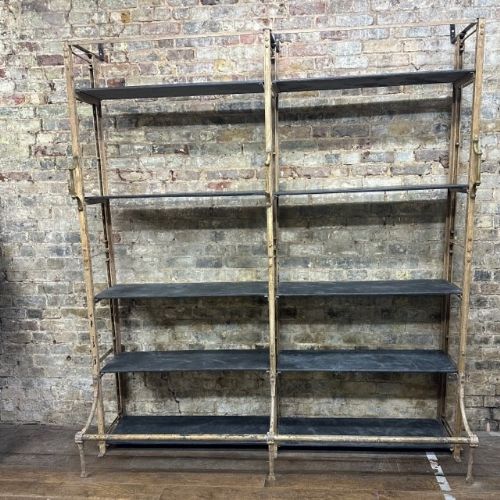
The versions you are most likely to meet on this page include baker's racks, shop display stands, and pot stands. They span French industrial, Victorian, and Edwardian styles, frequently combining robust iron frames with timber or slate components.
Many items bear the functional hallmarks of their origins, such as stamped marks or distressed painted surfaces. They range from large Parisian boulangerie racks to compact field kitchen dressers and etageres.
Materials and construction
Makers built these frames using heavy wrought iron, cast iron, and steel to support substantial loads. Structural elements often involved forged scroll-work and riveted or joined metal bars designed for commercial endurance.
Surfaces frequently feature original painted finishes, aged patinas, or gilt metal details. Some units incorporate contrasting natural materials like pine and slate to form the actual shelving surfaces.
One French bread rack likely spent decades absorbing the rich aroma of a Parisian boulangerie before retiring to a quiet life indoors.
Assessing quality
The finer examples display superior forge-work, such as intricate scroll-work and clean structural lines that balance utility with decorative appeal. Maker's stamps and original, undisturbed patinas elevate a piece well above standard utility items.
Simpler workshop pieces prioritize pure function over ornamentation, sometimes showing heavier wear from decades of commercial service. The integrity of the metal frame and the authenticity of the surface finish dictate the standing of each piece.
The Vintage Metal Shelving Glossary
- Baker's rack
- A tall utilitarian shelving unit traditionally used in bakeries for cooling bread and pastries. These units feature open metal framing to allow air circulation around baked goods.
- Etagere
- A set of open shelves for displaying small objects or ornaments. Edwardian versions often incorporate refined materials like gilt metal and inlaid marquetry.
- Pot stand
- A sturdy metal stand designed to hold heavy pots or plants. Victorian examples often utilise painted wrought iron to resist moisture.
- Boulangerie rack
- A French bakery shelving unit designed for heavy commercial use. They date predominantly from the nineteenth and early twentieth centuries.
Vintage Metal Shelving: Frequently Asked Questions
What were vintage metal shelves originally used for?
These pieces served practical roles in bakeries, shops, and kitchens where robust storage was essential. Bakeries utilised them for cooling loaves, while merchants used display stands to showcase goods.
Over time, many transitioned from commercial workspaces into domestic settings. Their open metal design made them ideal for holding heavy pots, kitchen provisions, and wares.
How do I clean and maintain painted metal shelving?
Dust the metal frames gently with a dry or slightly damp cloth to preserve the aged surface. Avoid harsh chemical cleaners that might strip original paint or distressed patinas.
Treat wooden or slate inserts according to their specific material needs. Regular gentle care ensures the historical finish remains intact for years.
Are these shelves sturdy enough for heavy books?
Wrought iron and steel frames provide exceptional structural support and load-bearing capacity. They easily accommodate heavy items such as books, cast iron cookware, or dense ceramics.
Checking the stability of the joints and the security of the shelves ensures safe daily use. Most commercial pieces were engineered to hold far more weight than typical modern shelving.
How can I tell a Victorian rack from an Edwardian one?
Victorian pieces tend to emphasise heavy wrought iron construction and utilitarian forms like shop stands and baker's racks. They often feature robust scroll-work and painted finishes.
Edwardian items frequently lean towards decorative refinement, sometimes incorporating gilt metal and marquetry as seen in etageres. Examining the materials and ornamental style helps identify the manufacturing period.