




Vintage Iron Display Unit
A vintage iron display unit brings robust utility and architectural presence into a room, offering open shelving forged from durable metals.
Vintage Iron Display Unit
When you search for a vintage iron display unit, you find functional metal furniture designed for storage and exhibition. These pieces originate from domestic, retail, and commercial spaces across the eighteenth, nineteenth, and early twentieth centuries.
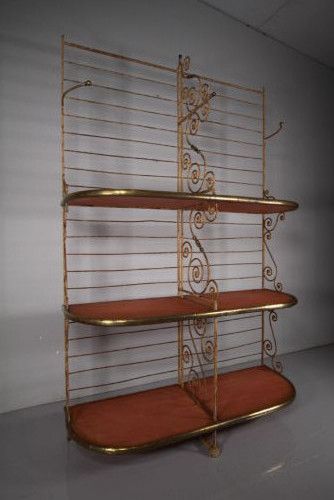
The selection on this page relies heavily on nineteenth-century French and English forms. You will encounter bakers racks, patisserie racks, shop display stands, and shelving units shaped by utilitarian needs.
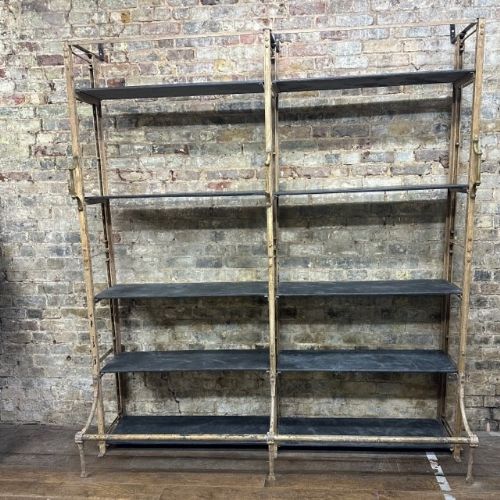
Many examples combine heavy metal frameworks with timber shelving or glass elements. They serve equally well in modern kitchens, living spaces, and retail interiors for organising everyday objects.
How they were made
Makers shaped these structures using wrought iron, cast iron, and steel, often combining them with oak, pine, or slate. Artisans utilised traditional blacksmithing techniques like scroll-work and riveting to join heavy metal bars together securely.
Surfaces frequently show the marks of hand-forging alongside applied paint finishes and brass detailing. Wooden elements such as dressers and shelving boards were integrated directly into the metal frames to support heavy loads.
Some nineteenth-century French bakers managed to keep their heavy iron racks remarkably free of flour dust.
What varies in quality
The standard of a vintage iron display unit depends on the crispness of its metalwork and the integrity of its joints. Pieces featuring hand-formed scroll-work and stamped maker marks generally demonstrate superior craftsmanship compared to simpler utilitarian variants.
Proportion and material combination also dictate the grade of a piece. Well-balanced structures that pair cast or wrought iron with seasoned oak, slate, or original glass retain greater structural coherence and visual harmony.
Liberty & Co.
The Vintage Iron Display Unit Glossary
- Bakers rack
- A tall metal shelving unit historically used in European bakeries to cool bread and pastries. These pieces feature open wire or slatted iron shelves designed for maximum airflow.
- Scroll-work
- Ornamental spiral or curved metal detailing shaped by a blacksmith. This decorative technique appears frequently on nineteenth-century frames.
- Wrought iron
- Tough, malleable iron worked by hand while hot. It forms the primary structural backbone for many historical display stands.
- Patisserie rack
- A specialised French storage frame built for pastry displays. They typically incorporate sturdy iron supports with multi-tier shelving.
- Shop display stand
- Commercial furniture built to showcase merchandise in nineteenth-century retail environments. These units prioritize open visibility and robust daily utility.
Vintage Iron Display Unit: Frequently Asked Questions
What is a vintage iron display unit?
A vintage iron display unit is a historical piece of functional furniture built primarily from metals like wrought iron, cast iron, or steel. These items include bakers racks, shop display stands, and open shelving designed for heavy commercial or domestic use.
Most examples date from the eighteenth century through to the early twentieth century. They combine industrial utility with decorative craftsmanship, featuring open tiers suited for storage and exhibition.
How were bakers racks originally used?
Bakers racks were utilised in European bakeries and patisseries to cool freshly baked bread, pastries, and loaves. Their open iron shelves allowed air to circulate freely around the hot goods.
Over time, these sturdy metal frames transitioned from commercial bakehouses into domestic kitchens and living areas. Today, people use them to store cookware, books, and plants.
How do I style an iron display unit?
An iron display unit works well in kitchens, living rooms, and hallways as a focal point for open storage. Balance heavy items like ceramics or cast-iron pans on the lower tiers with lighter books or plants near the top.
The industrial and rustic qualities of the metal frame pair effectively with exposed brickwork, plain plaster walls, and natural timber floors.
How can I tell the age of these pieces?
Dating these units involves examining the manufacturing techniques, materials, and structural fixings used in the frame. Nineteenth-century examples often feature hand-forged wrought iron, specific scroll-work patterns, and occasional maker stamps.
Later twentieth-century pieces tend to use standardised steel components and simpler welded joints. Associated timber elements like oak or pine shelving also offer clues based on their grain and wear.