
Vintage Metal Log Container
A vintage metal log container brings hearthside utility and warm metallic texture to a room, drawing on nineteenth-century and early twentieth-century designs.
Vintage Metal Log Container
A vintage metal log container serves primarily as a fireside receptacle for fuel, taking forms such as buckets, bins, scuttles, and cauldrons. Buyers exploring this category encounter pieces designed for practical service by the hearth that have since transitioned into decorative household objects.
The selection on this page draws heavily from Victorian, Edwardian, and Arts and Crafts periods, alongside rustic farmhouse and industrial styles. Makers of these vessels utilised robust metals to withstand daily domestic labour in nineteenth and early twentieth-century homes.
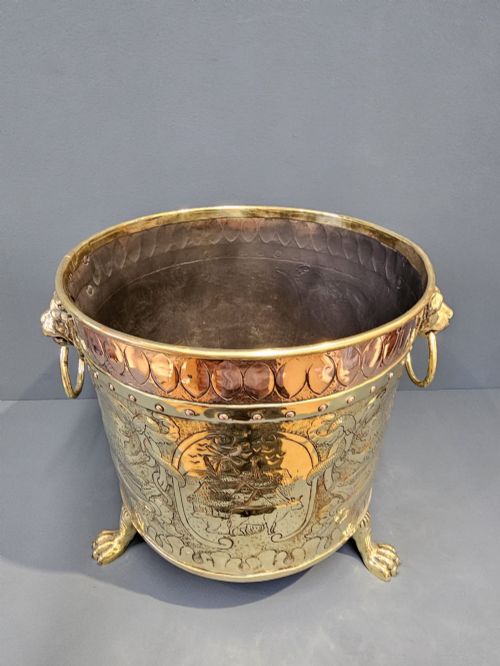
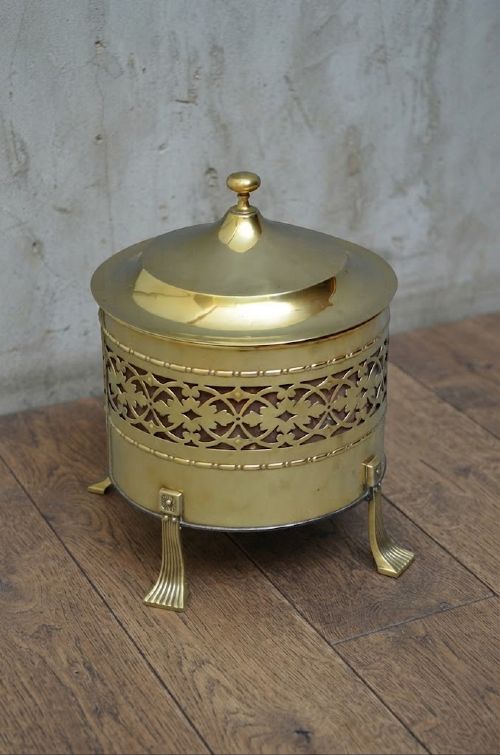
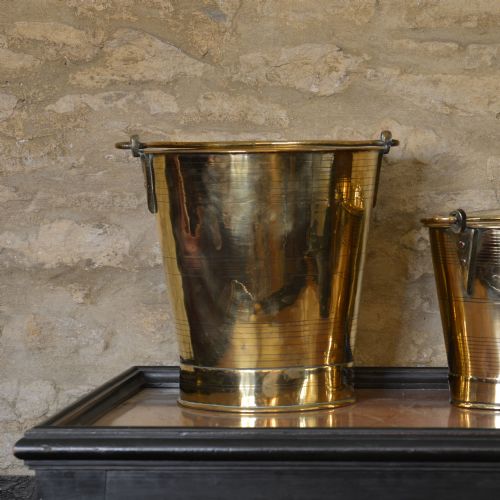
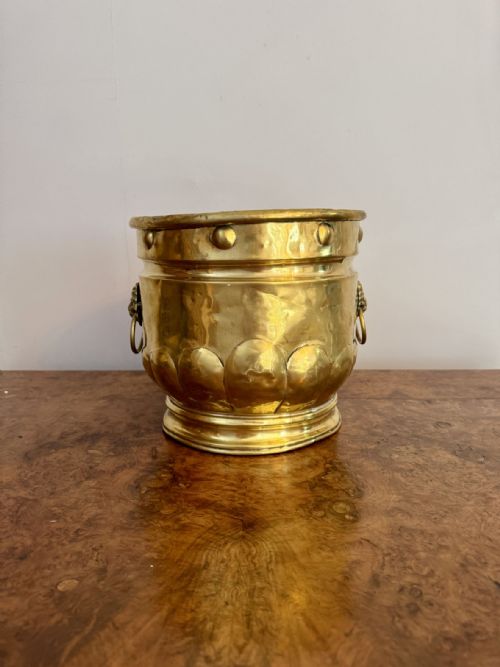
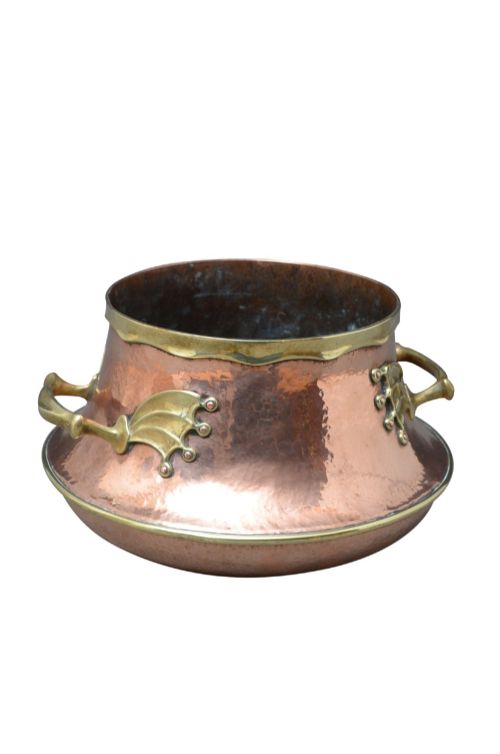
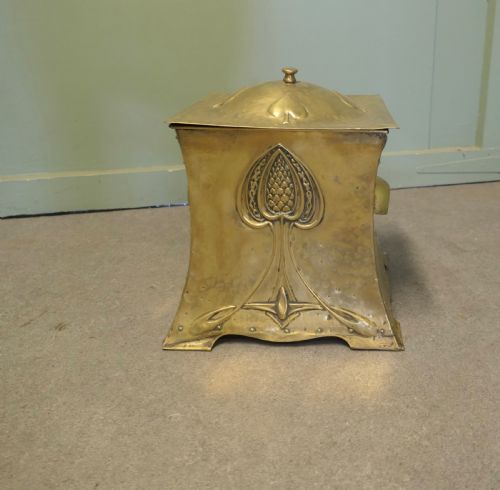
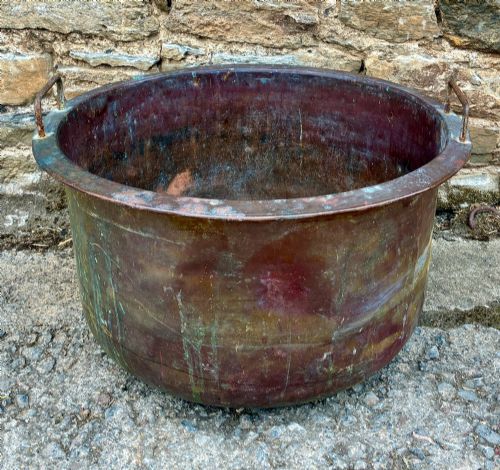
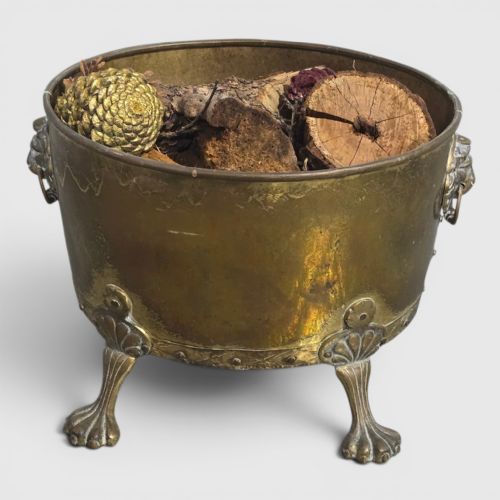
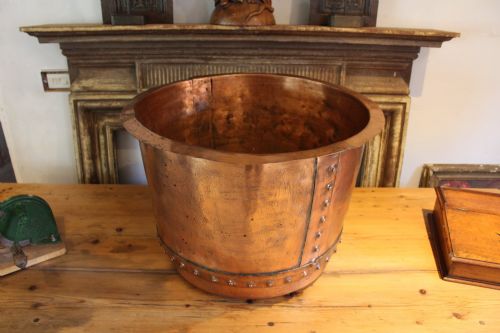
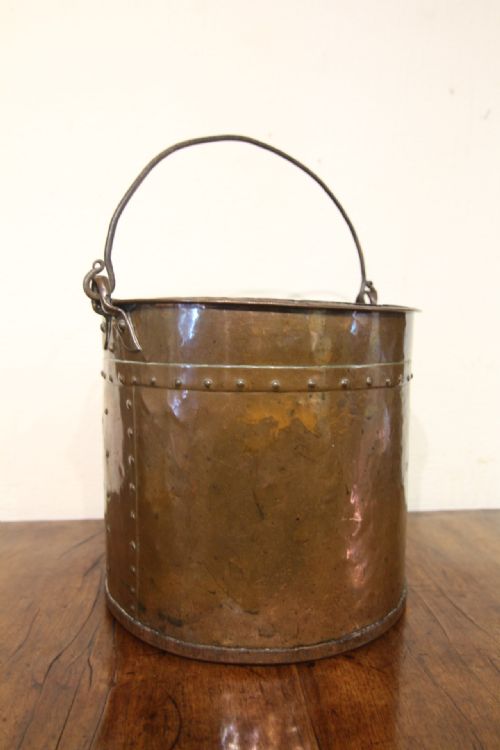
Common configurations include riveted copper bodies, brass swing-handled vessels, and iron-framed storage bins. Many examples incorporate contrasting bands, embossed details, or surface decoration typical of Arts and Crafts and Art Nouveau aesthetics.
Materials and construction methods
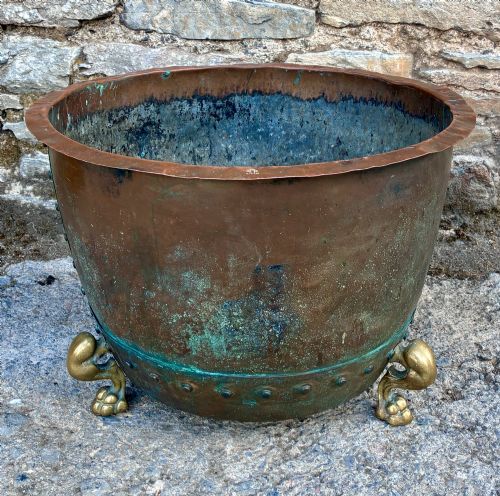
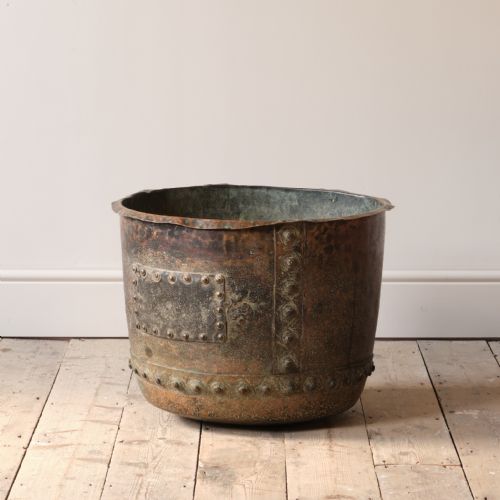
Makers built these containers using heavy-gauge copper, brass, iron, and galvanised metal, often combining materials within a single piece such as a copper body with a brass band or a wrought iron handle. Riveting metal plates together created strong, watertight joints capable of holding heavy loads of coal or wood.
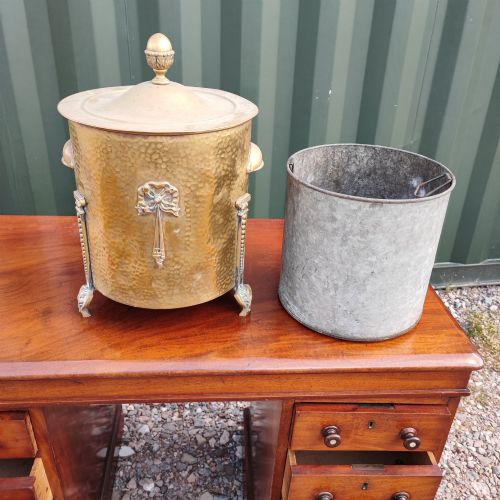
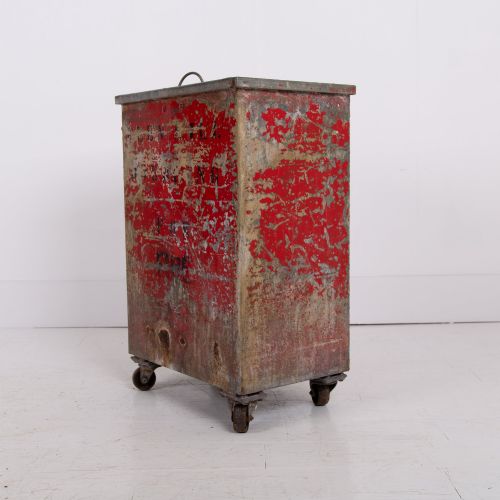
Surface finishes range from polished brass to patinated copper and riveted iron, with some items incorporating hammered textures or embossed tavern scenes. Iron frames, wheels, and swing handles provided structural support and portability for heavy domestic use.
Listings feature items from the nineteenth century through the 1930s, constructed in copper, brass, iron, and galvanised metal.
Evaluating construction and design
Quality in these containers rests on the weight of the metal and the integrity of construction, particularly the strength of riveted seams and the original attachment of handles. Heavier gauges of copper and brass resist denting and maintain their structural form better over decades of service.
Design ambition separates utilitarian vessels from finer decorative pieces, visible in hand-hammered Arts and Crafts surfaces, elaborate embossing, or integrated brass shovels. Original components, such as matching iron frames or period handles, elevate the integrity of the piece.
The Vintage Metal Log Container Glossary
- Coal scuttle
- A bucket or container specifically shaped for carrying and storing coal, often featuring a funnel mouth or hinged lid. Helmet scuttles take their name from their distinctive flared brim.
- Jardiniere
- An ornamental pot or stand for plants and flowers. Many vintage metal containers designed for fireside use are repurposed as plant holders.
- Arts and Crafts
- A design movement emphasising handcraftsmanship, simple forms, and natural materials. Pieces from this style often display visible rivets and hand-beaten metal surfaces.
- Riveted copper
- Metal construction joined by mechanical fasteners before modern welding became standard. This technique creates a distinct industrial texture along the seams.
- Cauldron
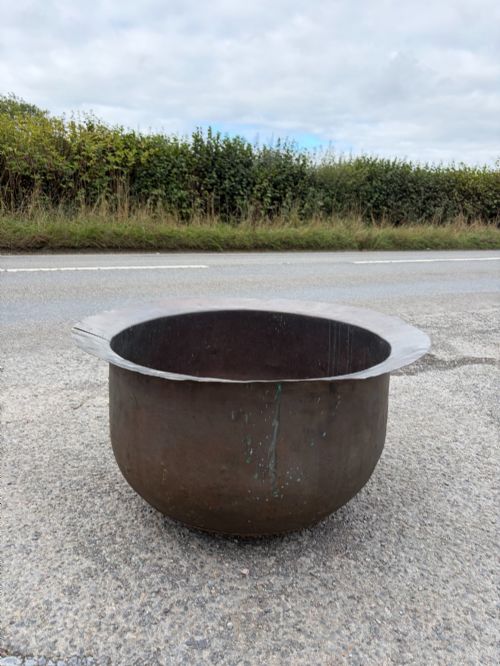
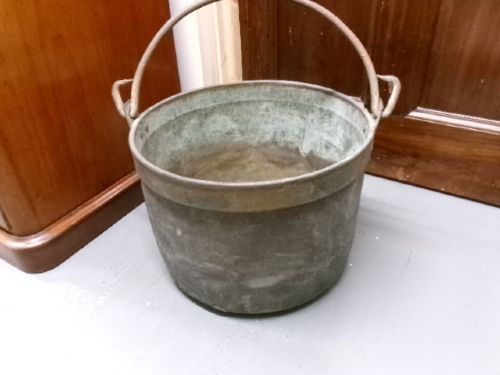
- A large round vessel with a swing handle, traditionally used over an open fire. In domestic settings, these were adapted for fuel storage.
Vintage Metal Log Container: Frequently Asked Questions
What were these metal containers originally used for?
These vessels served as practical coal buckets, log bins, and water carriers in nineteenth and early twentieth-century homes. They transported heavy fuel from outdoor stores to the domestic hearth.
Over time, many of these utilitarian objects shifted into interior decor roles, holding firewood, plants, or magazines.
How do I identify a Victorian metal log container?
Victorian examples frequently feature heavy riveted copper construction, embossed brass bodies, and swing handles made of wrought iron. Stylistic cues often include nineteenth-century manufacturing methods and robust, functional proportions.
Examining the joins, handles, and metal thickness helps distinguish these nineteenth-century pieces from later reproductions.
Can I use an antique metal bucket outdoors?
Many of these pieces, particularly galvanised metal tubs and copper wash boilers, were built to withstand demanding utility tasks. Placing them on patios or in gardens for plants is a common modern adaptation.
Protection from standing water and harsh winter frost preserves the original metal surfaces and structural rivets over time.
What is the difference between a coal scuttle and a log bin?
A coal scuttle typically incorporates a shaped mouth or a helmet form designed to pour small pieces of fuel cleanly into a grate. Log bins are generally wider, open-topped cylinders intended to hold bulk firewood.
Both forms utilise durable metals like brass and copper to handle rough fuel storage.