
Vintage Metal Light Pendant
These vintage metal light pendant options illuminate rooms with period character, drawing on styles from Edwardian designs to French chateau fixtures.
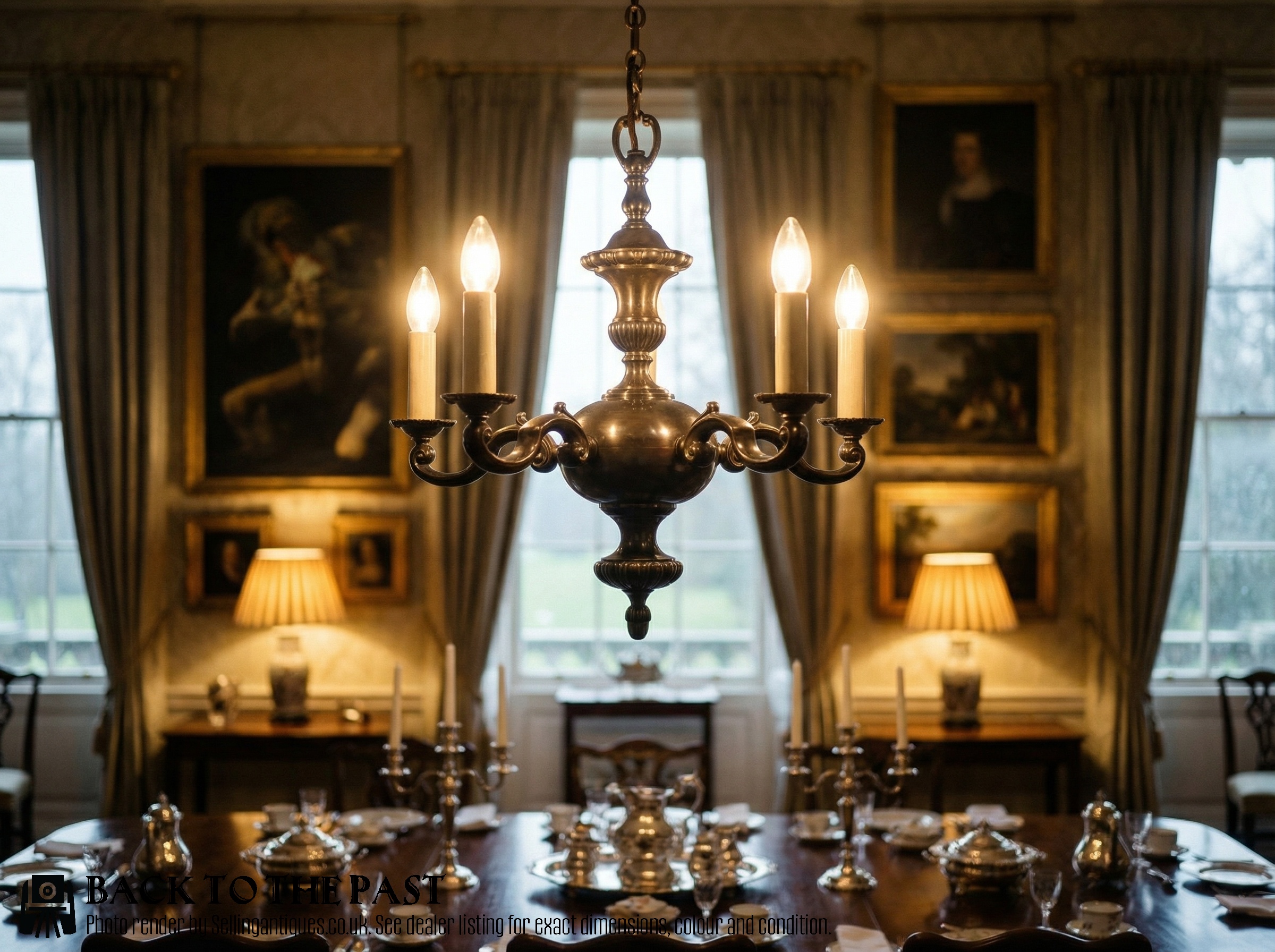
Vintage Metal Light Pendant
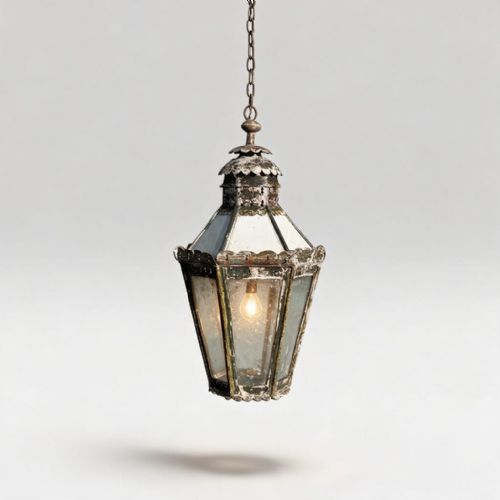
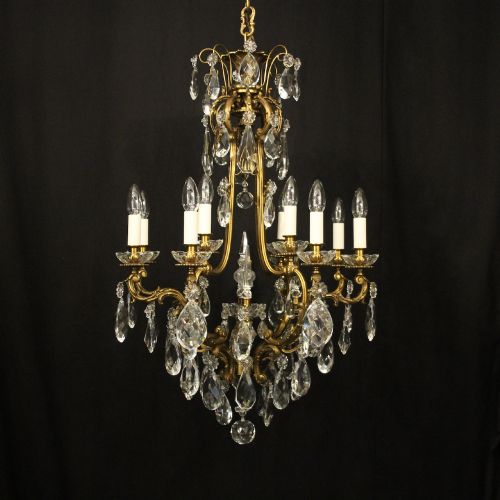
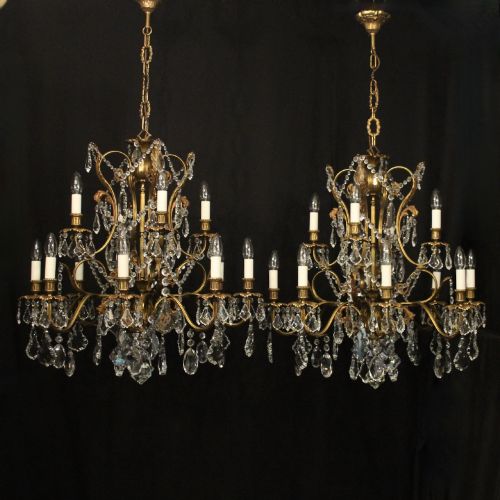
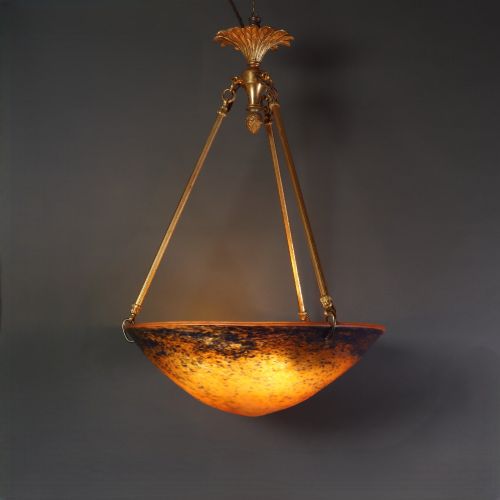
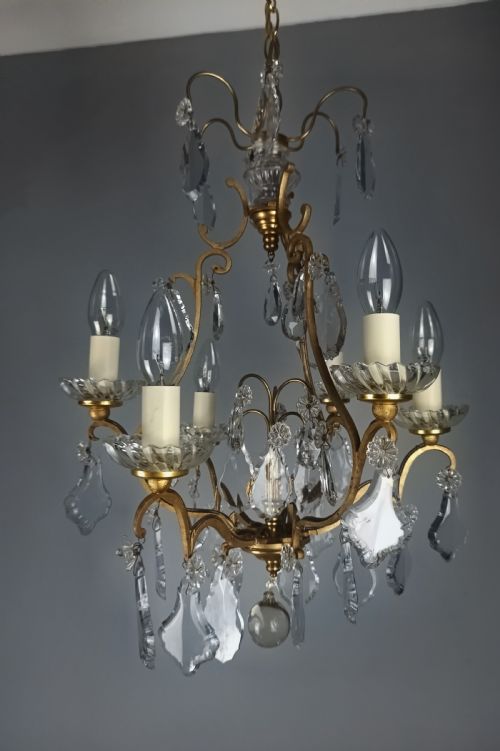
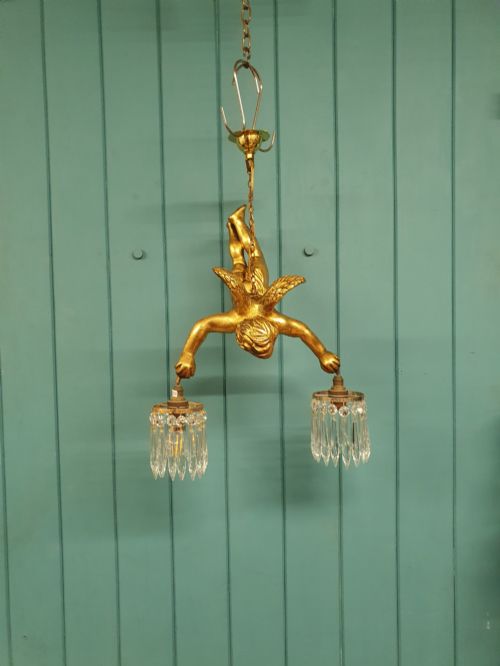
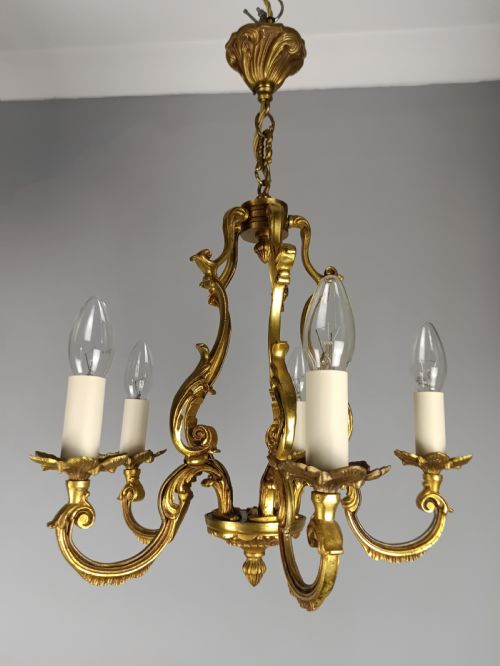
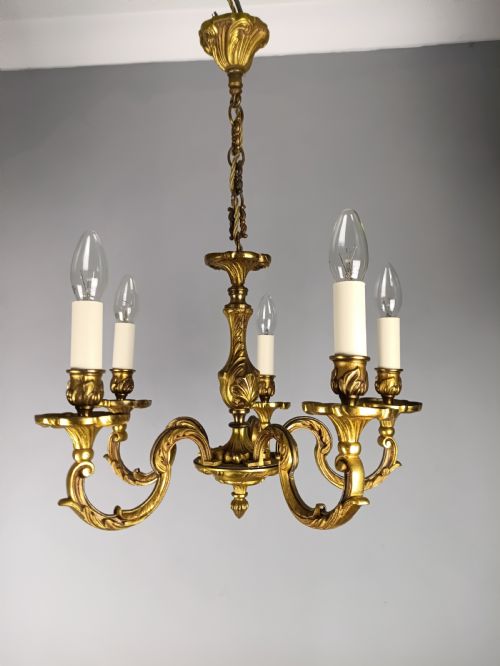
When you search for a vintage metal light pendant, you encounter hanging light fixtures formed from brass, bronze, copper, and wrought iron across the Victorian, Edwardian, and 1930 periods. The selection on this page leans heavily toward French and Italian chandeliers, hall lanterns, and pendant lights.
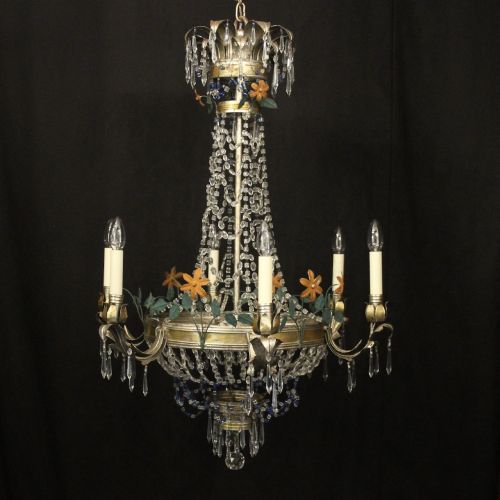
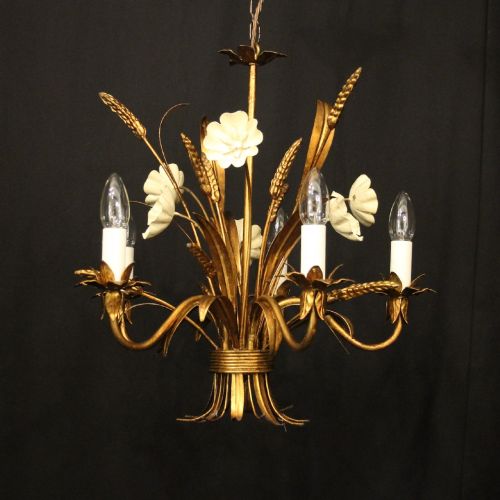
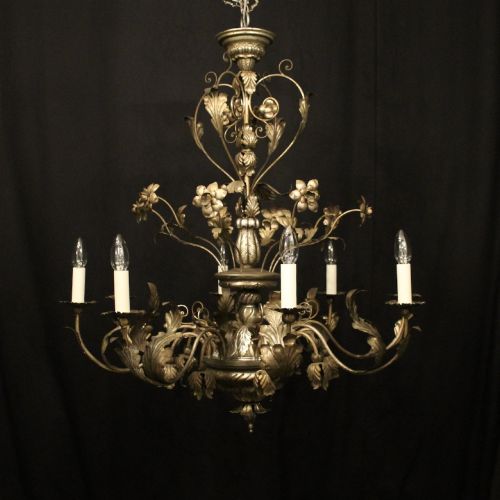
You see examples spanning ornate French Rococo Revival pieces to geometric Art Deco ceiling lights. Many incorporate glass crystals, porcelain flowers, or toleware leaves alongside the metal structure.
How they were made
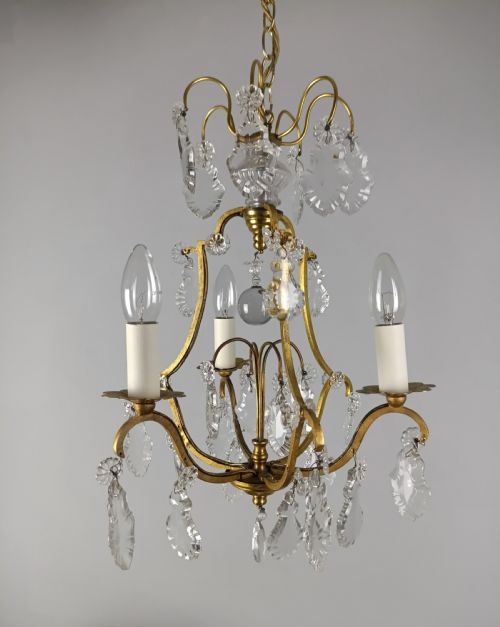
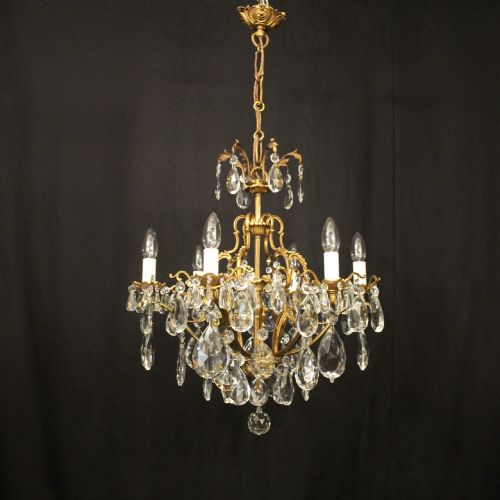
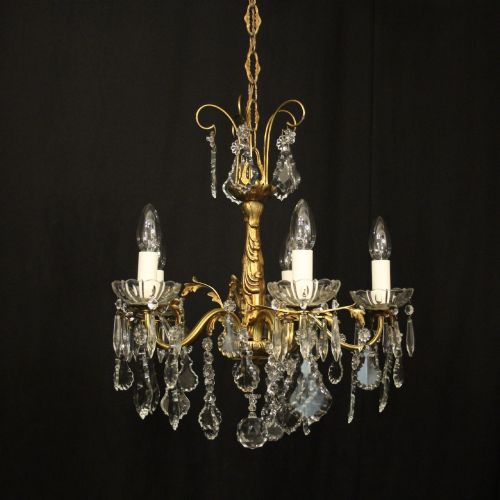
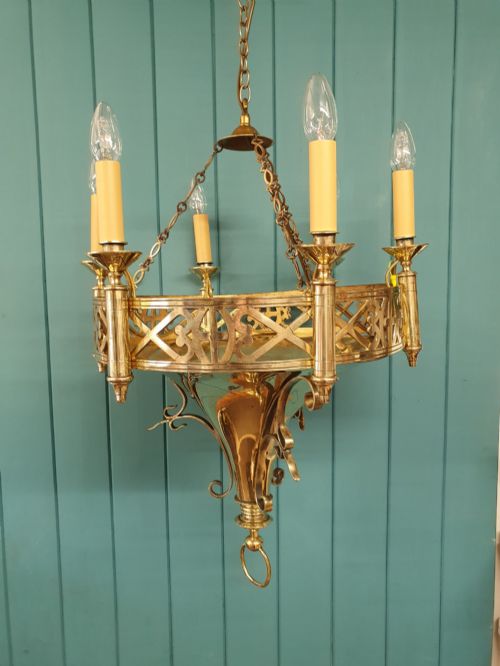
The metalwork in these pieces relies on casting, piercing, and gilt plating applied to brass, bronze, copper, and spelter. Frame structures often take the form of cages or arms supporting glass crystals and hand-blown bullseye glass panels.
Decorative elements involve applied tolewear, painted ceramic flowers, and faceted crystal drops hung from wire or pinned directly into the metal frames.
Object types span ceiling lights, hall lanterns, and pendant lights featuring Italian Florentine and French country styles.
What varies in quality
Quality shows in the weight and definition of the cast metal frame, from deeply chased gilt bronze down to lighter stamped brass and spelter. Hand-finished details such as painted toleware ceramic flowers and hand-blown bullseye glass indicate superior workshop production.
The complexity of the glass dressing, including cut crystal spikes and amber teardrops, distinguishes standard multi-light chandeliers from elaborate regional designs.
The Vintage Metal Light Pendant Glossary
- Toleware
- Painted sheet metal used for decorative floral and leaf motifs on chandelier branches. It brings colour and organic shape to metal lighting.
- Spelter
- A zinc alloy used as a substitute for bronze in decorative castings. It takes gilding well but offers a lighter weight.
- Hall lantern
- An enclosed hanging light designed for corridors and entrance spaces. These often feature pierced brass or glazed glass panels.
- Prism
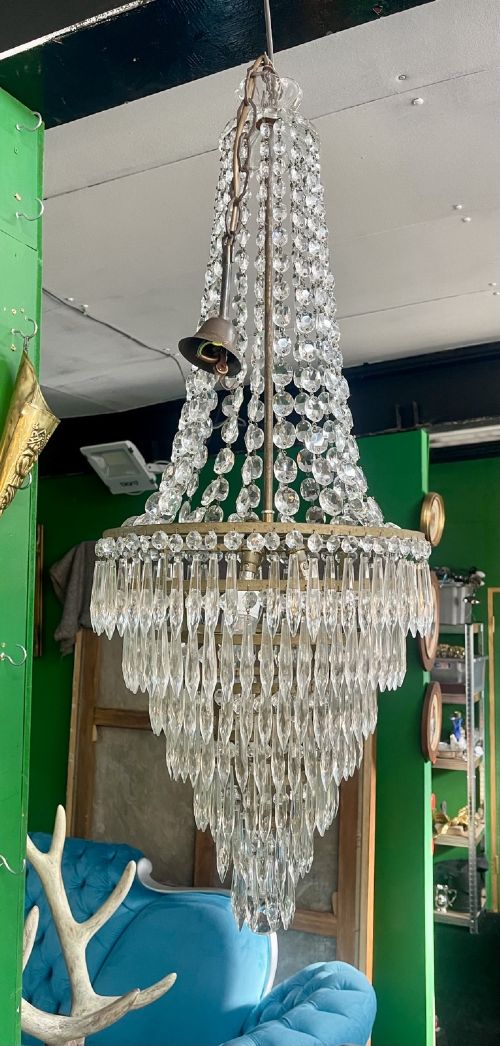
- A cut glass pendant designed to refract light from bulb clusters. Prisms hang in chains or form bag chandeliers.
- Slip shade
- A moulded piece of glass fitted into a metal frame to diffuse light downward. This form appears in Art Deco fixtures.
Vintage Metal Light Pendant: Frequently Asked Questions
How do I hang a heavy metal chandelier safely?
Heavy fixtures require direct support from ceiling joists using a steel hook or mounting bracket rather than relying on plasterboard alone. Professional installation ensures the electrical wiring handles the weight and voltage of multi-bulb frames.
Weight distribution matters because fixtures incorporating cast bronze, iron, and glass crystals exert considerable downward pull on the hanging chain and ceiling rose.
What periods do these metal pendant lights cover?
The listings encompass Victorian, Edwardian, and 1930 pieces alongside 19th-century designs. Styles range from French chateau and Rococo Revival to Moorish Revival and Art Deco.
Manufacturing dates reflect stylistic revivals, meaning Empire and Rococo forms frequently date from later Victorian or early 20th-century workshops.
How do I clean a crystal and metal pendant?
Remove dust with a soft feather duster before wiping metal surfaces with a dry or lightly dampened cloth. Avoid harsh chemical cleaners that strip gilt finishes from brass and bronze.
Crystals can be washed individually in warm water with mild soap while still attached, provided the power is switched off completely and the fixture dries fully.
Are these pendant lights wired for modern use?
Many older fixtures undergo rewiring to meet current electrical standards while retaining their original brass and bronze components. International fittings may require adaptation for domestic bulb sizes.
Checking the lampholders and internal wiring confirms whether professional rewiring is necessary before installation.