


Vintage Metal Garden Gate
A vintage metal garden gate brings solid structure and hard-wrought character to a boundary, giving any path or courtyard an immediate sense of weight and history.
Vintage Metal Garden Gate
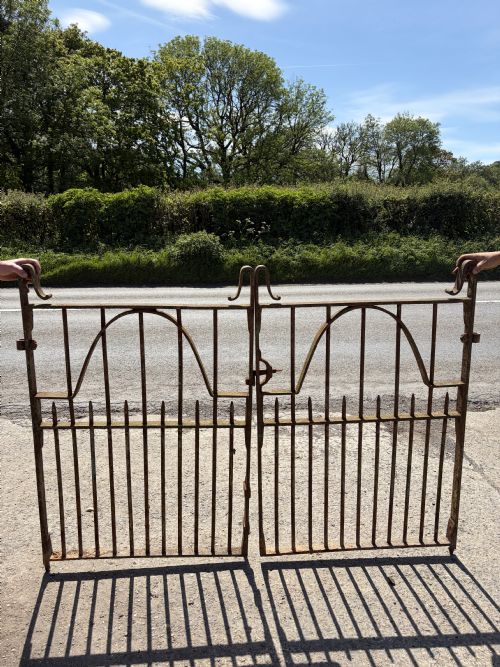
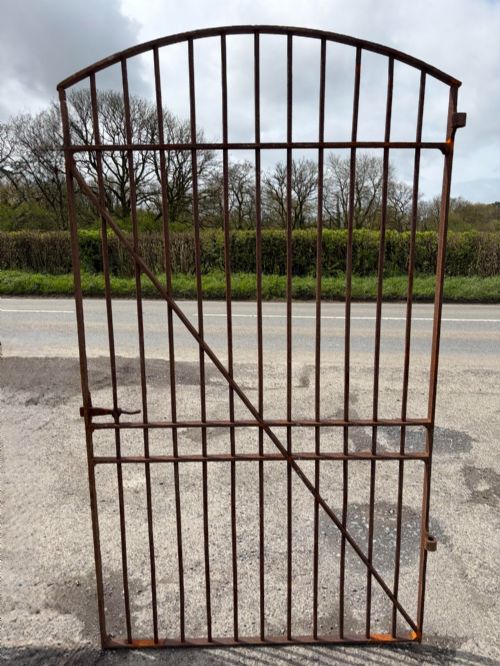
A vintage metal garden gate is a substantial architectural boundary marker built to secure entrances, pathways and estate drives. When searching for a vintage metal garden gate, you encounter heavy pedestrian entrances, taller estate barriers and paired carriage gates.
The versions most frequently met on this page date from the nineteenth century and the early decades of the twentieth century. These architectural salvage pieces originate from periods spanning Victorian, Edwardian and Art Deco designs.
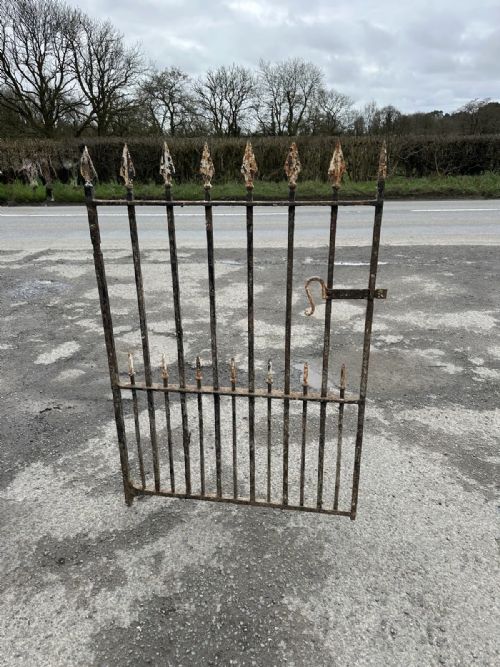
Forms vary from simple strapwork pedestrian entrances to tall arched top barriers and specialised kissing gates. Many examples show the robust hand of a blacksmith, while others utilise structured cast elements.
How they were made
These gates are constructed primarily from wrought iron, cast iron, steel and bronze, often combining forged bars with heavy rivets. Blacksmiths shaped the metal while hot, hammering the iron to form rigid frames and decorative strapwork.
Cast iron components provide structural rigidity and decorative finials, while bronze appears in finer architectural panels and screens. Riveting and traditional joinery secure the heavy bars together without modern welding.
Materials recorded across the inventory include wrought iron, cast iron, steel and bronze.
What varies in quality
Quality rests in the heaviness of the ironwork, the complexity of the strapwork and the integrity of the original forge work. A blacksmith made gate with hand-riveted joints and thick bar stock sits at the top of the range.
Simpler cast components and later machine-made steel frames represent more utilitarian production. The depth of the forging and the survival of original hinge fixings dictate the lasting value of the piece.
Raymond Subes
The Vintage Metal Garden Gate Glossary
- Wrought iron
- A tough, malleable form of iron containing slag inclusions that can be heated and hammered into complex shapes. It resists rusting better than modern steel and shows subtle surface texture from the forge.
- Cast iron
- Iron melted and poured into a mould to create rigid structural elements and decorative details. It offers crisp lines but can be brittle under sharp impacts.
- Strapwork
- Flat bands of metal riveted or welded in overlapping geometric patterns across a gate frame. This technique adds both structural bracing and visual rhythm.
- Kissing gate
- A small enclosure that allows one person to pass through at a time while preventing livestock from escaping. It typically swings within a U-shaped or V-shaped wooden or metal enclosure.
- Architectural salvage
- Building components rescued from older structures for reuse in new settings. These pieces carry authentic patination from decades of exposure to the elements.
Vintage Metal Garden Gate: Frequently Asked Questions
How do I hang a heavy iron gate?
Hanging a heavy vintage gate requires secure anchor posts and robust iron pintles fixed firmly into masonry or timber. The weight demands solid load-bearing fixings to prevent sagging over time.
Professional installation ensures the gate swings true and latches correctly without straining the original hinges and strapwork.
Can I leave the original rust?
Surface oxidation often protects the underlying metal and adds desirable historic character to architectural salvage. Many collectors prefer to stabilize the existing rust with oil or a protective coating rather than stripping it away.
Active flaking or structural rust requires wire brushing and careful treatment to halt degradation while preserving the aged appearance.
How do I tell Victorian ironwork apart?
Victorian ironwork typically displays heavy bar stock, hand-hammered rivets and robust strapwork built for utilitarian strength. The proportions are dense and functional, reflecting nineteenth-century industrial standards.
Later Edwardian and Art Deco examples introduce lighter geometric framing or stylized bronze and iron combinations.
Are these gates suitable for modern gardens?
These architectural pieces integrate well into contemporary landscapes as functional boundaries or decorative garden screens. Their weathered metal surfaces contrast pleasingly with foliage and stone.
Proper sizing and secure mounting allow a historic barrier to function reliably in a modern setting.