
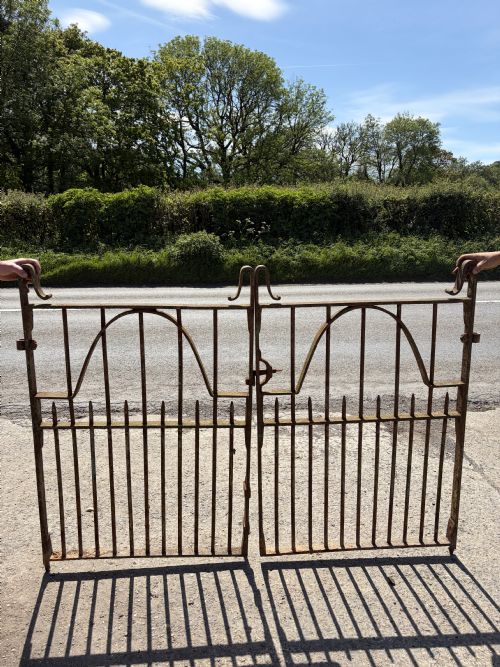
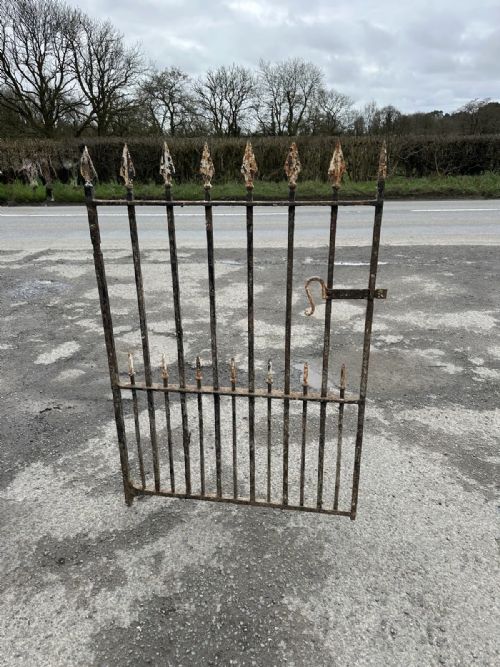


Reclaimed Iron Garden Gate
A reclaimed iron garden gate brings enduring structure to an outdoor space, offering sturdy boundaries shaped by Victorian hands.
Reclaimed Iron Garden Gate
When you search for a reclaimed iron garden gate, you encounter robust architectural salvage shaped across the eighteenth, nineteenth, and early twentieth centuries. These pieces range from modest garden entries to monumental estate gates and driveway gates designed to secure grand properties.
The examples most commonly met on this page belong to the Victorian era, alongside rustic farmhouse and Edwardian designs. Makers utilised durable metals to construct items intended to withstand decades of exposure while retaining distinct decorative qualities.
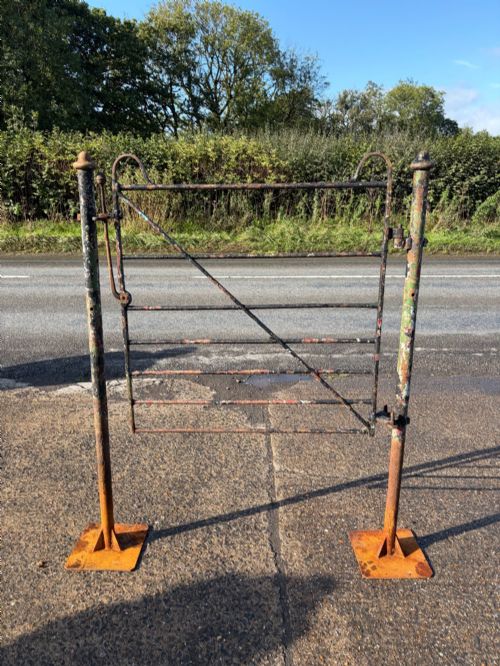
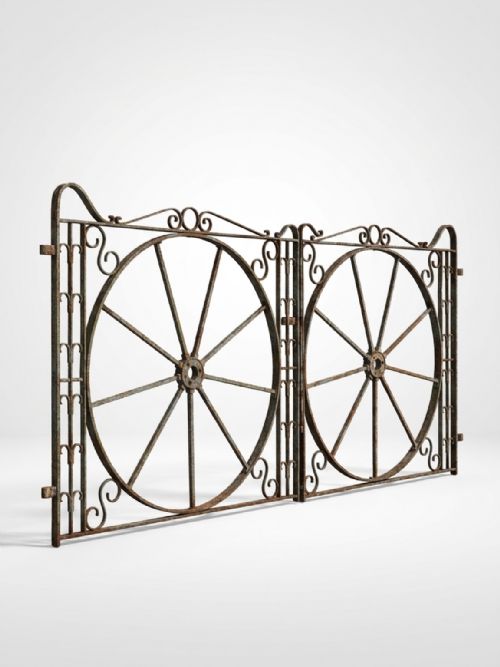
Forms vary from single garden gates and kissing gates to substantial pairs featuring strapwork, scroll panels, and trident details. Each object carries the weathered patina of its history, making it a functional centrepiece for contemporary landscaping.
How they were made
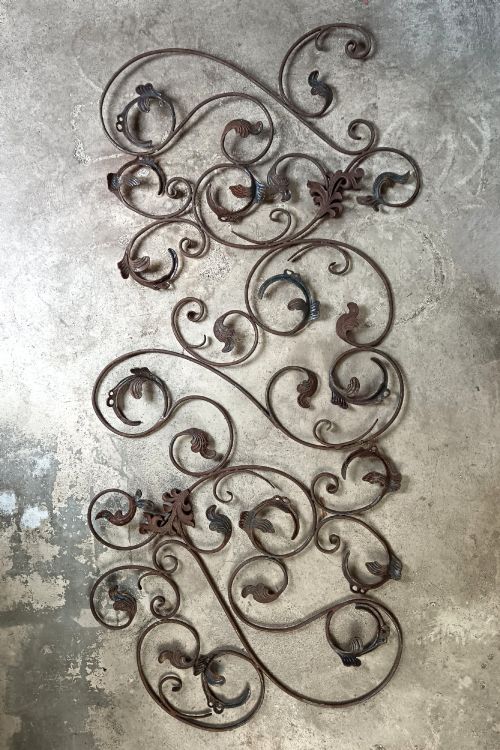
Blacksmiths and foundries shaped these items using wrought iron, cast iron, steel, and bronze. Wrought iron pieces rely on hand-forged strapwork and scroll panels, bending tough metal into durable structures.
Cast iron elements introduced intricate patterns and repeating motifs to larger estate gates and architectural screens. Artisans combined these techniques to balance heavy load-bearing frames with refined decorative details.
The listings here span the eighteenth century, the Victorian era, and the early twentieth century, utilising wrought iron, cast iron, bronze, and steel.
What varies in quality
The distinction between standard boundaries and exceptional architectural salvage lies in the ambition of the design and the weight of the metal. Monumental estate gates display complex strapwork and heavier gauge iron compared to simpler domestic garden entries.
Execution of detail separates fine craftsmanship from routine production, evident in how cleanly scroll panels are forged and how robustly the hinges and frames are joined. The depth of historical weathering also influences the character of the surface.
Raymond Subes
The Reclaimed Iron Garden Gate Glossary
- Wrought iron
- A tough, malleable iron that can be heated and hammered into decorative scrolls and structural straps. This material defines the majority of nineteenth-century agricultural and estate gates.
- Cast iron
- Molten metal poured into a mould to create rigid, ornate decorative components. It appears alongside wrought iron in heavier gates and architectural panels.
- Strapwork
- Flat bands of metal riveted or joined to reinforce structural frames. It forms the geometric backbone of many nineteenth-century estate gates.
- Kissing gate
- A small swinging gate enclosed in a U-shaped or V-shaped pen that allows one person through at a time. These served practical boundary roles in rural paths and estates.
Reclaimed Iron Garden Gate: Frequently Asked Questions
How do I hang a heavy iron gate?
Hanging a heavy architectural gate requires substantial masonry piers or reinforced timber posts capable of supporting the load without sagging.
Professional installers typically use adjustable heavy-duty hinge pins secured directly into stone or brickwork to ensure the structure swings truly.
How do I maintain weathered iron outdoors?
Outdoor iron benefits from gentle cleaning to remove debris, followed by stabilizing treatments that halt active corrosion without stripping the historic patina.
Applying a specialised clear wax or protective oil helps preserve the weathered surface against damp weather and seasonal changes.
Can these gates be resized for modern openings?
Altering historic ironwork requires careful smithing work to shorten or widen frames without compromising the structural integrity of the original strapwork.
Many buyers prefer to adapt their garden openings to fit the exact dimensions of the antique gate rather than cut the metal.
How do I date a nineteenth-century gate?
Dating relies on observing the combination of materials, such as early hand-forging techniques versus later standardised rolled steel components.
Stylistic markers like Victorian scrollwork, trident finials, or Art Deco bronze elements also provide clear clues to the decade of origin.