



Vintage Metal Deed Box
These vintage metal deed box examples are robust iron and steel containers built to secure valuable documents.
Vintage Metal Deed Box
When you search for a vintage metal deed box, you encounter heavy storage containers designed for legal papers, documents, and keepsakes. These items span from the 18th century through the Victorian era and into the early 20th century.
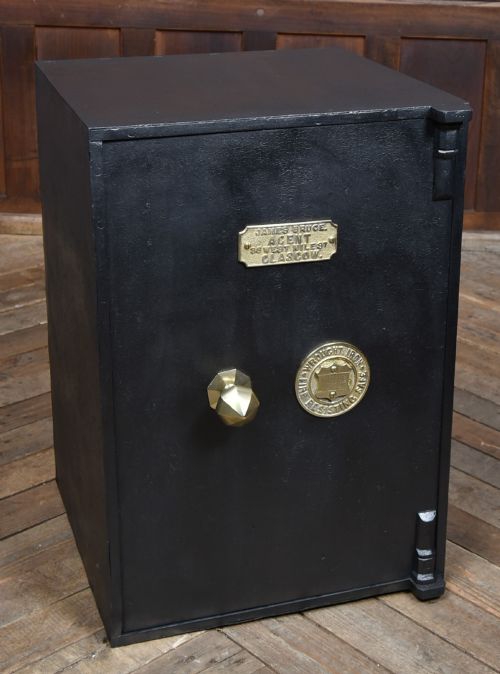
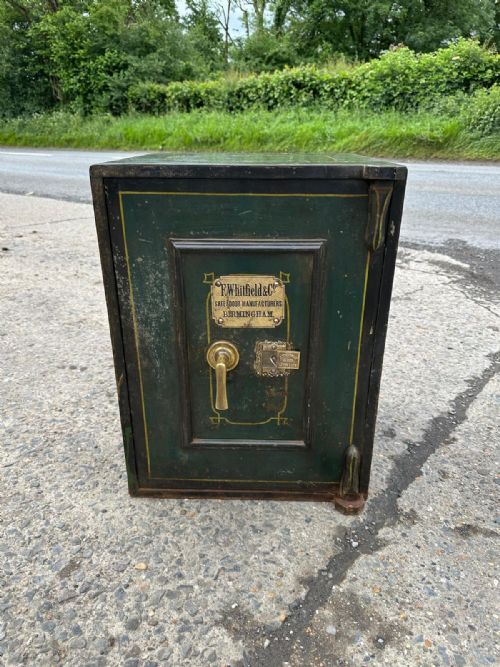
The selections on this page include safes, strongboxes, storage tins, and fall-front boxes. You will frequently find Victorian pieces alongside industrial examples and painted iron or toleware variants.
Origins range across English workshops and Scottish makers, with occasional Scandinavian folk art metal-bound boxes appearing in the selection. Forms vary from simple storage chests to complex patent safes with intricate locking mechanisms.
How they were made
Constructed primarily from sheet metal, cast iron, wrought iron, and steel, these boxes rely on durable metallic fabrication. Makers shaped tinplate and heavy plate iron to withstand heavy daily use in offices and homes.
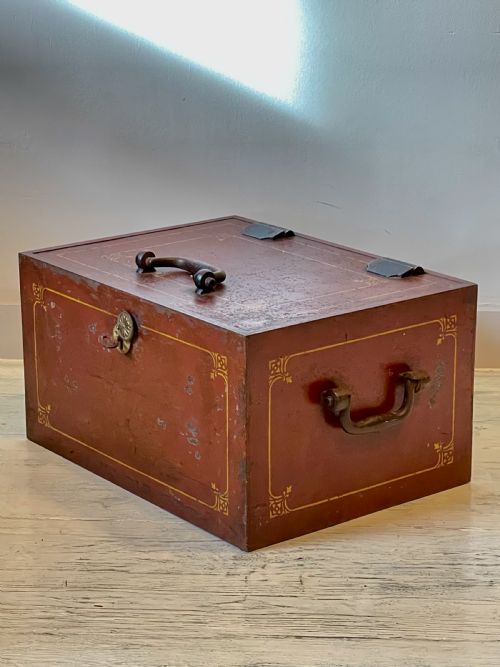
Surface finishes include original paintwork, japanning, and decorative toleware application. Many examples feature exposed metal banding, reinforced corners, and integrated carrying handles riveted directly to the body.
Vintage Metal Deed Box Retail Price Guide 2026
Typical asking prices for vintage metal deed box among the pieces listed under this phrase on Sellingantiques today, from the lower quarter to the upper quarter. They describe what is for sale here now, not the wider market.
Solicitors once stacked these colourful tins in floor-to-ceiling rows, turning dusty legal offices into towers of bright tinplate.
What varies in quality
Quality rests in the heaviness of the gauge, the complexity of the internal locking mechanism, and the survival of original surface decoration. Finer pieces display sophisticated patent locks by established makers rather than simple latches.
The preservation of original painted surfaces, lettering, and interior compartments distinguishes standard utility boxes from superior examples. Master work is evident in tight tolerances, dovetailed or cleanly joined plate, and functional brass fittings.
James Bruce Glasgow·F Whitfield And Co·Milners of Liverpool·George Price
The Vintage Metal Deed Box Glossary
- Deed box
- A secure metal container historically used by solicitors and merchants for holding land indentures and important papers.
- Toleware
- Metalware painted and lacquered, often featuring decorative motifs typical of 19th-century domestic storage tins.
- Strongbox
- A heavily reinforced security chest built with thick iron or steel to protect valuables from theft or fire.
- Japanning
- A type of durable dark varnish finish applied to metal surfaces to imitate Japanese lacquerwork.
- Tinplate
- Thin sheet steel or iron coated with tin to prevent rusting, common in document trunks.
Vintage Metal Deed Box: Frequently Asked Questions
What were deed boxes used for?
These containers held legal deeds, financial certificates, and family records in solicitors' offices and domestic studies.
Their robust construction kept damp and unauthorized hands away from sensitive paperwork before modern filing systems existed.
How do I date a metal box?
Dating relies on construction methods, lock types, and surface finishes like early paint or japanning.
Victorian and 18th-century pieces often feature hand-riveted plates and simpler lever locks compared to later patent mechanisms.
Are keys usually included?
Many vintage boxes survive without their original keys due to the passage of time and office moves.
Locks can sometimes be opened or fitted by a specialist locksmith if access to the interior is required.
How should I clean my box?
Dust gently with a dry cloth and preserve original painted surfaces without harsh chemical solvents.
Light application of wax can protect exposed iron and steel surfaces from future atmospheric moisture.