





Vintage Medical Wall Art
These vintage medical wall art pieces range from eighteenth-century anatomical engravings to early twentieth-century trade signs, offering scientific detail and striking visual composition for the home.
Vintage Medical Wall Art
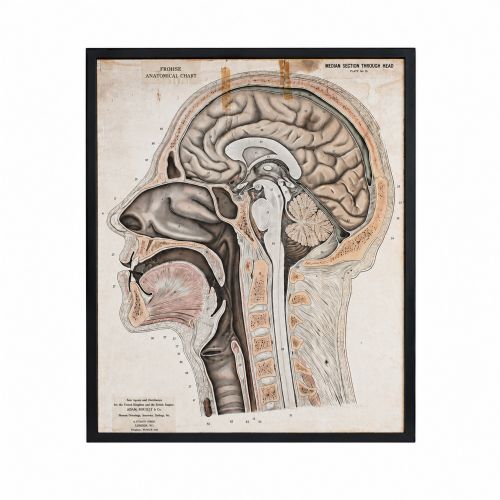
Vintage medical wall art encompasses historical illustrations, educational charts, trade signs, and portraits documenting medical practice and human anatomy across several centuries. These works include framed prints, hand-coloured lithographs, ink drawings, and oil paintings created to educate, record, or advertise.
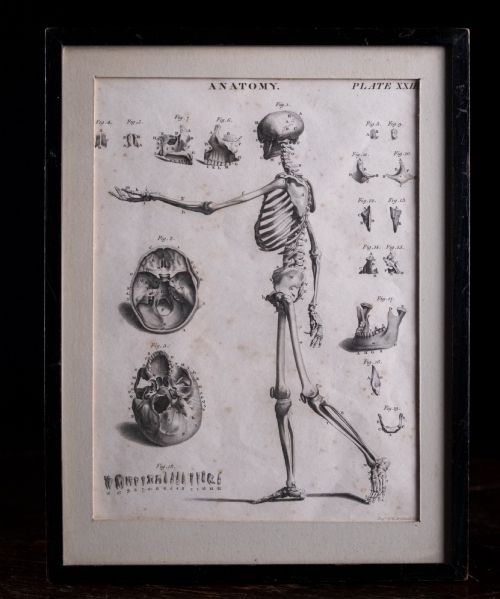
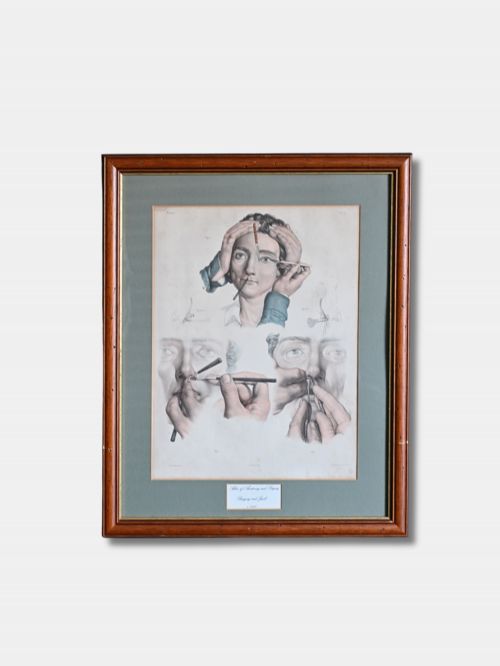
Buyers encounter eighteenth-century copperplate engravings, mid-nineteenth-century French procedures, and twentieth-century school charts or chemist signs. These diverse objects share a focus on scientific observation, skeletal structures, and medical practitioners.
The selection on this page relies upon period materials like paper, canvas, and glass, housed within wooden or giltwood frames. Each piece represents a specific intersection of art and scientific history, spanning Georgian, Victorian, and modern movements.
How they were made
Makers utilised copperplate engraving, lithography, and hand-colouring on paper to produce detailed anatomical plates, often publishing them as series or textbook illustrations. Artists also applied ink and oil paints directly onto canvas for portraits and fine art.
Trade signs and charts required sturdy wood backings, lead detailing, or double-sided construction to withstand commercial use in chemists and lecture halls. Craftsmen framed these paper works using wood and giltwood to protect the delicate media beneath glass.
Vintage Medical Wall Art Retail Price Guide 2026
Typical asking prices for vintage medical wall art among the pieces listed under this phrase on Sellingantiques today, from the lower quarter to the upper quarter. They describe what is for sale here now, not the wider market.
Listings feature paper, canvas, and glass, spanning periods from the eighteenth century to the mid-twentieth century.
What varies in quality
The precision of the draftsmanship and the clarity of the anatomical detailing distinguish the finest examples from simpler works. Master engravers like Jan Wandelaar or Andrew Bell achieved remarkable accuracy in musculature and skeletal proportions.
Condition and originality dictate the standing of a piece, particularly the preservation of early hand-colouring on paper and the authenticity of period wooden frames. Intact provenance, such as named medical subjects or complete series sets, elevates the historical significance.
Andrew Bell·W & A K Johnston·Jan Wandelaar·Victor Bonney
The Vintage Medical Wall Art Glossary
- Lithography
- A planographic printing process using a flat stone or metal plate on which image areas are greasy and non-image areas ink-repellent. This technique allowed for the mass production of detailed medical illustrations.
- Engraving
- A printmaking method where an artist cuts lines into a metal plate to hold ink. Eighteenth-century anatomical plates relied on this technique for fine, permanent scientific lines.
- Giltwood
- Wood that has been treated with gold leaf or gold paint. Frames utilising this finish often house formal portraits and important scientific plates.
- Trade sign
- A board or hanging object used by businesses to advertise their services. Early twentieth-century examples identify chemists and apothecaries.
- Hand-coloured
- A print that has had colour applied by hand after the initial black-and-white printing process. This adds individual artistic value to botanical and anatomical plates.
Vintage Medical Wall Art: Frequently Asked Questions
How do I hang heavy framed charts?
Ensure your wall fixings match the weight of the wood and glass frames, utilising appropriate wall plugs and screws.
For large educational charts, professional picture hooks distribute the load safely across the wall structure.
Are these charts original or modern reproductions?
The pieces listed originate from the eighteenth, nineteenth, and twentieth centuries as recorded in the periods and materials.
Examine the paper texture, ink fading, and framing methods to confirm historical age.
How should I protect paper art from light?
Keep historical paper and hand-coloured lithographs away from direct sunlight to prevent the ink and pigments from fading.
Using museum-grade glass with UV protection offers an extra layer of conservation for sensitive works.
What is the difference between an engraving and a lithograph?
Engravings are incised into metal plates and produce sharp, precise lines ideal for detailed anatomical structures.
Lithographs rely on chemical processes between grease and water, often permitting softer tones and hand-applied watercolours.