



Vintage Medallion Rug
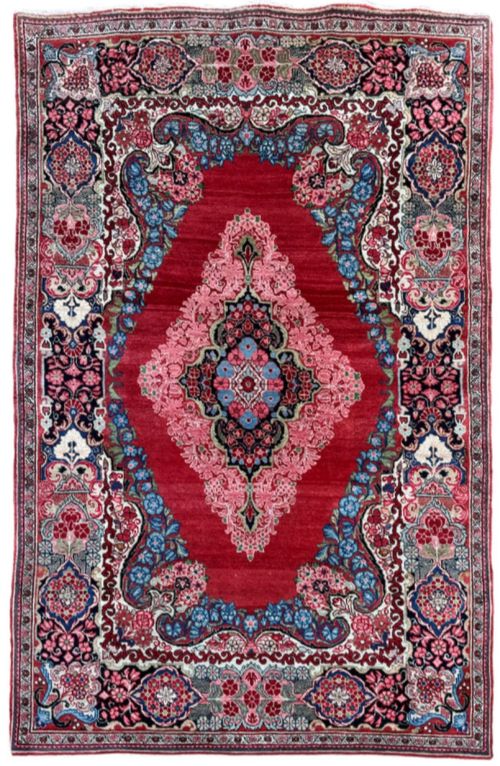
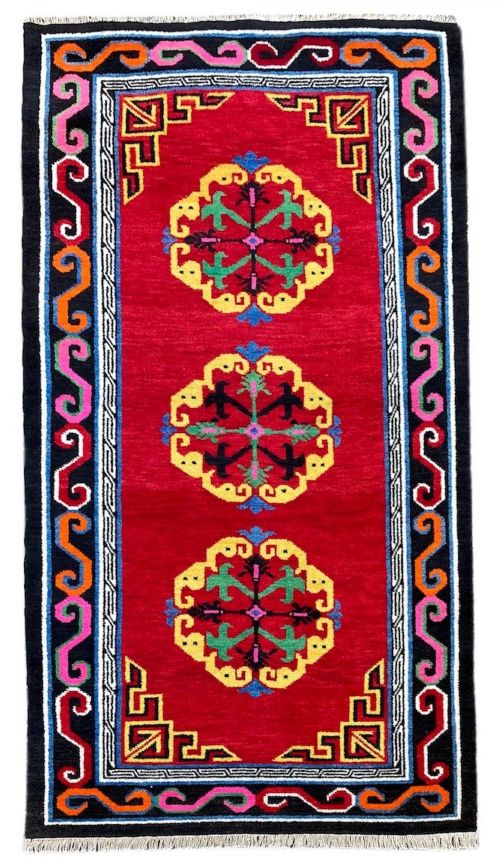
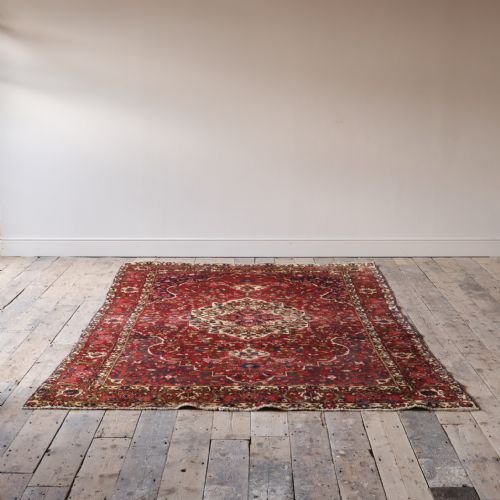
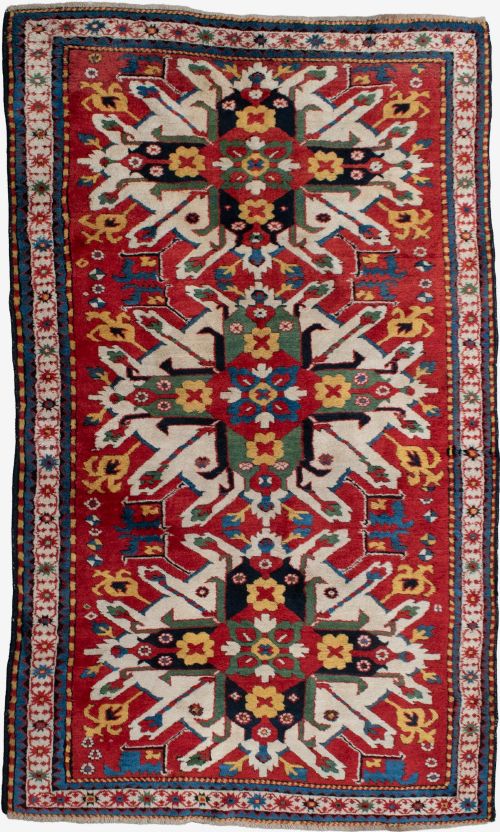
A vintage medallion rug brings structured central geometry and deep regional character into a room.
Vintage Medallion Rug
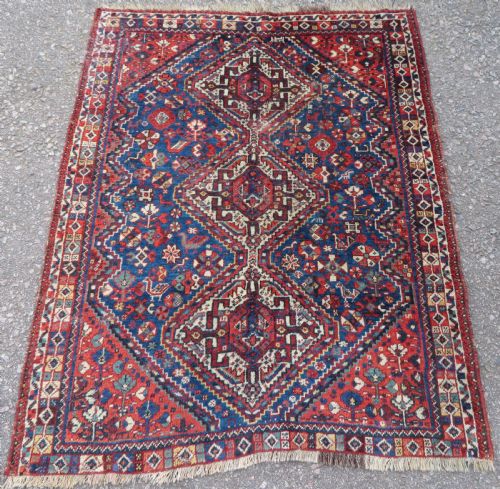
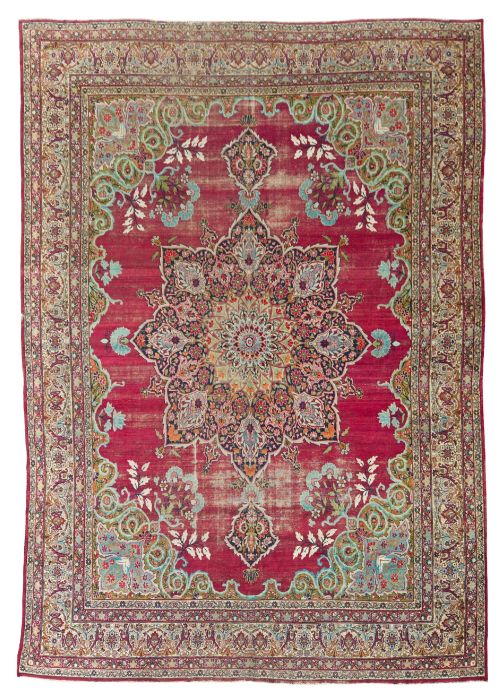
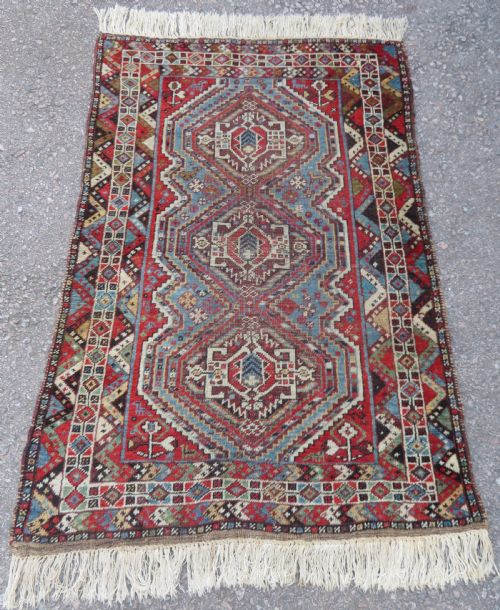
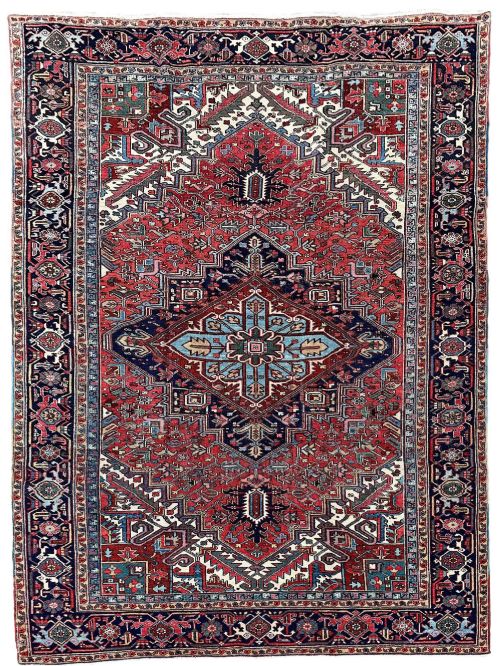
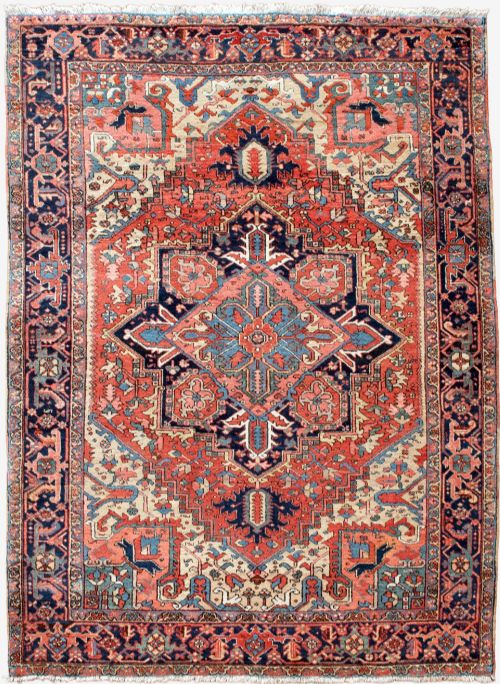
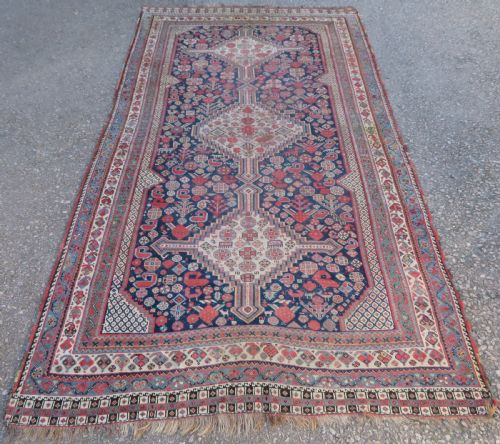
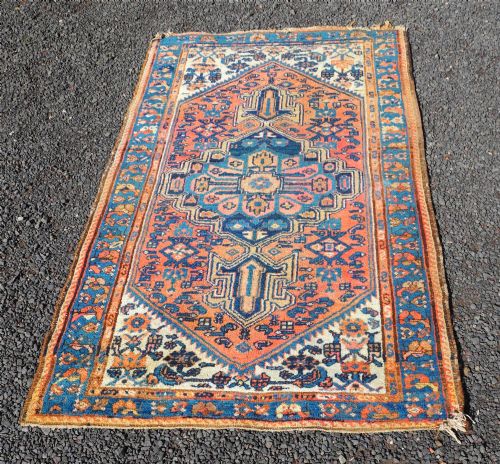
When you search for a vintage medallion rug, you are looking at floor coverings defined by a prominent central motif set against a patterned field. These pieces span the late nineteenth century through to the mid-twentieth century, originating primarily from Persian, Caucasian, Anatolian, and Tibetan weaving traditions. The selection includes everything from large hearth-sized carpets and room-scale carpets down to narrower runners and compact area rugs.
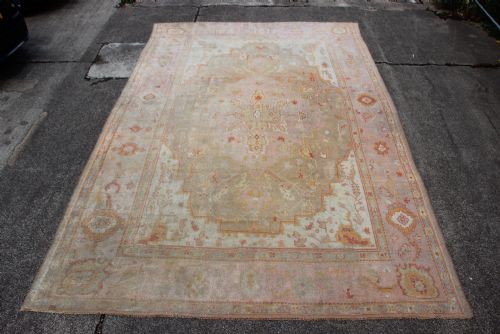
On this page, you are most likely to meet pieces originating from Persian workshops and villages such as Heriz, Hamadan, and Saroukh, alongside Caucasian Kazak and Anatolian Oushak productions. The forms vary from geometric tribal compositions to formal curvilinear designs. Many date from the decades around nineteen-hundred and nineteen-twenty, utilising traditional formats adapted for domestic interiors.
Materials and Construction
The primary material across these textiles is wool, frequently knotted by hand onto sturdy cotton foundations. Some specific regional examples incorporate camel wool fields or introduce fine silk highlights to accentuate particular motifs within the design. These natural fibres are dyed using traditional methods that yield mellow, deep tones over decades of ageing.
Construction relies on hand-knotting techniques executed across various regional densities, from coarse tribal weaves to tightly packed village carpets. The structures range from standard rectangular area formats to long runners and specific regional fragments. Edge finishes and pile heights vary according to the provenance, reflecting the practical requirements of nomadic or workshop production.
Listings span periods from the nineteenth century through the nineteen-sixties, featuring wool, cotton, silk, and camel wool.
Factors That Distinguish Quality
Quality in these textiles rests upon the clarity of the central design and the precision of the hand-knotting. Pieces that rise to the top of the range display balanced proportions in the medallion and crisp transitions in the surrounding geometric or floral motifs.
The integrity of the wool and the depth of the dye work further separate standard examples from finer specimens. Well-preserved pile density and harmonious natural colour palettes indicate superior materials and skilled execution at the loom.
The Vintage Medallion Rug Glossary
- Medallion
- The central ornamental motif dominating the field of the rug. It typically takes a geometric, star, or lobed form.
- Pile
- The upright yarn loops or cut ends that form the soft surface of the textile. Hand-knotted rugs derive their texture from this visible wool layer.
- Runner
- A long, narrow carpet format designed for hallways, staircases, or corridors. These pieces measure significantly longer than they are wide.
- Kilim
- A flat-woven carpet lacking a pile, produced by tightly interweaving warp and weft threads. These items offer a smooth, durable surface.
- Warp
- The stationary vertical threads stretched across the loom upon which the knots are tied. Cotton and wool are the standard materials used for this structural foundation.
Vintage Medallion Rug: Frequently Asked Questions
Where should I place a runner rug?
Runners suit long, narrow spaces such as hallways, corridors, and galleys. They also function effectively alongside beds or in narrow kitchen spaces.
Ensure you measure the floor area carefully, leaving a uniform border of exposed flooring around the edges of the textile.
How do I care for wool floor coverings?
Regular gentle vacuuming without a rotating brush roll prevents dust accumulation within the pile. Address spills promptly by blotting with a clean, dry cloth rather than rubbing.
Professional cleaning suited for antique textiles maintains the integrity of the natural fibres and dyes over time.
How do I identify a tribal design?
Tribal designs typically feature bold geometric shapes, stylised animals, and repeated cruciform motifs rather than complex curved florals. These patterns reflect the local folklore and weaving traditions of nomadic groups.
Asymmetrical details and spontaneous colour shifts often indicate village or tribal rather than urban workshop production.
What is an Oushak carpet?
Oushak carpets originate from the town of Ushak in western Anatolia and are known for their softer wool and muted colour palettes. They frequently employ large-scale floral or geometric medallion layouts.
These pieces typically present a more relaxed, luminous appearance compared to tightly packed Persian counterparts.