




Vintage Mechanical Folk Art
Vintage mechanical folk art brings movement and character into a room through hand-operated toys, figures, and working models.
Vintage Mechanical Folk Art
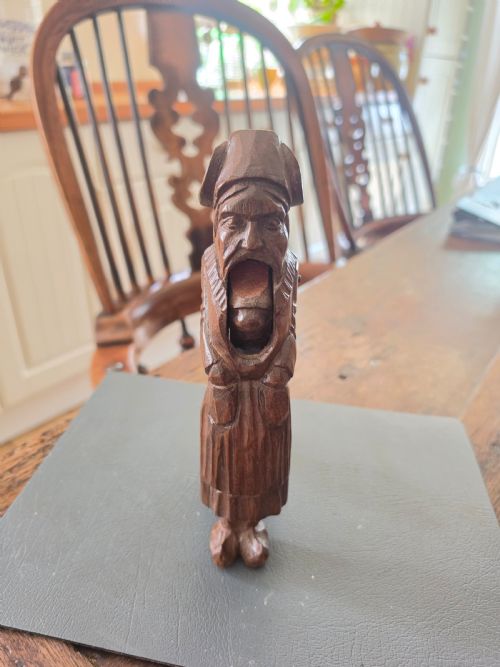
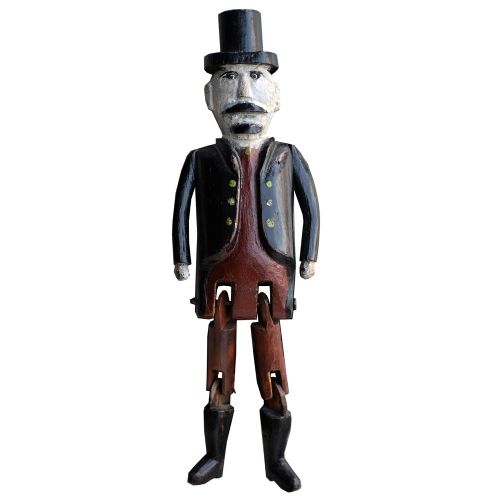
Vintage mechanical folk art encompasses items created outside formal academic traditions that incorporate moving parts, levers, or clockwork mechanisms. The pieces found here span the nineteenth century and the early twentieth century, taking forms such as nutcrackers, jigger dolls, balance toys, and working windmills.
Buyers seeking vintage mechanical folk art often encounter regional pieces originating from England, America, the Netherlands, and the Black Forest. These objects range from cast iron money banks to carved wooden figures and kinetic sculptures designed for simple amusement.
How they were made
Maker construction relies heavily on organic and industrial materials, combining carved hardwoods like oak, walnut, and pine with sheet metal, painted iron, and cast iron. Wood carvers shaped figures by hand, while metalworkers fabricated balance arms, cogs, and clockwork gear assemblies.
Surfaces often feature original paint or applied pigments over wood and metal substrates to highlight facial expressions and costume details. Mechanical linkages within these sculptures connect external levers or weights to internal pivots, allowing the figures to teeter, rock, or turn when activated.
Current listings feature materials ranging from painted iron and sheet metal to solid oak and walnut.
What varies in quality
Quality rests upon the ingenuity of the mechanism and the crispness of the carving or casting. Pieces with complex linkages or original clockwork movements that function smoothly stand apart from simpler, static items.
The survival of original painted surfaces significantly influences the integrity of a piece. Examples retaining vibrant, untouched pigment demonstrate better preservation than those with heavy overpainting or replacement components.
The Vintage Mechanical Folk Art Glossary
- Jigger doll
- A small articulated wooden figure designed to dance on a board when a person taps or vibrates the surface. These toys rely on loose joints to create erratic, lifelike motion.
- Whirligig
- A wind-driven kinetic sculpture featuring rotating propellers or arms that move in the breeze. Makers constructed these items for outdoor or garden display using painted wood and sheet metal.
- Balance toy
- A gravity-operated sculpture that rocks or pivots on a single point without tipping over. Weights placed at specific angles create the illusion of perpetual motion.
- Black Forest
- A region in Germany known for intricate woodcarvings, particularly nineteenth-century nutcrackers and animal figures. These items utilise local walnut and display deep relief carving.
Vintage Mechanical Folk Art: Frequently Asked Questions
How do mechanical folk art pieces work?
Most pieces rely on manual operation through levers, pull-strings, or balancing weights rather than complex motors. Users activate the movement by turning a crank, tapping a base, or setting the sculpture in a draught.
Clockwork examples utilise internal springs that require a key to wind the mechanism. The stored energy then drives small gears and linkages to animate the figures over a short duration.
How do I care for vintage moving parts?
Keep these items away from direct sunlight and damp environments to prevent the wood from warping and the metal parts from rusting. Handle the moving linkages gently to avoid stressing historical joints and pinned connections.
Avoid applying modern lubricants to antique clockwork or dry wooden pivots unless advised by a specialist conservator. Gentle dusting with a soft brush is usually sufficient for regular maintenance.
How can I tell the period of a piece?
Dating relies on examining the material composition, tool marks, and style of the paintwork. Nineteenth-century examples often feature hand-forged iron and deep hand-carved wood, while early twentieth-century pieces may incorporate stamped sheet metal and commercial pigments.
Patina accumulated through handling and age offers strong clues to authenticity. Comparing the construction methods to dated regional examples helps narrow down the decade of manufacture.