








Vintage Measuring Instrument
These vintage measuring instrument examples combine precision engineering with functional design, offering tactile history for collectors of scientific instruments.
Vintage Measuring Instrument
When you search for a vintage measuring instrument, you encounter tools designed to quantify liquids, air, distance, and weight across multiple historical periods. These objects span simple domestic items to precise governmental standards and meteorological apparatus.
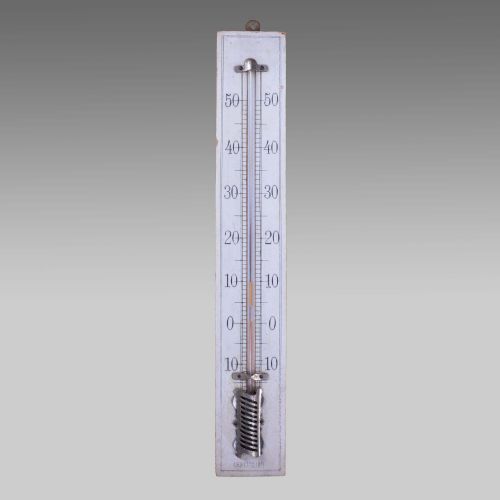
You are most likely to meet 19th century brass and wood pieces on this page, including balances, slide rules, and thermometers. Scientific instruments dominate the selection, reflecting industrial and domestic standardisation.
How they were made
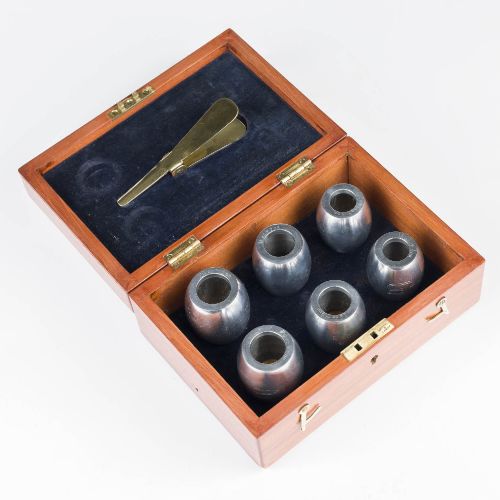
Maker workshops utilised solid brass and dense hardwoods like mahogany and boxwood to construct durable housing for delicate components. Glass plates and steel indicators provided accurate visual readings within fitted velvet-lined timber cases.
Engraved scales and calibrated markings were laboriously hand-scribed onto metal surfaces to ensure precision in professional trade and scientific contexts.
Vintage Measuring Instrument Retail Price Guide 2026
Typical asking prices for vintage measuring instrument among the pieces listed under this phrase on Sellingantiques today, from the lower quarter to the upper quarter. They describe what is for sale here now, not the wider market.
What varies in quality
The distinction between standard commercial production and superior quality rests in the clarity of maker signatures, original fitted cases, and complete accessory sets. Instruments bearing specific county allocations or governmental verification marks demonstrate higher precision standards.
Materials dictate the tactile experience, where heavy cast brass and finely figured mahogany outlast simpler metal constructions.
De Grave Short And Co·W And S Jones·Negretti And Zambra·J Hicks·Edward Roberts·W H Harling
The Vintage Measuring Instrument Glossary
- Anemometer
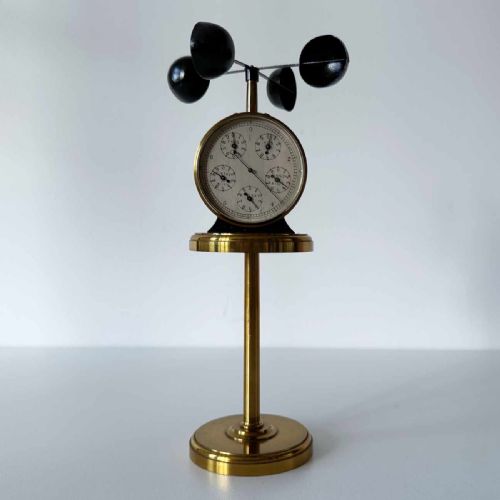
- An instrument used for measuring the speed of wind or gas flow. Meteorological examples often employ rotating cups.
- Chondrometer
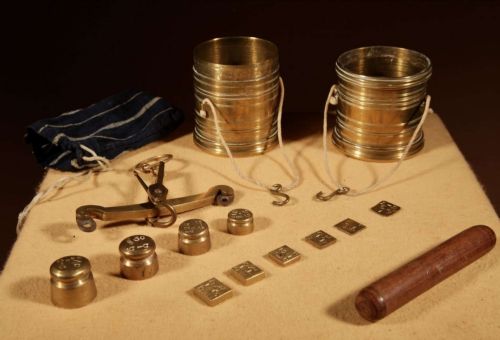
- A specialised device used to determine the weight and density of grain. These typically feature mahogany cases and brass balance beams.
- Hydrometer
- A tool designed to measure the specific gravity of liquids based on buoyancy. Sikes hydrometers are common historical variations.
- Clinometer
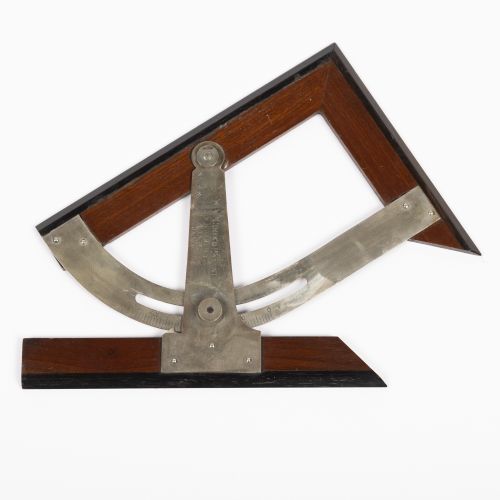
- An instrument used for measuring angles of slope, elevation, or depression of an object with respect to gravity. Surveyors and engineers utilise them for alignment.
- Loupe
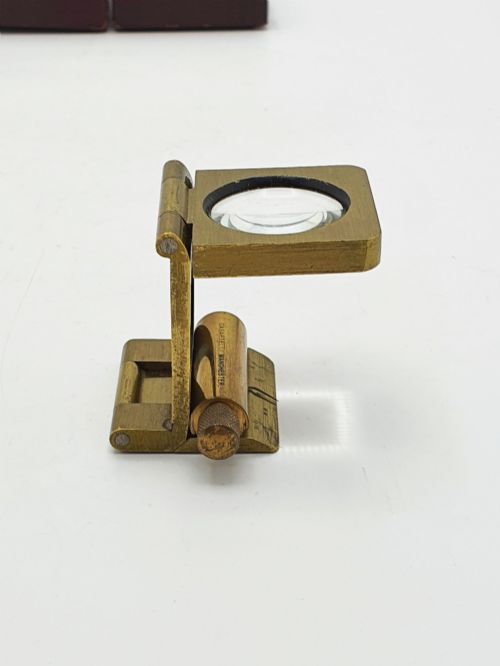
- A small magnifying glass used to examine details closely. Linen testers incorporate a built-in measuring scale for inspecting fabric weaves.
Vintage Measuring Instrument: Frequently Asked Questions
What did an excise officer use a slide rule for?
Excise officers utilised boxwood slide rules to calculate duties on spirits and other taxable goods based on volume and strength.
These pocket instruments allowed officials to compute measurements rapidly while conducting inspections in the field.
How do I identify a Sikes hydrometer set?
Sikes hydrometers comprise a weighted brass stem accompanied by a series of small numbered change weights and an ivory-scale thermometer.
They were formally adopted to measure the proof strength of alcohol for taxation and commercial trade.
What is an imperial standard yard?
An imperial standard yard served as the official physical measurement of length for a specific county or municipality.
Governments commissioned makers like De Grave to produce these verified bars to ensure uniformity in commerce.
Why are some instruments housed in mahogany cases?
Mahogany cases protected sensitive brass mechanisms, glass tubes, and loose weights from dust and impact during transport.
Interior velvet linings kept delicate components secure and immobilised while stored in offices or laboratories.