


Vintage Marquise Ring
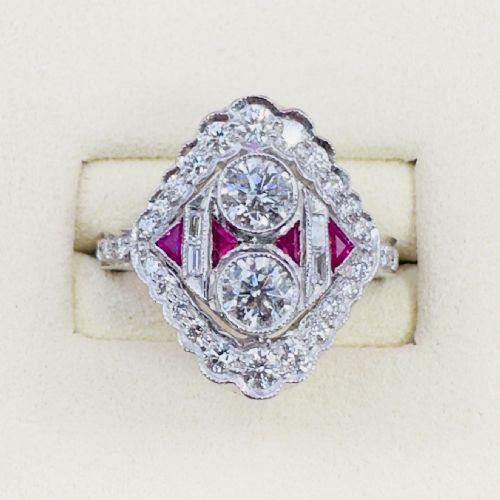
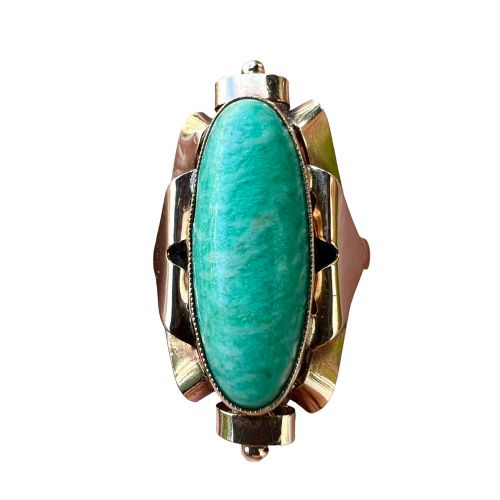
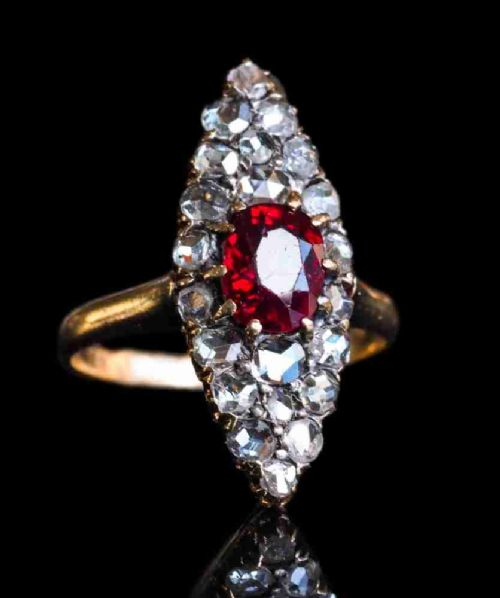
A vintage marquise ring presents a distinctive boat-shaped silhouette that lengthens the finger with tapered ends and generous central stones.

Vintage Marquise Ring
A vintage marquise ring centres on an elongated, pointed outline often referred to in period terminology as a navette or marquis shape. These pieces span Victorian, Edwardian, Art Deco, and mid-century aesthetics, encompassing cocktail rings and dress rings designed for prominent finger coverage.
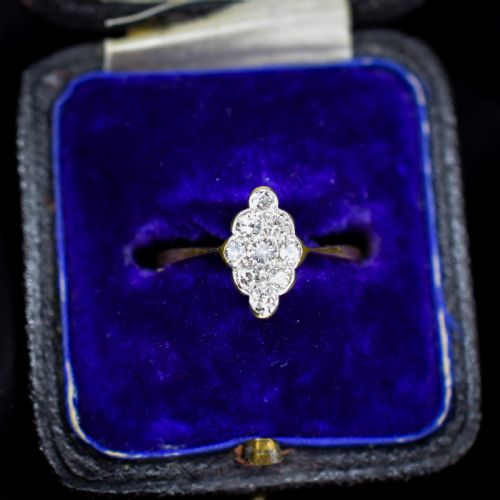
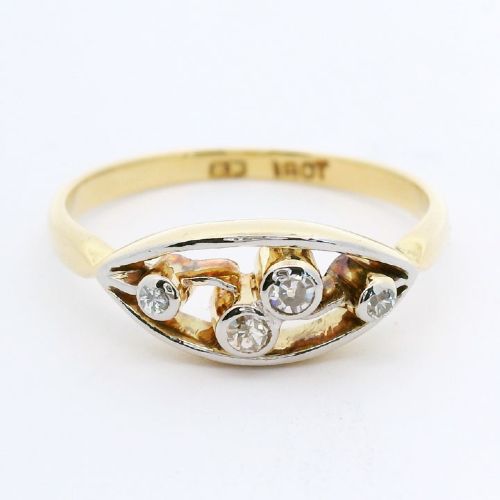
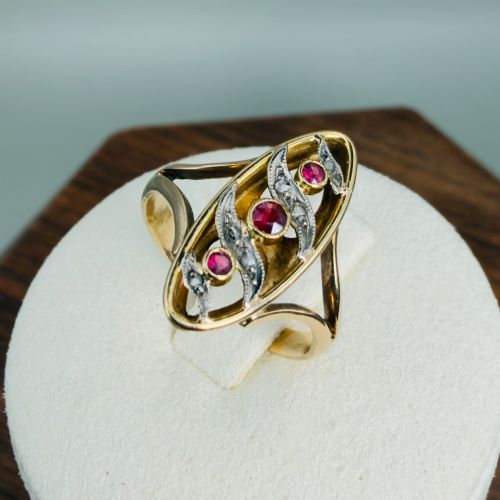
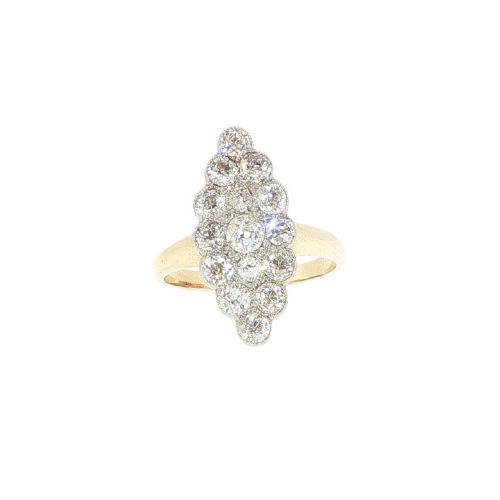
Makers frequently mounted clusters of smaller diamonds or coloured gems within this geometric profile to maximise brilliance. Examples range from delicate late nineteenth-century gold bands to substantial platinum mountings from the 1920s and 1930s.
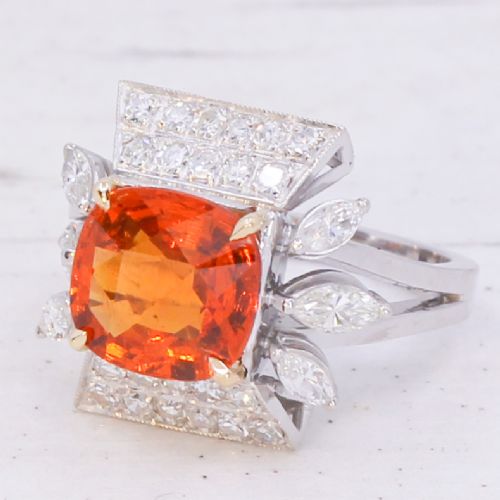
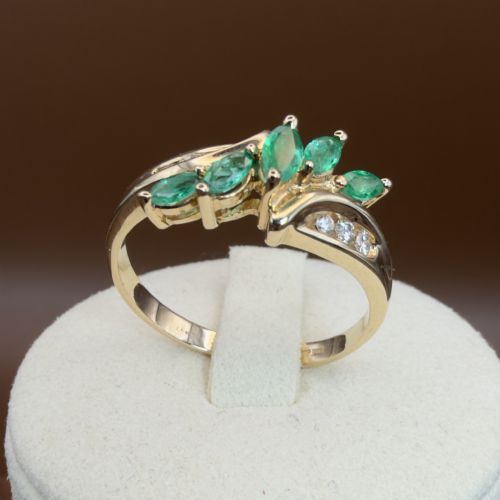
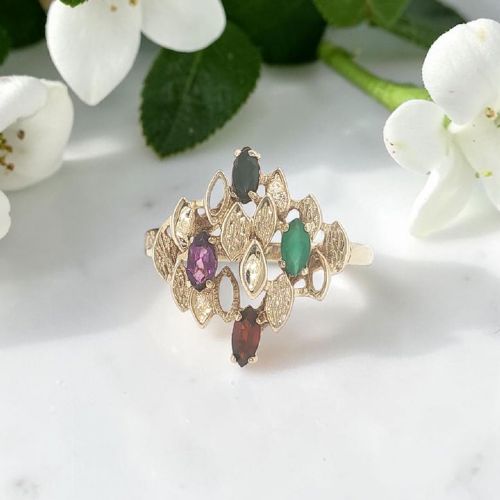
Geometric symmetry defines the Art Deco iterations, whereas earlier Victorian and Edwardian versions lean towards intricate scrolling frames and cluster arrangements. Mid-century interpretations often scale up the central stones, incorporating sapphires, emeralds, and aquamarines.
Materials and Construction
Goldsmiths utilised 18ct yellow and white gold alongside platinum, sometimes combining metals such as platinum tops on gold shanks to highlight white diamond work. Silver also appears on earlier nineteenth-century face settings alongside gold bands.
Gemstones including old-cut and brilliant-cut diamonds, rubies, sapphires, emeralds, and garnets were secured in claw, bezel, or pavé settings. The elongated shape required precise gem-cutting to fit the sharp terminal points of the navette outline without risking stone fracture.
Early makers occasionally hid tiny gold hearts beneath gemstone clusters, offering a secret token of affection to the wearer.
Evaluating Quality and Craftsmanship
The precision of the metalwork around the terminal points dictates the structural integrity of an elongated ring. Settings that securely protect the vulnerable tips of marquis-cut or navette stones without excessive metal bulk represent superior construction.
The match and quality of the central gems relative to the surrounding melee stones dictate the overall harmony of the piece. Well-matched colour saturation in rubies, sapphires, or emeralds paired with high-clarity diamonds elevates the piece above standard production.
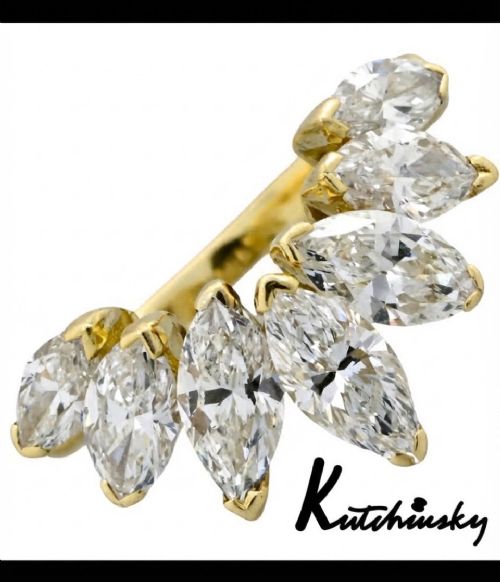
Kutchinsky
The Vintage Marquise Ring Glossary
- Marquise
- A pointed, boat-shaped gemstone cut with curved sides and two sharp ends. This shape is also known historically as a navette.
- Navette
- French for little ship, describing an elongated boat-shaped ring design or gemstone cut. It is frequently seen in Georgian, Victorian, and Edwardian jewellery.
- Cluster ring
- A ring design featuring a central stone encircled by a border of smaller gems. This layout amplifies visual impact and light reflection.
- Old-cut diamond
- A diamond cut by hand before the mid-twentieth century, typically featuring a small table, high crown, and large culet. These stones display a softer candlelit sparkle compared to modern brilliant cuts.
Vintage Marquise Ring: Frequently Asked Questions
What is a marquise ring?
A marquise ring is a piece defined by its elongated, boat-shaped silhouette featuring tapered points at both ends. This distinctive outline creates the illusion of greater size on the hand.
Historically called a navette, the shape accommodates single large gems or multi-stone clusters set in platinum or gold.
How do I date a vintage ring?
Dating involves examining the metal types, gemstone cuts, and construction techniques employed by the goldsmith. Edwardian and Victorian pieces often feature yellow gold and old-cut stones, while Art Deco examples favour platinum and geometric symmetry.
Hallmarks stamped inside the shank also provide official assay office and year markers where present.
Are these rings suitable for daily wear?
Most vintage rings constructed in 18ct gold or platinum withstand regular daily wear if handled with reasonable care. However, elongated shapes with sharp points require mindfulness to avoid catching the terminal edges on fabrics.
Softer gems like emeralds or coral demand gentler treatment than diamonds or sapphires.
What is an old-cut diamond?
An old-cut diamond refers to stones shaped by hand prior to the standardisation of modern brilliant-cut facets in the mid-twentieth century. These diamonds possess characteristic chunky facets and a small top table.
They produce a softer, warmer scintillation under low lighting conditions.