

Vintage Marquetry Chest
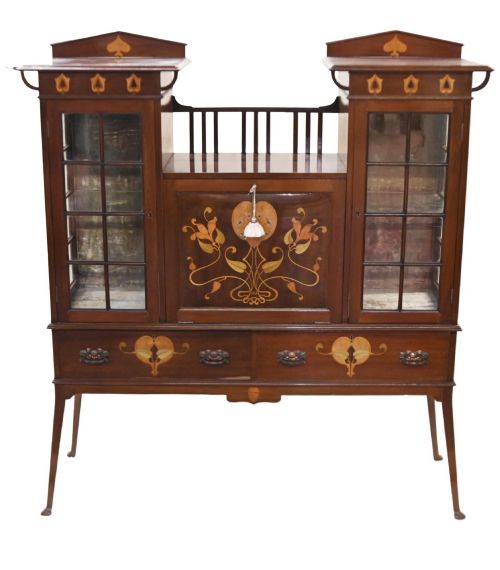
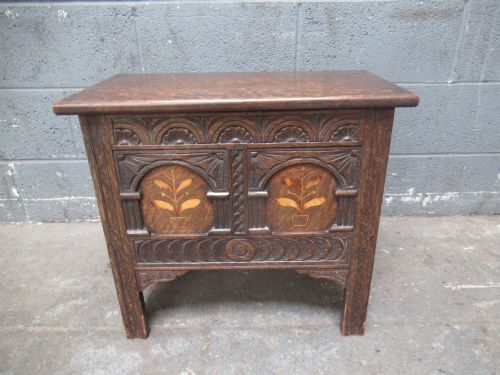
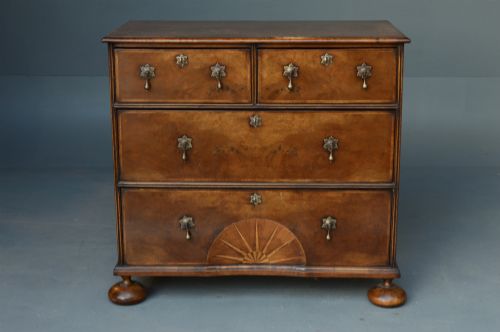
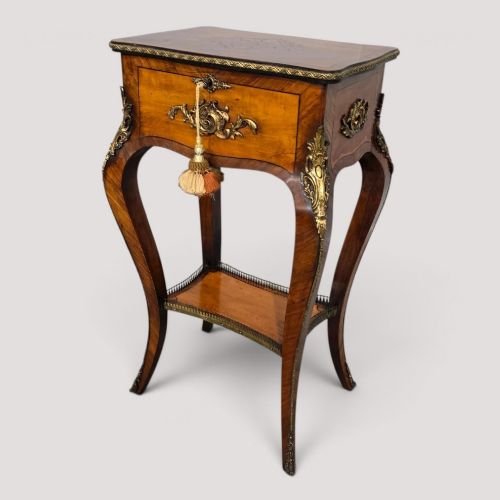
A vintage marquetry chest brings pictorial wood veneers into a room, offering both surface ornament and storage across various forms.
Vintage Marquetry Chest
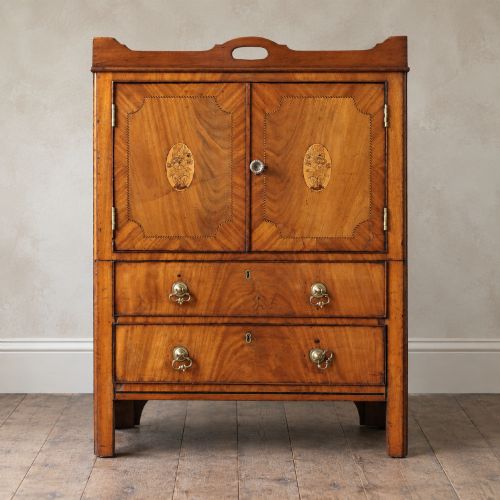
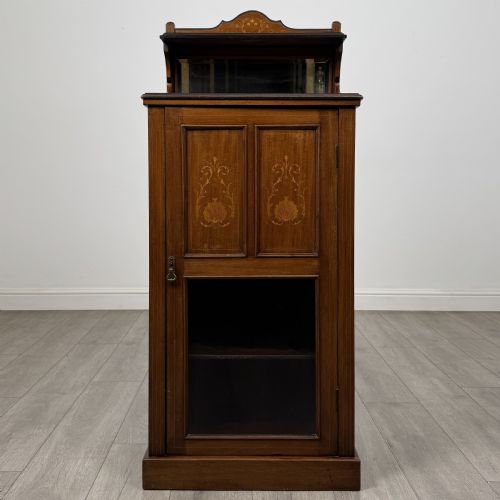
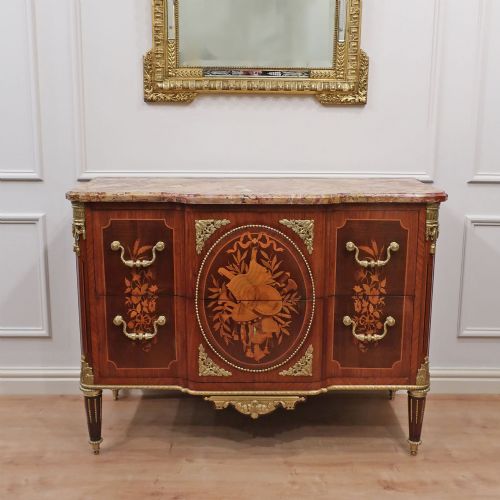
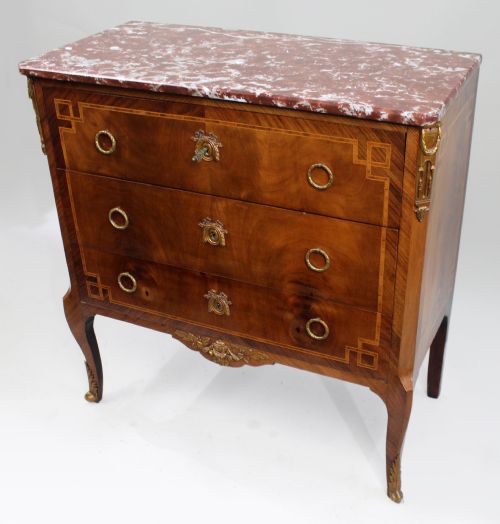
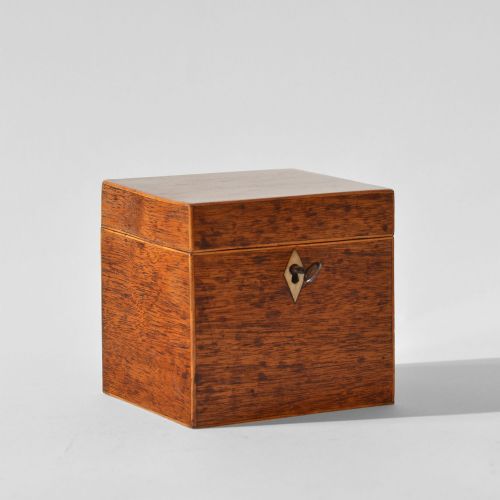
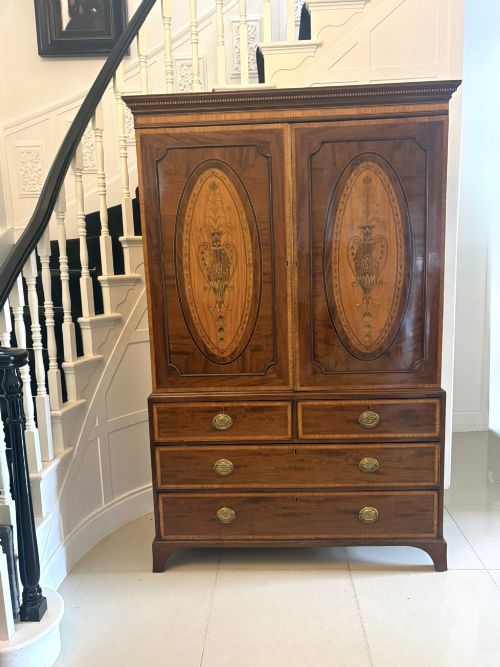
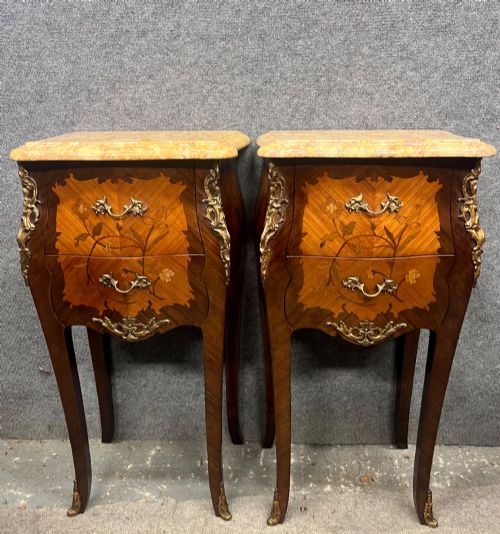
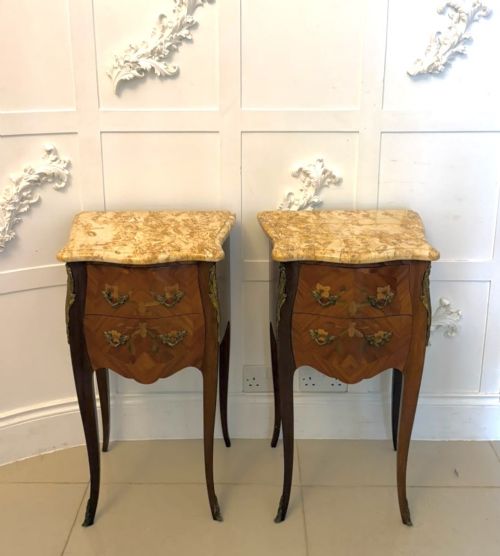
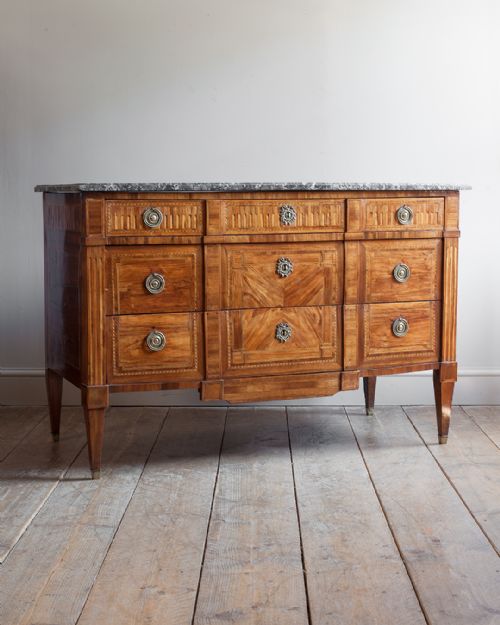
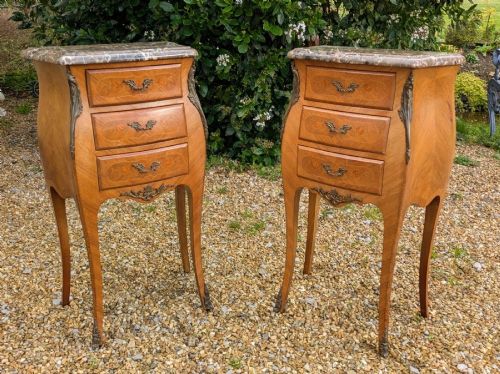
When you search for a vintage marquetry chest, you encounter a wide selection of fitted furniture and smaller decorative boxes featuring decorative wood veneers. The inventory ranges from substantial Georgian linen presses and 18th-century French commodes to compact Edwardian bedside cabinets and tea caddies.
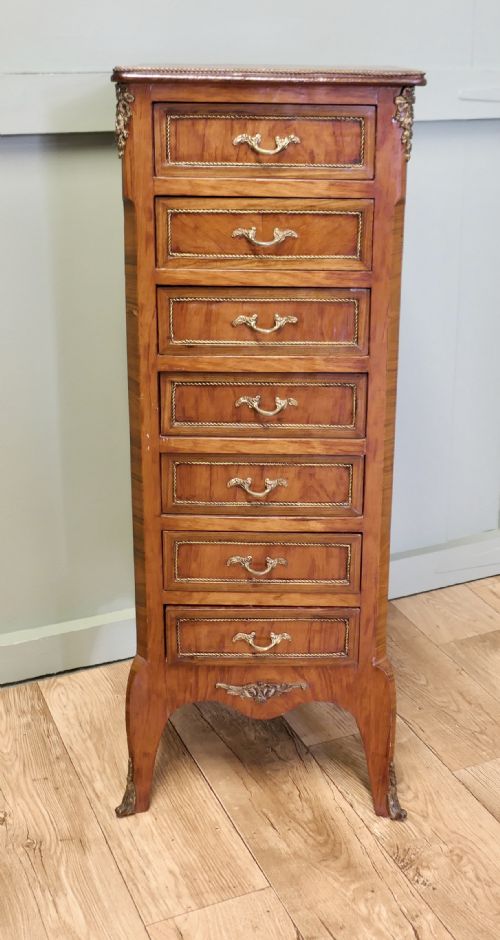
The objects span multiple centuries, appearing in Georgian, Victorian, Edwardian, and 1920s iterations with strong representation from French Louis styles. Alongside standard chests of drawers, the category includes nightstands, lamp tables, and specialised containers like tantaluses and jewellery boxes.
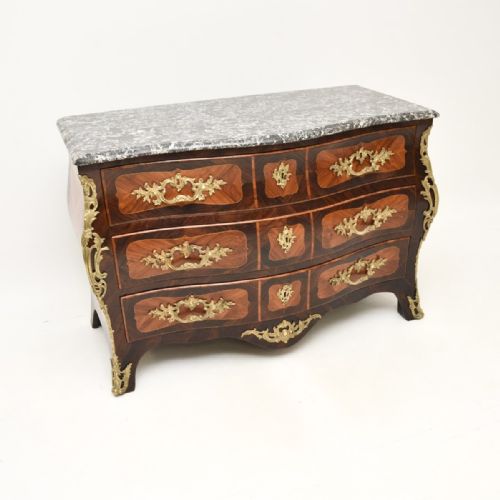
Makers often utilised continental workshops or British cabinet makers to produce pieces shaped in serpentine, bombé, or straight-fronted configurations. Buyers typically choose between larger floor-standing drawer units and smaller tabletop or bedside variants.
How they were made
Craftsmen built carcass frames from foundational timbers such as mahogany, walnut, oak, or kingwood, applying thin slices of contrasting veneer over the primary structure. Woods like rosewood, satinwood, and burr walnut provided natural variations in tone and grain pattern for pictorial motifs.
Cabinet makers secured decorative elements using animal glues and hand saws, frequently incorporating brass mounts, ormolu, and shaped marble tops on continental commodes. Surface details often involved Tunbridge inlay or floral patterns assembled from numerous small pieces of dyed and natural timber.
Vintage Marquetry Chest Retail Price Guide 2026
Typical asking prices for vintage marquetry chest among the pieces listed under this phrase on Sellingantiques today, from the lower quarter to the upper quarter. They describe what is for sale here now, not the wider market.
Some nineteenth-century tea caddies include secret compartments originally intended for locking away expensive spice reserves from household staff.
What varies in quality
The standard of a vintage marquetry chest rests primarily on the precision of the veneer work and the complexity of the wood selection. Tighter joints between individual timber segments and more intricate pictorial designs indicate higher workshop proficiency.
Structural integrity also separates examples, seen in the stability of carcase frames, the smooth operation of drawer runners, and the quality of secondary woods used internally. Original hardware, intact marble slabs, and well-preserved surface polishes elevate certain pieces above standard production items.
Jacques Bircklé·Druce & Co.
The Vintage Marquetry Chest Glossary
- Marquetry
- The art of applying decorative pieces of veneer to a structural carcass to form pictures or geometric patterns. This technique allows craftsmen to use varied timber tones without relying solely on solid exotic woods.
- Commode
- A low chest of drawers, frequently associated with 18th- and 19th-century French cabinet making. These pieces often feature shaped marble tops and elaborate ormolu mounts.
- Veneer
- A thin slice of fine wood applied to a secondary timber base to provide a decorative surface. It permits complex patterning while preventing the warping common in solid boards.
- Ormolu
- Gilded bronze mounts and decorative trimmings applied to furniture. It serves to accent corners, handles, and apron rails on continental pieces.
- Tantalus
- A locking beverage cabinet designed to display decanters while restricting access to the contents. They frequently incorporate inlaid woodwork and brass fittings.
Vintage Marquetry Chest: Frequently Asked Questions
What is a marquetry chest?
A marquetry chest is a storage piece decorated with fitted wood veneers that form pictorial or geometric designs. These items range from large bedroom commodes to small bedside cabinets.
Cabinet makers utilised diverse timbers to create contrasting colours within the surface patterns, combining structural utility with decorative art.
How do I care for my chest?
Maintain these pieces by keeping them away from direct sunlight and sudden temperature shifts, which can dry out wood and lift veneers. Dust gently with a dry cloth and avoid harsh chemical polishes.
Apply a traditional beeswax polish occasionally to nourish the timber surface and preserve the historic finish without damaging the grain.
Are these chests French or English?
The inventory includes both origins, featuring distinct regional characteristics. French pieces often showcase Louis XV or Louis XVI styling with serpentine shapes, marble tops, and ormolu mounts.
English variants tend to focus on mahogany or walnut carcases with understated floral inlay, rectilinear proportions, and traditional brass drawer pulls.
How do I date a marquetry chest?
Dating relies on examining construction methods, timber choices, and stylistic cues. Eighteenth-century examples often feature hand-cut dovetails and native woods, while 19th-century pieces might incorporate machine-sawn elements and exotic veneers.
Comparing the hardware, secondary woods, and lock mechanisms against known period standards helps narrow down the decade of manufacture.