


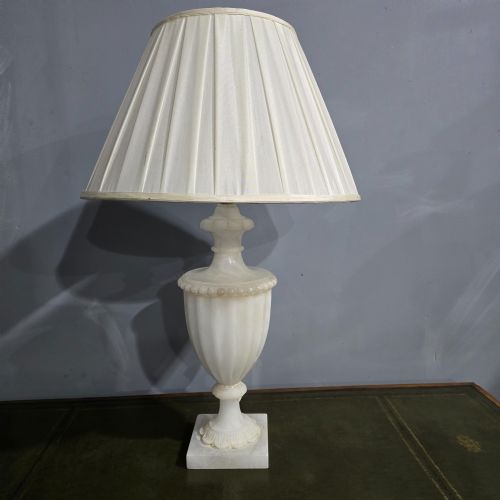


Vintage Marble Urn Lamps
Vintage marble urn lamps bring classical form and warm light to a room, drawing on centuries of revival design.
Vintage Marble Urn Lamps
When you search for vintage marble urn lamps, you encounter lighting formed from carved stone bodies shaped into classical vessels, frequently mounted with metal handles, bases, and neck fittings for electrical bulbs. The forms emerge from nineteenth-century revivals and early twentieth-century production, mirroring ancient amphorae, cassolettes, and campana shapes transformed into domestic table lighting.
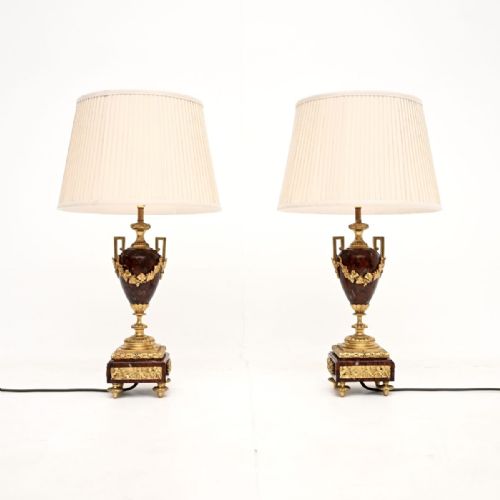
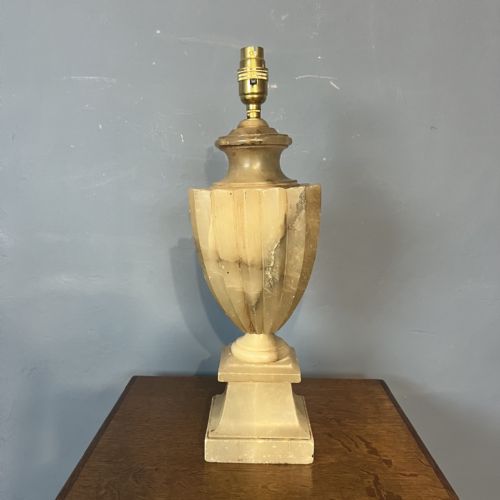
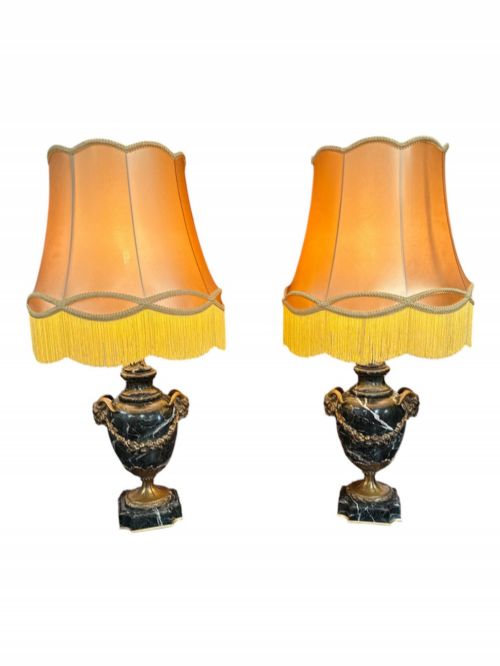
The pieces on this page lean heavily toward French Neoclassical and Louis XVI styles, alongside Italian and Edwardian interpretations. You will find matched pairs as well as single monumental standards, often utilising white marble, rouge marble, Siena marble, onyx, or translucent alabaster.
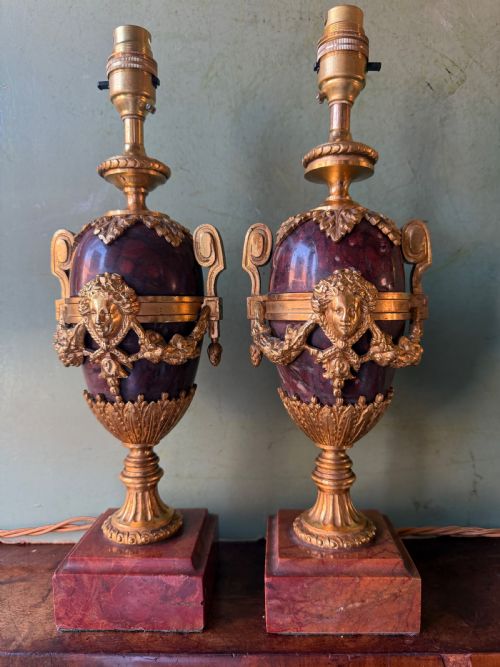
Alongside actual stone urn bodies, the selection includes pieces featuring gilt bronze, ormolu, brass, and patinated metal mounts. Certain examples incorporate fabric shades or sit atop distinct classical plinths, bridging the gap between sculptural ornaments and functional household lamps.
Materials and construction methods
The stone components are turned on heavy lathes or hand-carved from solid blocks of marble, alabaster, or onyx, then polished to a smooth finish. Alabaster offers a naturally translucent quality that diffuses light softly, while dense marbles like rouge and Siena provide rich veining and solid weight.
Metal mounts, including ormolu, gilt bronze, and brass, are cast using traditional foundry methods and hand-chiseled to crisp detail before being secured around the stone bodies with threaded rods or pins. These metal collars, handles, and paw feet reinforce the structural integrity of the stone while adding classical ornamentation.
Wiring channels are drilled vertically through the centre of the stone or integrated discretely alongside the metal hardware during later conversions to electricity. Fabric elements and shade holders are subsequently fitted to the top mountings to complete the lamp.
Listings feature vintage marble urn lamps spanning from the late nineteenth century through the 1930s, incorporating materials such as alabaster, rouge marble, onyx, and gilt bronze.
Assessing quality in stone and metal
Quality rests in the crispness of the bronze or ormolu chasing and the natural depth of the stone figure. Superior pieces display finely articulated metalwork with sharp relief, whereas lesser examples feature soft, cast-indistinct mounts with visible seam lines.
The selection of the stone itself dictates distinction, with deeply figured rouge marble, translucent white alabaster, and richly layered Siena stone sitting at the upper end of the scale. Uniformity in matched pairs, where the natural veining mirrors across both urn bodies, marks superior workshop selection.
The integration between stone and metal components reveals the standard of manufacture. Top-tier lamps exhibit flush, tight joints without adhesive gaps, ensuring the heavy stone vessel remains firmly anchored to its base.
The Vintage Marble Urn Lamps Glossary
- Ormolu
- Gilt bronze ornamentation applied to furniture and lighting. The technique involves creating a mercury-gilding finish on cast bronze, producing a durable golden sheen.
- Cassolette
- A decorative vessel shaped like an urn, often featuring a reversible lid that functions as a small bowl or burner. In lighting, the urn body is adapted to hold electrical components.
- Campana
- A bell-shaped classical urn profile with a wide mouth and a tapered base. This silhouette appears frequently in Neoclassical designs.
- Alabaster
- A fine-grained, translucent stone used for carving sculptural vessels. It allows light to pass partially through its surface, creating a warm glow when illuminated from within or beside.
- Neoclassical
- A style spanning the eighteenth and nineteenth centuries that revives classical Greek and Roman motifs. It relies on symmetry, urn forms, and architectural restraint.
Vintage Marble Urn Lamps: Frequently Asked Questions
How do I clean an alabaster lamp?
Dust alabaster surfaces gently with a dry, soft microfiber cloth to prevent dirt settling into the porous stone. Avoid using water, harsh detergents, or chemical solvents, which can damage the delicate matte finish.
For stubborn marks, consult a specialist conservator rather than attempting wet cleaning at home. Moisture penetrates unsealed stone easily and leaves permanent staining.
Are these lamps safely wired?
Many older pieces retain older wiring or have undergone various alterations over the decades. Have a qualified electrician inspect the internal cord, lampholder, and plug before regular daily use.
Rewiring preserves the original metal mounts and brass components while bringing the electrical safety up to modern domestic standards.
How can I date my lamp?
Examine the style of the bronze casting, the type of marble used, and the construction methods of the internal threaded rods. Nineteenth-century pieces typically show hand-finished chasing on the ormolu and heavier bronze gauges.
Twentieth-century iterations often adopt simpler brass fittings and standardised electrical paths. Comparing the decorative motifs to established French and Italian revival periods narrows the timeline further.
Can I replace the lampshade?
Selecting a replacement shade depends on the proportions of the urn body and the height of the central brass harp. Choose neutral silk, linen, or parchment shades that complement the classical silhouette without overwhelming the stone base.
Ensure the fitter matches the existing shade carrier, whether it uses a spider fitter, uno ring, or clamp-on mechanism.
Where should I place an urn lamp?
Position these substantial lamps on sturdy side tables, pedestals, or deep sideboards where their weight and height balance the surrounding furniture. Avoid placing them near edge zones where accidental knocks could topple the heavy stone base.
Allow enough clearance around the body so the decorative handles and metal mounts remain visible.