



Vintage Marble Top Gueridon
A vintage marble top gueridon is a round pedestal table bringing classical French elegance and durable stone surfaces to an interior space.
Vintage Marble Top Gueridon
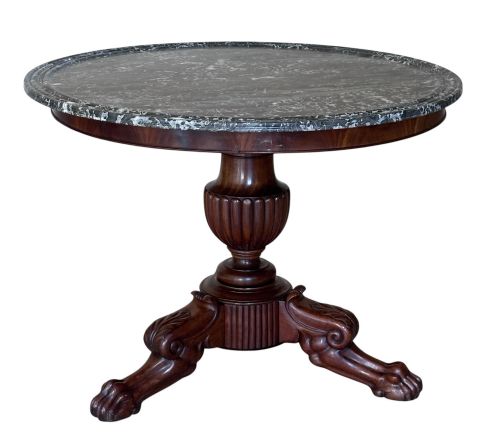
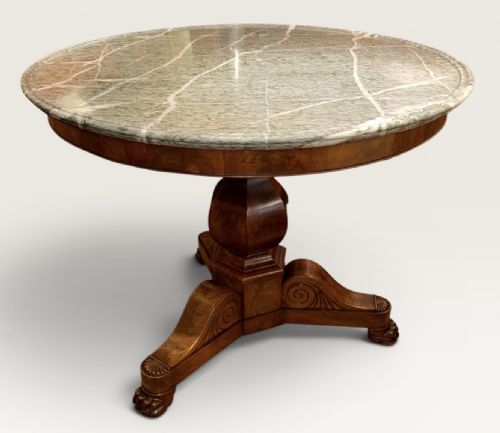
When searching for a vintage marble top gueridon, a buyer encounters circular small tables originating primarily from French design traditions spanning the nineteenth and early twentieth centuries. These tables frequently function as centre tables, occasional tables, lamp tables, or plant stands, resting on central pillars or slender legs.
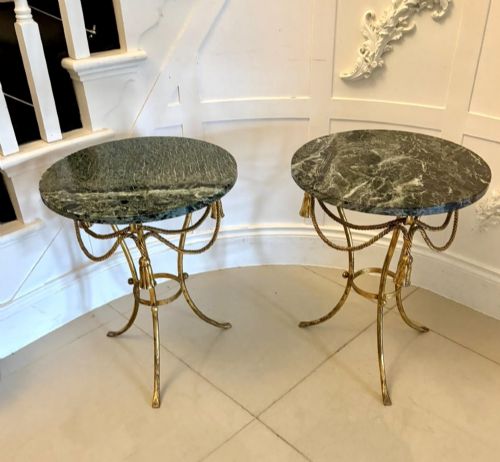
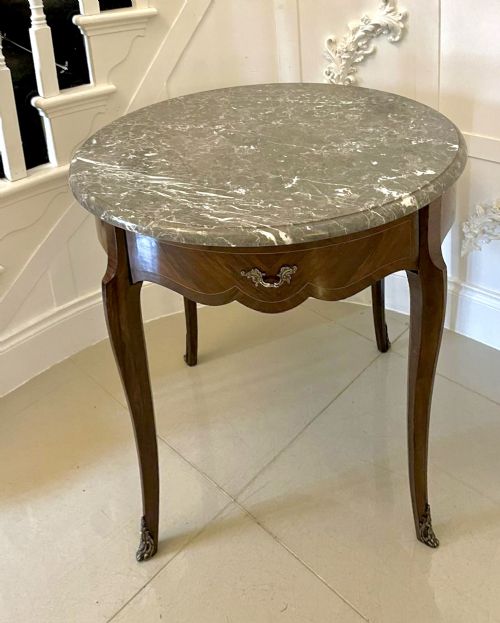
The most common versions met on this page are nineteenth-century French tables featuring inset stone slabs, executed in styles ranging from Louis XVI to French Empire. Walnut, mahogany, kingwood, and giltwood provide the structural support for white marble, onyx, or verde marble surfaces.
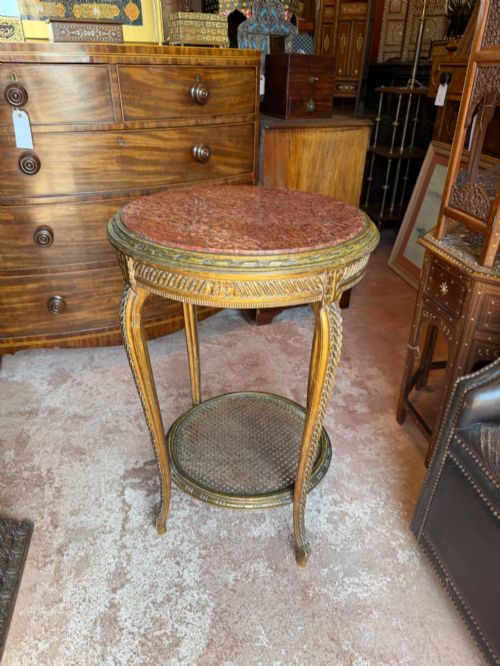
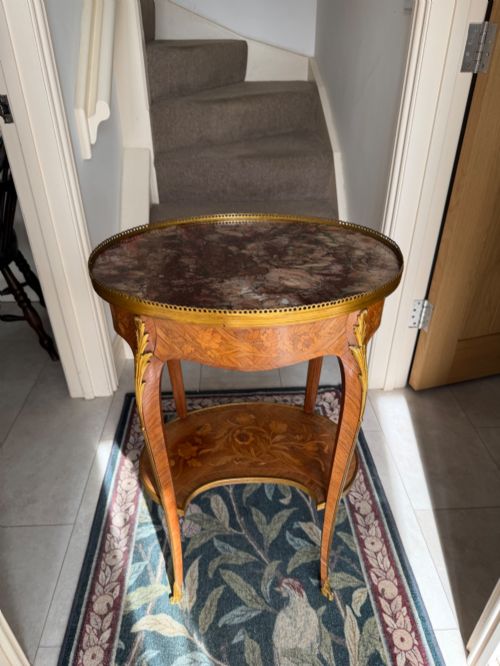
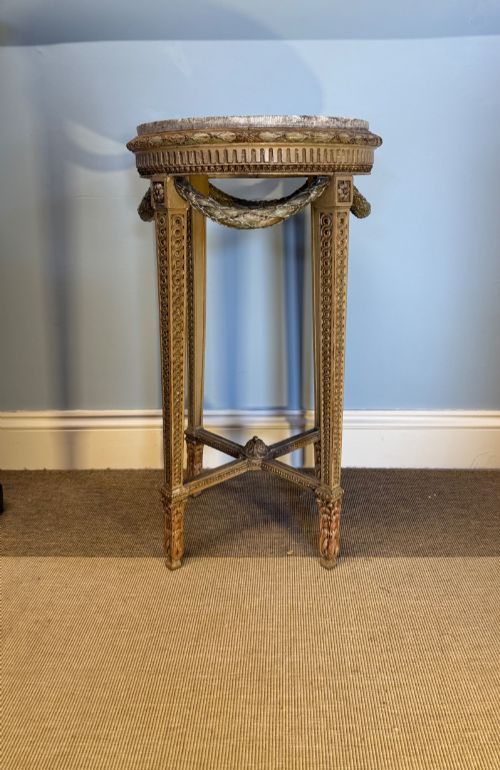
Makers and craftsmen adapted these small tables for diverse domestic roles, producing bedside cabinets, bistro tables, and multi-tiered stands with canework or parquetry. Each piece combines a solid timber or gilded frame with a heavy stone top designed for display and daily use.
How they were made
Cabinet makers constructed the frames using hardwoods such as mahogany, walnut, and kingwood, frequently applying veneer, parquetry, or paint finishes. Giltwood and gilt metal mounts enhanced the classical appearance of the timber structures.
Stone tops, including white marble, onyx, and verde marble, were cut and polished to fit precisely within wooden galleries or flush surrounds. Brass and ormolu ornaments, alongside occasional canework shelves, completed the assembly of these decorative stands.
Object forms include bedside cabinets, plant stands, bistro tables, and multi-tiered canework stands alongside standard centre tables.
What varies in quality
The refinement of the timber work and the choice of decorative elements separate standard examples from finer pieces. Finely figured kingwood veneers, intricate parquetry, and detailed gilt bronze or ormolu mounts indicate superior workshop production.
The quality of the stone top and its integration into the wooden frame also influence the overall standard. Original marble slabs with harmonious veining fitted seamlessly into galleried or moulded surrounds represent the higher end of surviving items.
The Vintage Marble Top Gueridon Glossary
- Gueridon
- A small French round table supported by a central pillar or legs. These tables served various domestic functions as candle stands, plant pedestals, or centre tables.
- Ormolu
- Gilded bronze ornamentation applied to furniture frames. This technique added decorative metallic lustre to nineteenth-century French pieces.
- Parquetry
- Geometric wood mosaic patterns inlaid into furniture surfaces. Craftsmen utilised contrasting timbers like mahogany and satinwood to create decorative tops.
- Kingwood
- A dense, richly figured exotic timber used for veneering high-status furniture. Its distinctive dark grain patterns defined many nineteenth-century French tables.
Vintage Marble Top Gueridon: Frequently Asked Questions
What is a gueridon table used for?
A gueridon serves primarily as an occasional table, lamp table, or plant stand within a room. Its sturdy stone surface provides a practical platform for displaying decorative objects or lighting.
Historically, these round tables sat in the centre of rooms or beside seating arrangements for convenience. Today, buyers utilise them in hallways, sitting rooms, and bedrooms as functional decorative accents.
How do I identify a nineteenth-century French gueridon?
Nineteenth-century examples typically display specific regional styles such as Louis XVI, French Empire, or Louis XV revivals. The combination of native or exotic hardwoods with heavy stone tops is characteristic of the period.
Construction methods, including traditional joinery and hand-finished bronze or brass mounts, help distinguish older pieces from later reproductions. Examining the underside of the timber frame often reveals age-related patina and construction wear.
What types of marble appear on these tables?
Surviving tables feature white marble, verde marble, and onyx slabs cut to fit the circular wooden frames. White marble appears frequently on nineteenth-century French and Edwardian examples.
Green verde marble and patterned onyx provide distinct coloration and veining that complement gilt metal or mahogany structures. Each stone variety was chosen for its durability and aesthetic contribution to the design.
Where should I place a marble top table at home?
These tables suit placement in reception rooms, entryways, and beside armchairs where a small surface is needed. The stone top resists moisture well, making them suitable for holding lamps or potted plants.
Their compact circular footprint allows them to fit easily into corners or tight spaces without crowding a room. Pairing a gueridon with traditional or contemporary seating creates a balanced focal point.