


Vintage Marble Entryway Table
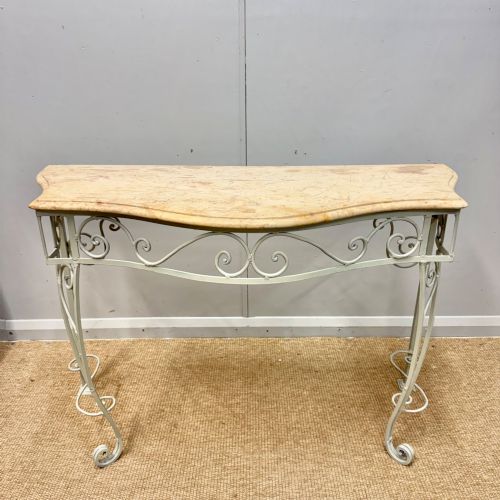
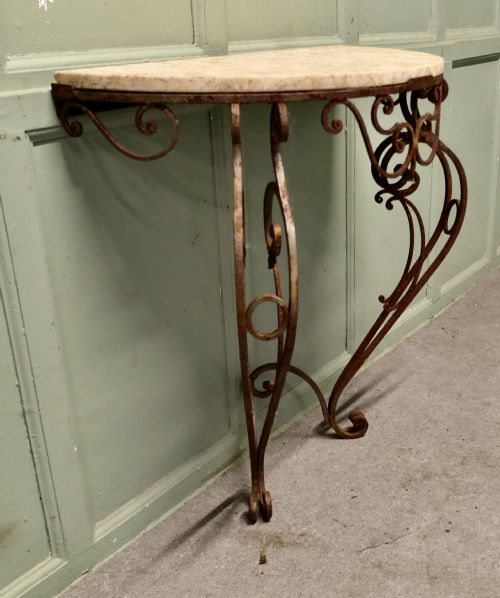
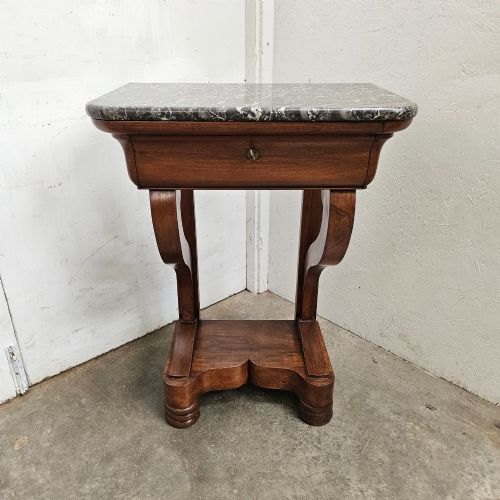
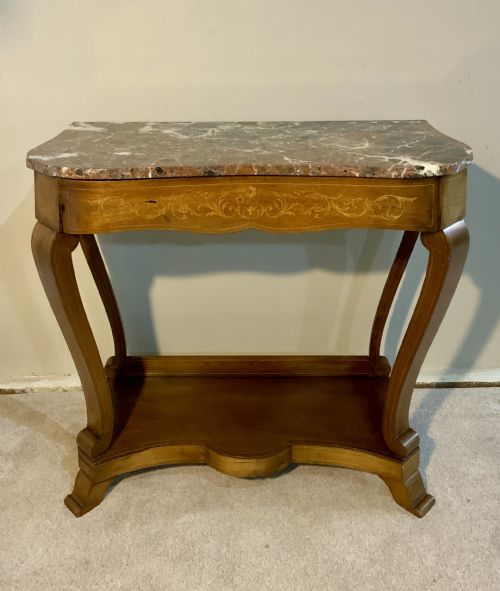
These vintage marble entryway table pieces combine solid stone with timber or iron framing, bringing enduring functional surface space to halls and corridors.
Vintage Marble Entryway Table
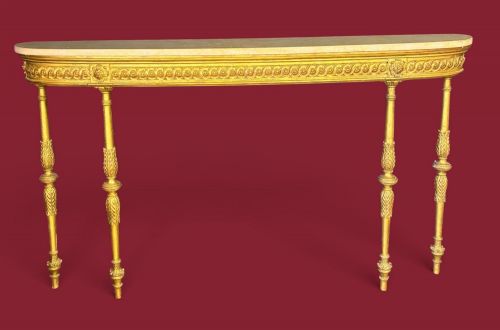
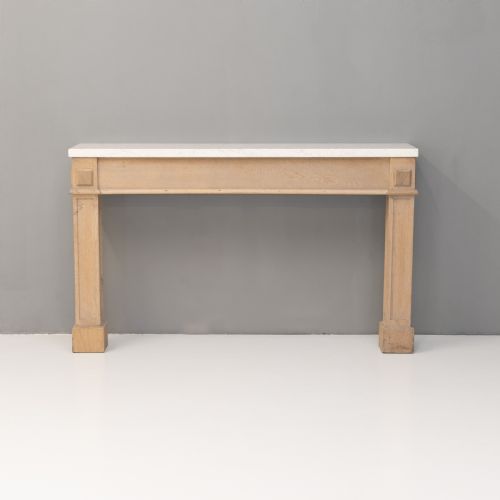
A vintage marble entryway table is typically encountered as a console or side table designed to stand flat against a hallway wall. The selection spans the eighteenth century through to the nineteen thirties, drawing heavily upon French Chateau, Neoclassical, Victorian, and Louis XVI design vocabularies.
Most examples combine a heavy stone surface with a supportive base constructed from walnut, mahogany, oak, wrought iron, or giltwood. Pieces frequently adopt distinct silhouettes such as serpentine outlines, while occasional variations include integrated mirrors or serving table proportions.
How they were made
Construction relies upon the pairing of substantial stone slabs with supportive frames of timber or forged metal. Cabinetmakers shaped structural woods like walnut and mahogany, whilst blacksmiths hammered and shaped wrought iron for robust console bases.
Decorative detailing on wooden and giltwood frames involves hand carving, mirroring historical French and neoclassical motifs. Marble tops are cut and polished to fit the underlying frame, often utilising fossil marble or plain varieties.
Current listings span the eighteenth century to nineteen thirty, incorporating walnut, mahogany, oak, wrought iron, and giltwood materials.
What varies in quality
Quality rests in the harmony between the stone top and the supporting framework. Finely carved giltwood and detailed walnut joinery distinguish higher tiers of production from simpler rustic iron frames.
The Vintage Marble Entryway Table Glossary
- Console table
- A table designed to stand against a wall, frequently fixed with brackets. These forms form the primary structural type for this search.
- Giltwood
- Timber coated with a thin layer of gold leaf. This finish appears predominantly on neoclassical and Louis XVI style frames.
- Serpentine outline
- A line that curves inward and outward in a continuous flowing wave. This shaping frequently defines the edge of eighteenth and nineteenth century tabletops.
- Fossil marble
- Limestone containing distinct fossilised remains that is polished for decorative use. It provides patterned variety to tabletops.
- Neoclassical
- A style reviving classical Roman and Greek motifs. It governs several giltwood and wood console designs from the nineteenth and twentieth centuries.
Vintage Marble Entryway Table: Frequently Asked Questions
Where should I place a marble console?
These tables suit narrow circulation spaces, hallways, and entrance halls where a shallow surface is required. Their wall-hugging proportions allow them to sit flush against plaster without obstructing foot traffic.
Because the surface is stone, they function well for holding everyday items like keys and post while maintaining a formal aesthetic upon entry.
How do I care for a marble top?
Maintenance requires wiping the stone surface regularly with a soft damp cloth to remove grit and dust. Avoid acidic cleaners which can etch the polished surface over time.
Using coasters and mats protects the stone from moisture rings and heavy impact, preserving the natural finish of the material.
Are these tables heavy to move?
The presence of solid stone slabs makes the top section remarkably heavy compared to timber-only furniture. Lifting usually requires two people to prevent strain on the joints.
The base frames, whether wrought iron or carved walnut, are built to bear this substantial weight safely.
Can these tables stand unsupported?
Most console formats are designed to stand against a vertical surface for optimal stability. Some tall or narrow configurations benefit from being secured to the wall to prevent tipping.
Free-standing side table variants offer independent stability through wider four-legged timber frames.