



Distressed Entryway Table
These distressed entryway table pieces are console and side tables spanning several centuries and country house styles, offering character for narrow halls.
Distressed Entryway Table
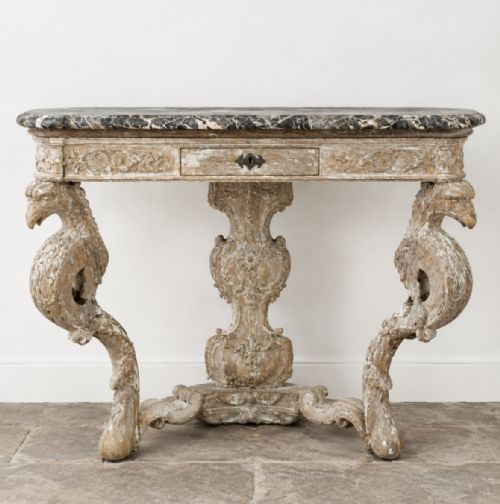
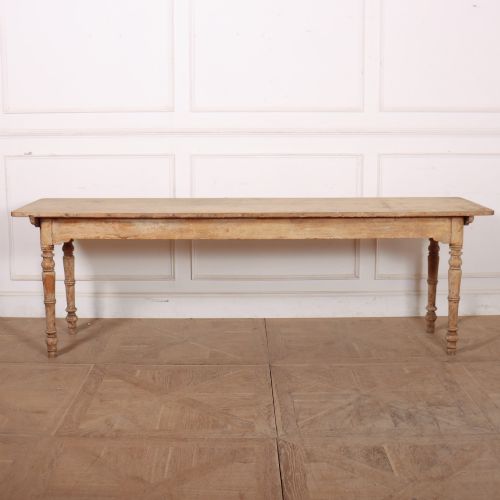
A distressed entryway table is fundamentally represented here by console tables and side tables designed for halls and narrow spaces. You encounter forms ranging from 18th Century baroque examples to Edwardian and later country house variations.
The selection includes specific regional characters such as French Rococo, Italian Country, and Scandinavian Country styles. These pieces often feature painted wood surfaces that display historical wear.
Makers and workshops produced these tables in oak, pine, and carved wood, frequently finished with paint, gesso, or paired with marble tops. The primary form met on this page is the console table designed to sit flat against a wall.
How they were made
Construction relies upon traditional timber framing in oak and pine, shaped through hand carving to achieve decorative contours. Artisans applied gesso and paint finishes directly to the wood substrate to build up layered surfaces.
Selected examples incorporate inset marble tops resting upon carved wooden bases. Joinery methods reflect the specific period of manufacture, spanning 18th Century baroque techniques to later 20th Century workshop practices.
What varies in quality
Quality in these tables rests upon the depth of hand carving and the integrity of the original painted or gesso surfaces. Pieces displaying early 18th Century baroque detail exhibit finer sculptural execution than later vernacular reinterpretations.
The substance of the materials utilised, such as heavy marble slabs versus lighter timber tops, alters the physical presence of the console. Structural harmony between the carved wooden base and the upper surface determines the overall balance of the piece.
The Distressed Entryway Table Glossary
- Console table
- A table designed to be fixed against a wall, frequently supported by ornamental brackets or legs rather than four independent vertical supports. These pieces traditionally occupy hallways and reception spaces.
- Baroque
- An ornate artistic style prevalent in the 17th and 18th centuries characterised by dramatic curves, rich carving, and theatrical proportions. Baroque console tables display exuberant decorative vocabulary.
- Gesso
- A plaster-like mixture applied to wood surfaces as a smooth base for paint or gilding. This material allows for crisp decorative mouldings.
- Serpentine front
- A furniture front contour that curves outward at the centre and inward at the sides, or vice versa. This shaping demands advanced woodworking skill.
Distressed Entryway Table: Frequently Asked Questions
Where should I place a console table?
Console tables function best in narrow hallways, entryways, or against living room walls where floor space is limited. Their shallow depth allows them to sit flush against vertical surfaces without obstructing movement.
They provide a functional surface for lamps, mirrors, or decorative objects while defining the proportion of an entrance hall.
How do I identify an 18th century piece?
Eighteenth-century examples typically display hand-carved details, heavy timber construction, and baroque or rococo stylistic markers. Examining the underside and joinery reveals period-specific tool marks and timber seasoning.
Surface patination on these early pieces develops through centuries of use rather than artificial distressing.
What is the difference between console and side tables?
Console tables are specifically proportioned to stand against a wall, sometimes requiring wall attachment for stability. Side tables are generally free-standing and feature four independent legs.
In historical listings, the two terms frequently overlap when describing narrow hall furniture.
How do I care for painted wooden tables?
Painted and gesso surfaces require gentle dusting with a dry microfibre cloth to protect the historic finish. Avoid harsh chemical cleaners or excessive moisture that might lift fragile paint layers.
Placing felt pads beneath objects resting on the marble or wood top prevents surface abrasion.