


Vintage Marble Cocktail Table
A vintage marble cocktail table anchors a room with cool stone and period metalwork, offering a sturdy surface designed for daily hospitality.
Vintage Marble Cocktail Table
A vintage marble cocktail table combines a heavy stone slab with a low frame, serving primarily as a coffee or low table in a reception room. These pieces span several decades and centuries, ranging from the late Victorian era through the Edwardian period and into the mid-twentieth century.
The versions most frequently met on this page are French and Italian designs originating from the nineteenth and early twentieth centuries. They appear in styles such as Neoclassical, Louis XVI Revival, and French Provincial, often taking the form of low tables suited for domestic interiors.
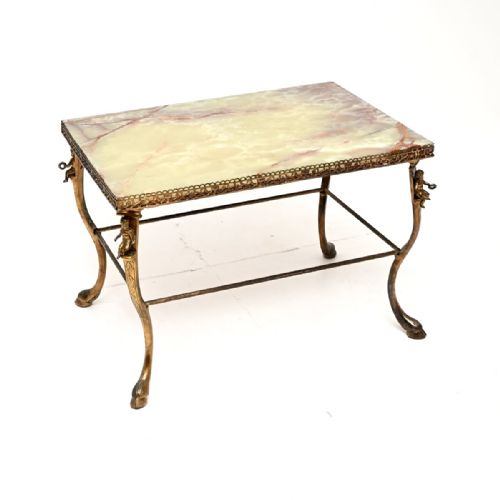
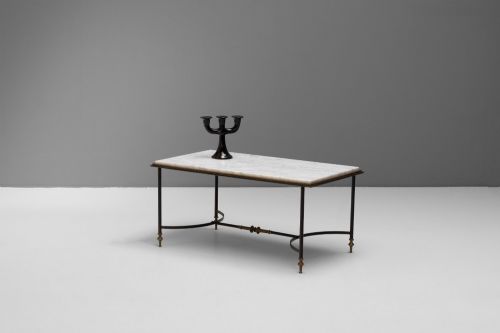
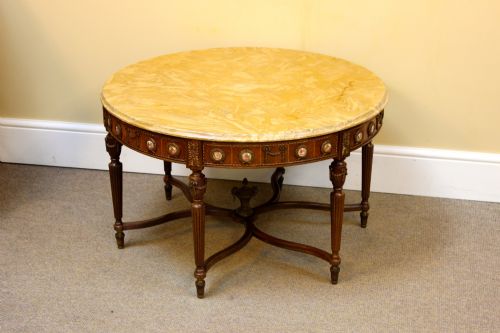
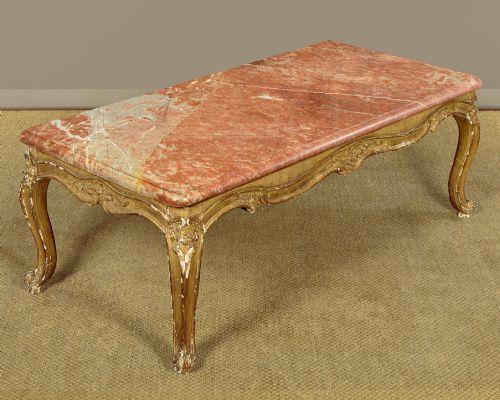
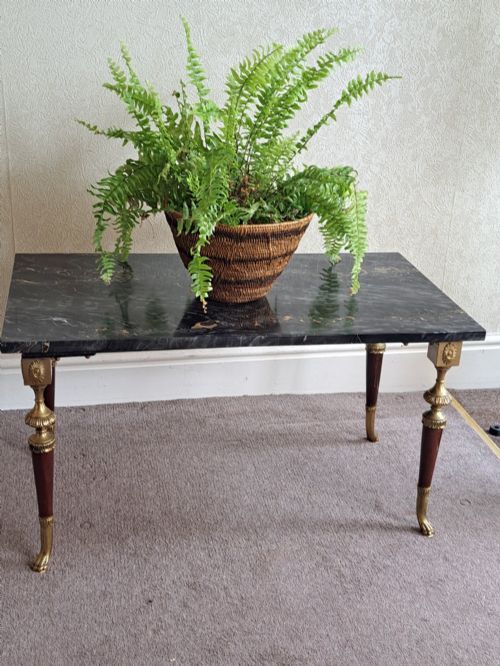
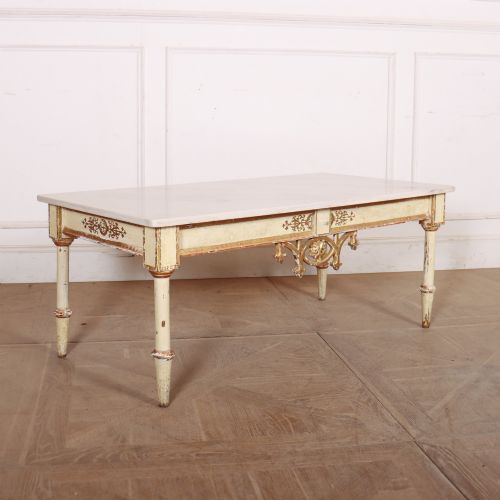
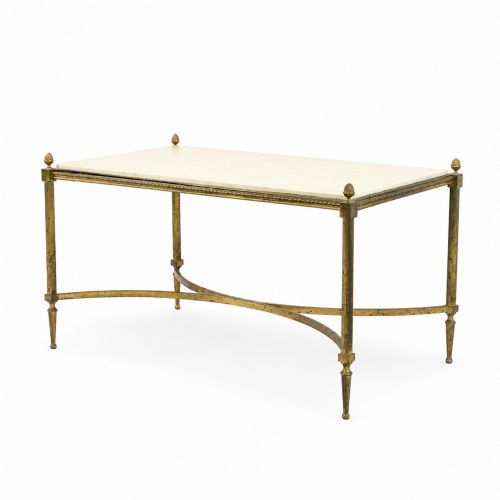
Makers and workshops across Europe produced these low tables utilising stone tops paired with supportive frames of brass, walnut, wrought iron, or giltwood. Buyers encounter rectangular, round, and specimen stone tops supported by metal legs or carved wooden bases.
Materials and construction
The construction of these pieces relies heavily on the pairing of natural stone with structural frames of brass, iron, or timber. Marble provides a smooth, cool upper surface, while underlying structures utilise walnut, giltwood, wrought iron, or cast brass to support the considerable weight.
Joinery and metalworking techniques reflect the period of origin, from hand-forged wrought iron frames to finely carved walnut and gilded wood. Specimen tops and decorated surfaces involve specialist stone-setting and painted finishes applied to wood.
Dolphin motifs occasionally swim up from the floor to support stone tops, lending an unexpected aquatic grace to the parlour.
Quality and execution
Quality in these low tables rests on the selection of materials, particularly the depth and figuring of the marble slab and the solidity of the supporting base. Finer examples display heavier cast brass mounts, intricate hand-carved woodwork, or complex specimen stone arrangements.
The integration between the stone top and the frame determines the overall stability and finish of the piece. Superior craftsmanship shows in the precise fit of the marble within wooden or metal borders and the refined detailing of wrought iron or gilt metal.
The Vintage Marble Cocktail Table Glossary
- Specimen top
- A table surface composed of multiple geometric pieces of different coloured marbles or stones arranged in a decorative pattern. This technique creates a mosaic effect often found on Italian tables.
- Giltwood
- Timber that has been coated with a thin layer of gold leaf or gilt paint. It provides a bright, reflective finish popular in Neoclassical and Revival furniture.
- Wrought iron
- Iron that has been heated and shaped with hand tools by a blacksmith. This material yields sturdy, organic scrollwork and structural frames.
- Neoclassical
- A style drawing inspiration from the classical art and architecture of ancient Greece and Rome. It is characterised by symmetry, straight lines, and classical motifs.
- Louis XVI Revival
- A nineteenth-century revival style emulating the refined proportions and classical ornamentation of late eighteenth-century French design.
Vintage Marble Cocktail Table: Frequently Asked Questions
What is a vintage marble cocktail table?
A vintage marble cocktail table is a low domestic table featuring a stone top supported by a frame of wood, brass, or iron. These pieces date from the nineteenth and twentieth centuries.
They serve as functional centrepieces in living spaces, combining the practicality of a stone surface with decorative period styling.
How do I clean marble?
Marble requires gentle cleaning with warm water and a soft cloth to avoid scratching the polished surface. Acidic substances should be kept away from the stone to prevent staining.
Regular dusting and immediate wiping of spills help maintain the finish of the stone over time.
Are these tables French or Italian?
Many examples originate from French and Italian workshops, reflecting regional design traditions such as Neoclassical and Rococo Revival. French pieces frequently utilise brass and walnut, while Italian examples often showcase specimen stone tops.
Both origins contributed significantly to the production of decorative low tables during the nineteenth and early twentieth centuries.
How do I date a table?
Dating relies on stylistic clues, construction methods, and materials characteristic of specific periods like the Edwardian era or the 1920s. Ironwork, gilt details, and wood types offer clear indicators of age.
Examining the underside and the joinery helps confirm the period of manufacture.