

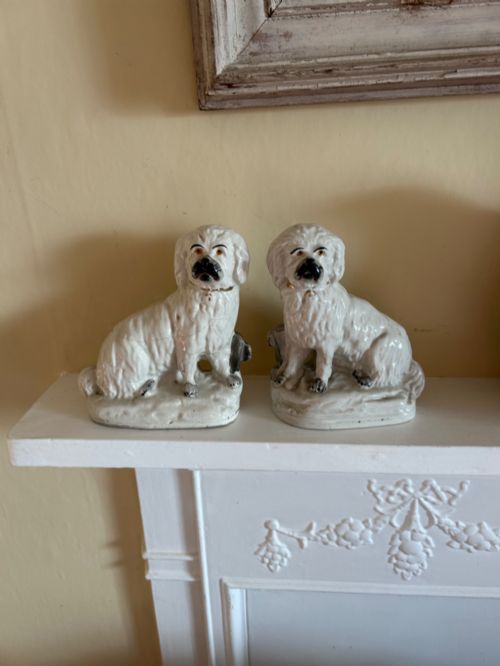


Vintage Mantel Dogs
These vintage mantel dogs bring character and symmetry to a hearth, offering a charming slice of decorative history.
Vintage Mantel Dogs
Vintage mantel dogs encompass a diverse array of ceramic, pottery, and metal figures designed to sit in pairs upon a fireplace shelf. The selection on this page leans heavily toward traditional Staffordshire spaniels alongside Art Deco hounds and whimsical poodles.
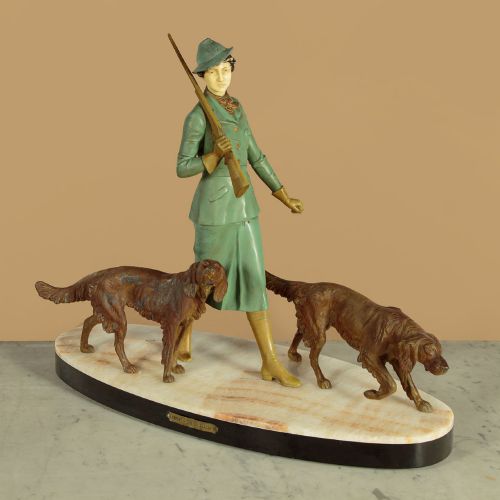
Buyers will encounter various incarnations ranging from mid-nineteenth century earthenware pairs adorned with copper lustre to twentieth century spelter and marble table clock sets. These pieces reflect shifting domestic tastes from Victorian sentimentality to streamlined modernist sculpture.
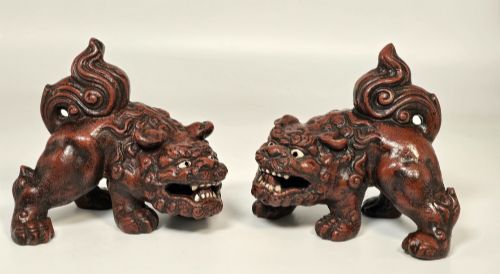
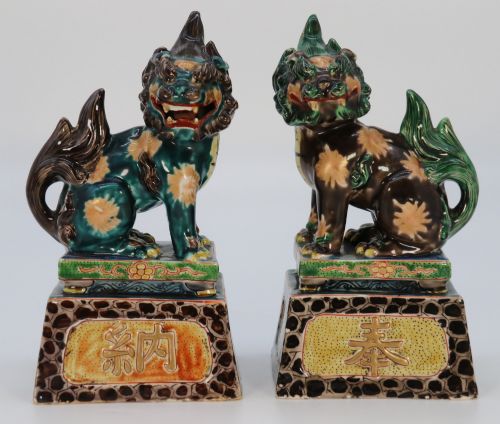
Originating predominantly from English potteries and continental workshops, these decorative figures include seated spaniels, terriers, whippets, and even Buddhist lions. They serve primarily as ornamental focal points that anchor a mantelpiece arrangement.
Materials and Techniques
Pottery and earthenware bodies form the backbone of the traditional Staffordshire tradition, shaped using moulds and finished with hand-painted glazes, copper lustre, and gilt accents. These ceramic techniques allow for repeatable forms that still retain individual painterly details.
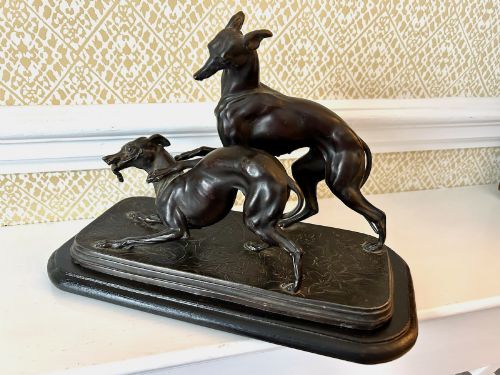
Metal sculptures utilise spelter or bronze finishes often mounted onto heavy marble or onyx bases, particularly amongst the Art Deco examples. Such combinations provide the substantial weight required for functional clock sets and sculptural bookends or night lights.
Vintage Mantel Dogs Retail Price Guide 2026
Typical asking prices for vintage mantel dogs among the pieces listed under this phrase on Sellingantiques today, from the lower quarter to the upper quarter. They describe what is for sale here now, not the wider market.
Some clever hounds double as novelty alarm clocks or glowing night lights to keep watch after dark.
Factors Determining Quality
The choice of materials and the integrity of the glaze or metal patina dictate the overall refinement of a piece. Original matching pairs that survive without heavy restoration command greater appreciation among collectors.
Royal Doulton·Beswick
The Vintage Mantel Dogs Glossary
- Earthenware
- A porous type of pottery fired at lower temperatures, commonly used for nineteenth century mantel figures and glazed for colour.
- Spelter
- An alloy of zinc and lead used as a cheaper alternative to bronze for twentieth century animal sculptures.
- Staffordshire pottery
- Ceramics produced in the pottery towns of Staffordshire, famous for producing pairs of hearth spaniels.
- Copper lustre
- A metallic glaze technique giving ceramics a reflective, coppery sheen popular on Victorian pieces.
Vintage Mantel Dogs: Frequently Asked Questions
How do I style mantel dogs?
Place them facing inwards toward each other at either end of the fireplace shelf to frame the hearth properly.
Ensure the scale matches the depth of the mantelpiece so they sit securely without overhang.
Are these dogs always sold in pairs?
Traditional earthenware spaniels and terriers were almost exclusively modelled and sold as symmetrical pairs to sit on either side of a clock.
Later Art Deco sculptures and sculptural clock sets often appear as single unified pieces featuring multiple hounds.
How can I tell Victorian from Art Deco dogs?
Victorian pieces typically rely on hand-painted earthenware with copper lustre or gilt highlights depicting spaniels and poodles.
Art Deco examples lean towards stylised spelter and marble depicting greyhounds, whippets, and alsatians with streamlined geometry.
What were comforter spaniels?
These were nineteenth century ceramic spaniels placed on British mantelpieces to watch over the household and offer comfort.
They became a staple of Victorian parlour decor, often referred to affectionately as Wally dogs.