
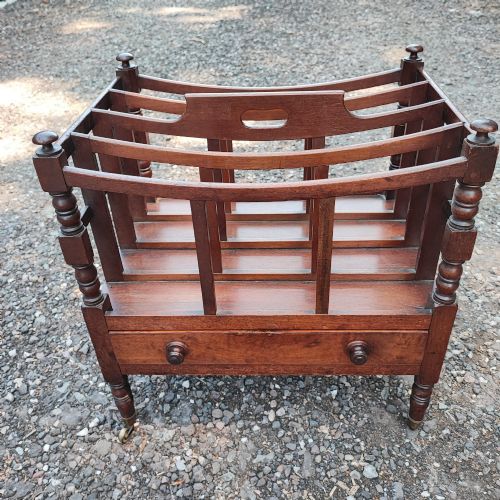
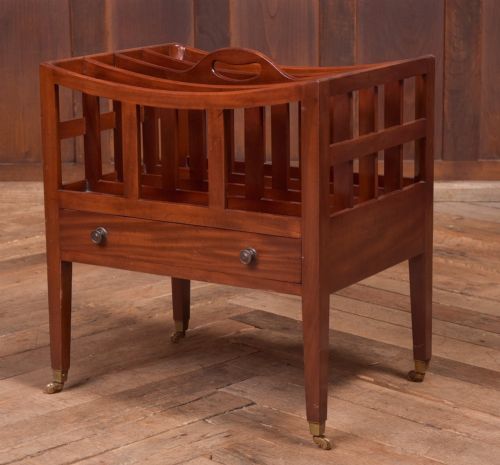
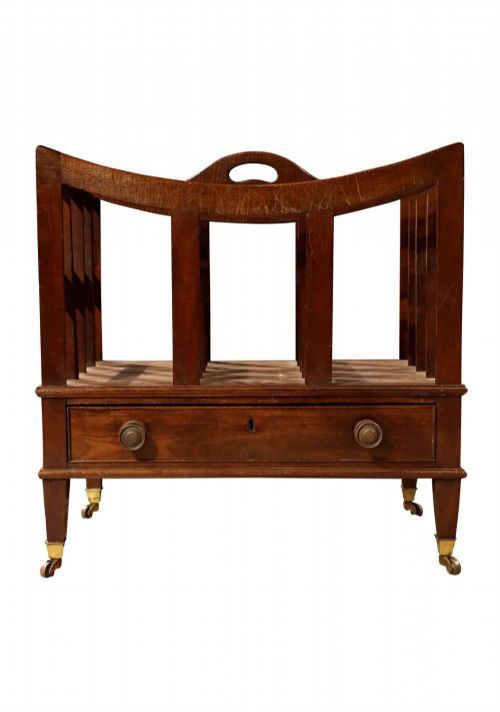


Vintage Mahogany Newspaper Rack
A vintage mahogany newspaper rack brings timber warmth and practical division to a room, keeping daily reading organised with traditional grace.
Vintage Mahogany Newspaper Rack
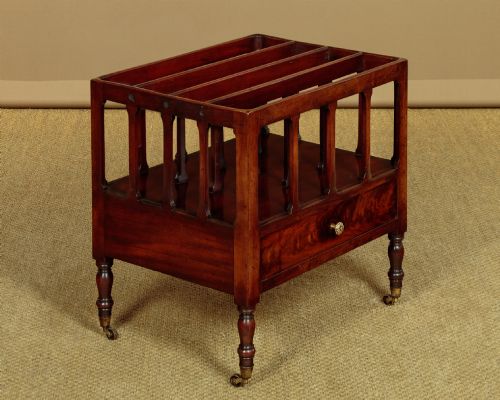
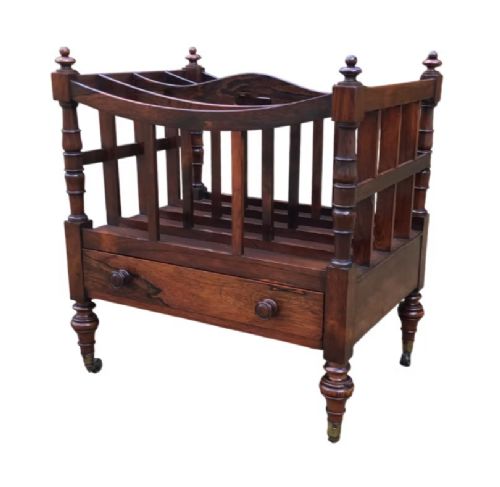
A vintage mahogany newspaper rack typically takes the form of a traditional Canterbury, designed with upright slatted divisions to hold periodicals, sheets of music, or folios neatly off the floor. These pieces span several distinct historical periods, with Regency, Georgian, and Edwardian examples appearing most frequently across the selection.
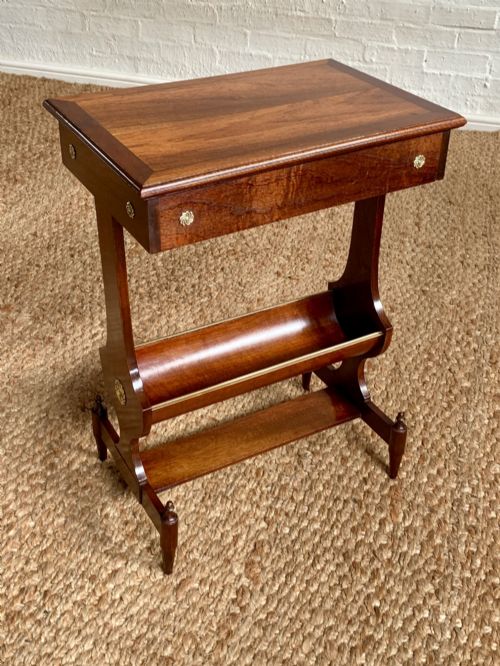
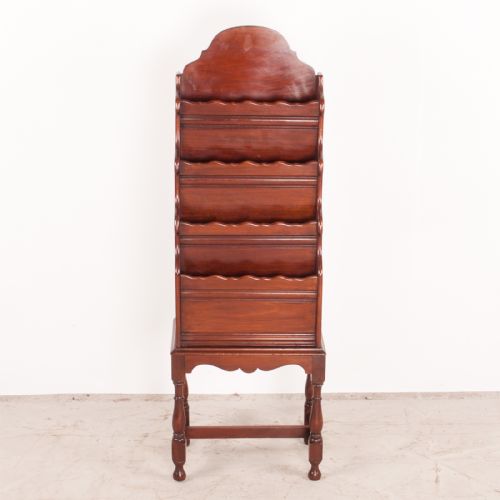
Beyond standard open racks, the forms encompass boat-shaped designs, pieces equipped with lower drawers for smaller items, multi-tiered stands, and revolving bookcases mounted on brass stands. Timbers predominantly feature rich mahogany, sometimes accented with rosewood or boxwood and satinwood inlay.
The objects serve as both functional furniture and decorative statements, often positioned beside seating areas or within studies. Their origins range from early nineteenth-century workshops to twentieth-century revivals.
Materials and Construction Techniques
Cabinet makers utilised solid mahogany and flame mahogany veneers, constructing the slatted divisions and upright frames with precise joinery to bear the weight of stacked paper and folios. Turned legs, frequently fitted with castors, provide mobility and elevation to the heavier floor-standing models.
Metal elements play a functional structural role, incorporating brass handles, hinges, and castors alongside tubular brass supports or metal wire dividers in specific Victorian and Edwardian variations. Inlaid details such as satinwood and boxwood add linear contrast to the dark timber surfaces.
Materials paired with mahogany across the inventory include brass, rosewood, boxwood, satinwood inlay, and metal wire.
Distinctions in Quality and Execution
The standard of timber selection sets individual pieces apart, with figured flame mahogany veneer and dense solid stock representing the upper end of cabinet-making standards. Finer examples display meticulous attention to the turning of legs, crispness of carved details like wreath motifs, and the integration of dovetailed drawers.
Structural integrity and hardware refinement dictate durability and visual polish. Original brass castors, precise joinery in the slatted divisions, and balanced proportions distinguish superior traditional work from simpler twentieth-century utility pieces.
The Vintage Mahogany Newspaper Rack Glossary
- Canterbury
- A low, freestanding stand with partitioned sections designed originally for sheet music and later utilised for newspapers and magazines. It often incorporates a single drawer beneath the main tier.
- Flame mahogany
- A veneer cut from timber where the branch meets the trunk, producing a distinctive flickering, flame-like grain pattern. Cabinet makers reserved this expensive cut for the most visible exterior surfaces.
- Regency
- An English design style dating from the early nineteenth century, characterised by classical restraint, elegant curved shapes, and classical mounts. Pieces from this era often feature boat-shaped frames and delicate turned supports.
- Satinwood inlay
- A contrasting ornamental wood inserted into recesses in the mahogany surface to create geometric borders or decorative motifs. It provides a bright, golden contrast to the darker primary timber.
- Folio stand
- A large storage rack designed to hold oversized paper documents, prints, or large books. These sturdy stands often appear in country house settings within the Georgian period.
Vintage Mahogany Newspaper Rack: Frequently Asked Questions
What is the difference between a Canterbury and a magazine rack?
A Canterbury is a traditional piece of furniture featuring partitioned vertical sections, often elevated on legs with castors and frequently including a drawer. Magazine racks encompass a broader category that includes lighter twentieth-century stands, revolving bookcases, and wire-framed holders.
While both serve to store periodicals, Canterburys originate primarily from the Georgian, Regency, and Victorian eras as formal cabinet pieces, whereas general magazine racks often reflect Edwardian or later domestic utility.
How were these pieces used historically?
These stands were placed beside seating in drawing rooms, studies, and music rooms to keep daily newspapers, folios, and sheet music tidy and accessible. The compartmentalised dividers kept different publications separated and upright.
Drawers incorporated into the base of certain designs held smaller reading accessories, writing implements, or musical notes, keeping tabletop surfaces clear.
How do I care for a mahogany newspaper rack?
Maintain the timber by dusting regularly with a soft cloth and applying a quality beeswax periodically to nourish the mahogany grain. Avoid placing the stand in direct sunlight or near heat sources to prevent the veneer from drying or cracking.
Check brass castors and joints gently during cleaning, ensuring that moving parts remain free of dust accumulation without applying harsh chemical polishes.
How can I tell a Regency piece from an Edwardian revival?
Regency pieces date from the early nineteenth century and typically exhibit dense, heavy mahogany, hand-turned legs, and construction methods characteristic of pre-industrial workshops. Edwardian pieces, dating around nineteen hundred, often show brighter inlaid satinwood, lighter framing, and machine-assisted joinery.
Examining the underside, drawer linings, and interior secondary woods helps confirm the period of manufacture and distinguishes original antiques from later revivals.