


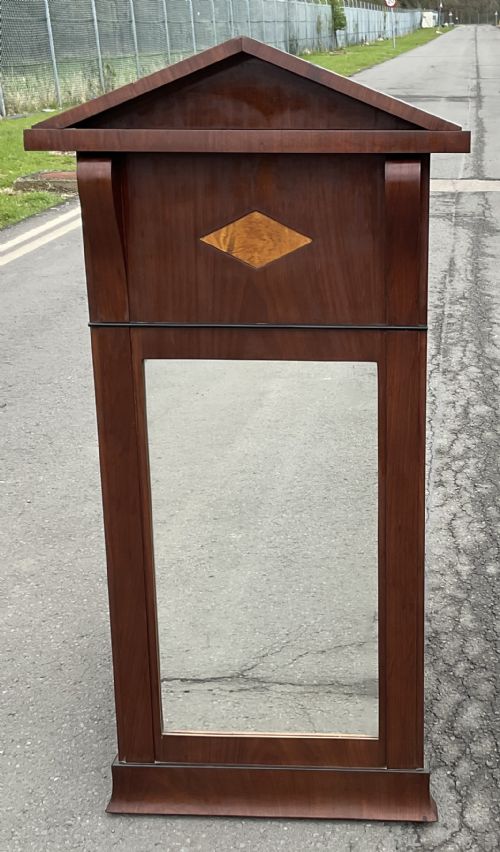
Vintage Mahogany Hall Mirror
These vintage mahogany hall mirrors offer deep timber grains and practical entryway glass, combining period craftsmanship with everyday utility.
Vintage Mahogany Hall Mirror
A vintage mahogany hall mirror is a functional furnishing designed for domestic entryways, utilising rich timber frames to house reflecting glass. When you search for this phrase, you encounter pieces spanning the Victorian and Edwardian eras, alongside pieces executed in Regency and Georgian styles.
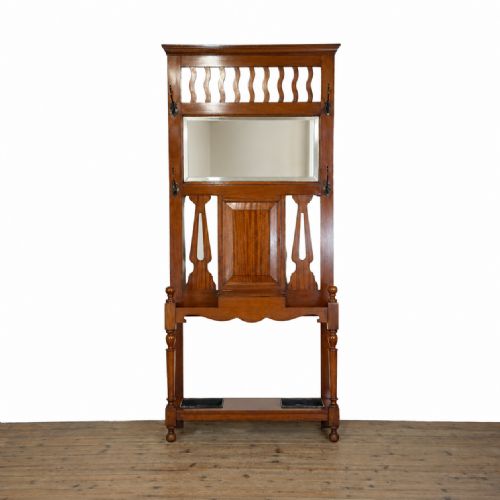
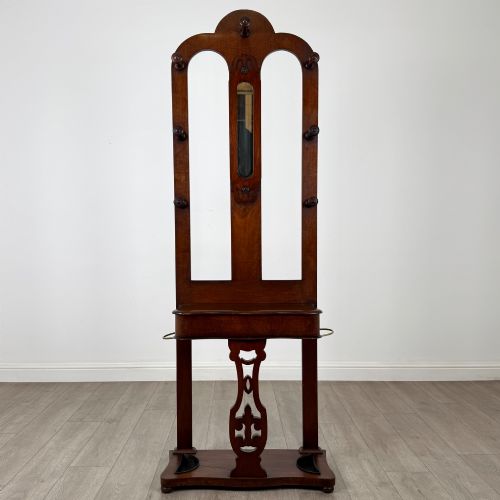
The selection ranges from dedicated wall-hanging plates to integrated hall stands featuring central mirrors, umbrella holders, and marble tops. These items served a practical domestic purpose in nineteenth and early twentieth-century hallways, offering a final reflection before leaving the house.
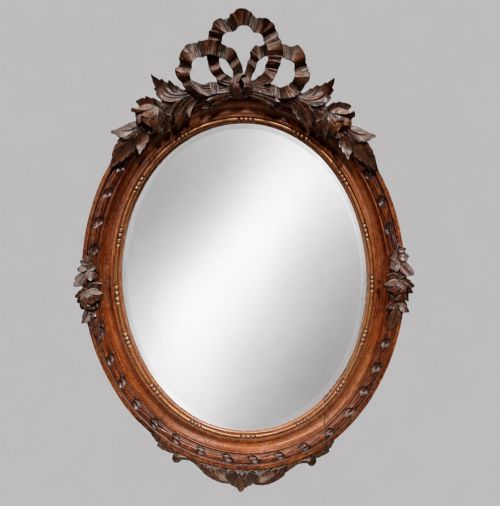
Most examples originate from the late nineteenth century and the early decades of the twentieth century, reflecting the prevailing revival aesthetics of those periods. Buyers find various configurations, from simple oval wall mirrors to complex combinations incorporating coat hooks and shelves.
Materials and construction techniques
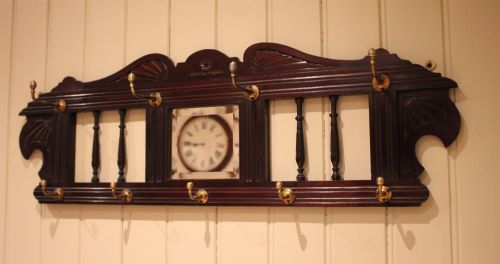
Makers utilised solid mahogany and mahogany veneers over secondary timbers, often selecting boards with pronounced grain patterns. Frames frequently incorporated brass hardware, such as coat hooks, mirror pivots, and hanging brackets, complementing the dark reddish-brown timber.
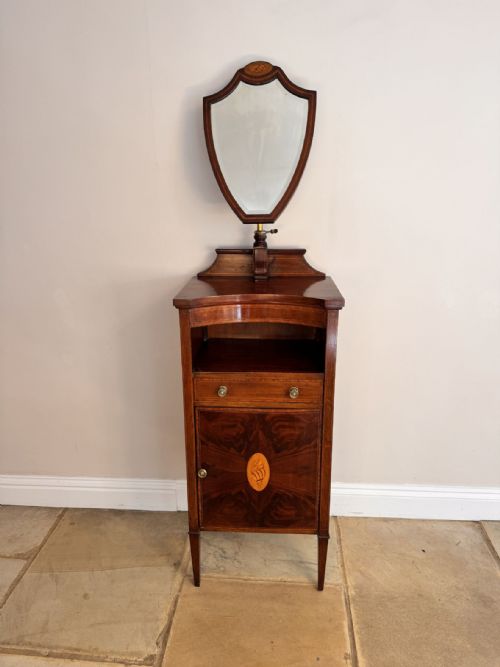
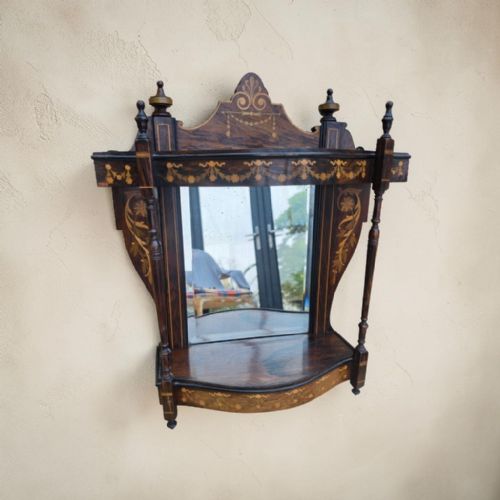
Surface ornamentation involved inlay work using lighter woods like satinwood, alongside carved details reflecting Victorian Chippendale or Neoclassical revivals. Selected hall stands incorporated ceramic elements, such as decorative tiles, alongside marble surfaces for durability.
Certain Edwardian mirrors carry the colloquial designation of a last look mirror, serving the final check before stepping out.
Distinctions in quality and execution
Quality separates pieces through the depth of timber selection and the precision of cabinetmaking joints. Finer examples display crisp, hand-carved mouldings and sophisticated inlay, whereas simpler iterations rely on pressed decoration or plain timber framing.
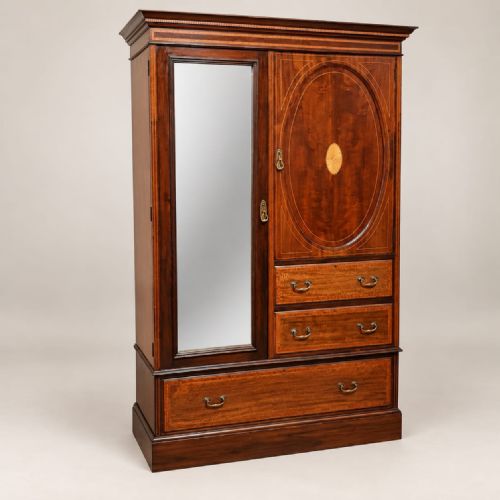
The structural integration of multi-purpose pieces, such as combination wardrobes and hall stands with fitted marble tops, demonstrates higher manufacturing ambition. The integrity of the original glass plate and the quality of secondary brass fittings also indicate the grade of the piece.
The Vintage Mahogany Hall Mirror Glossary
- Mahogany
- A durable tropical hardwood known for its rich reddish-brown colour and fine grain. It serves as the primary structural and visual medium for these frames.
- Inlay
- A technique where pieces of contrasting timber, such as satinwood, are inserted into recessed portions of the mahogany base to create decorative patterns.
- Pier mirror
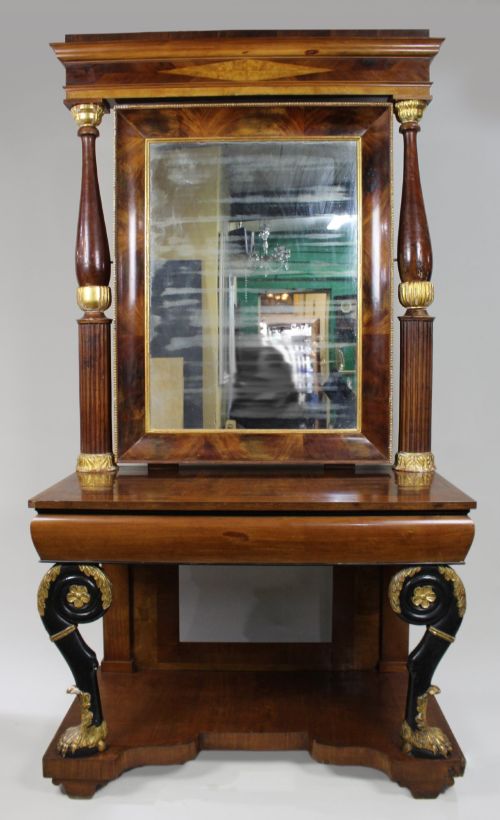
- A tall wall mirror traditionally hung on the pier, the solid wall space between windows. These often accompany console tables in period interiors.
- Hall stand
- A large hallway item combining a central mirror with coat hooks, umbrella wells, and sometimes marble surfaces. It anchors the entryway with multiple domestic functions.
- Parcel gilt
- A decorative method where specific carved elements of the mahogany frame receive a thin application of gold leaf, highlighting particular details.
Vintage Mahogany Hall Mirror: Frequently Asked Questions
What periods do these mirrors represent?
The pieces span from the nineteenth century through the Edwardian era, incorporating styles such as Victorian, Regency, and Arts and Crafts.
Craftsmen across these periods utilised mahogany alongside brass, marble, and ceramic elements to suit domestic interiors of the time.
How were hall stands used originally?
Hall stands served as multi-purpose furniture pieces in Victorian and Edwardian reception areas. They provided a central mirror for last-minute checks, alongside hooks for coats and hats.
Lower sections frequently included umbrella wells and marble surfaces to handle wet weather accessories upon entering the home.
Where should I hang a hall mirror?
These mirrors suit entryways, hallways, and reception rooms where reflective glass and timber frames enhance smaller spaces. Wall-hung versions function effectively above console tables or low shelves.
Ensure adequate wall fixings support the weight of solid mahogany frames and integrated wooden brackets.
How do I identify a revival style?
Revival pieces adopt historical design vocabularies from earlier centuries, such as Georgian Chippendale or Neoclassical motifs executed in later Victorian workshops.
Examine the construction methods, timber patination, and secondary materials to distinguish between original period pieces and later interpretations.