
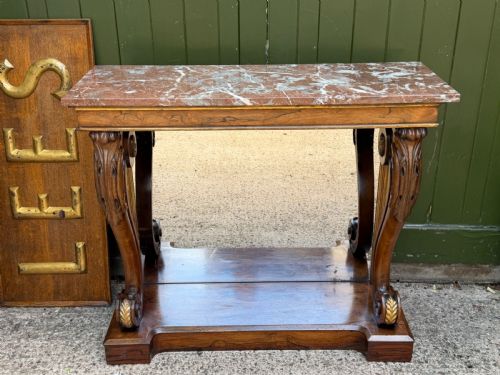


Gilt Pier Mirror Table
A gilt pier mirror table pairs a tall wall glass with a matching console, offering an opulent focal point that visually expands any room.
Gilt Pier Mirror Table
When searching for a gilt pier mirror table, buyers encounter paired furnishings designed to sit between architectural windows, combining a console base with a coordinating wall mirror. These matched sets arrive in varied iterations spanning the Regency era through the early twentieth century, originating from English, French, Italian, and Swedish workshops.
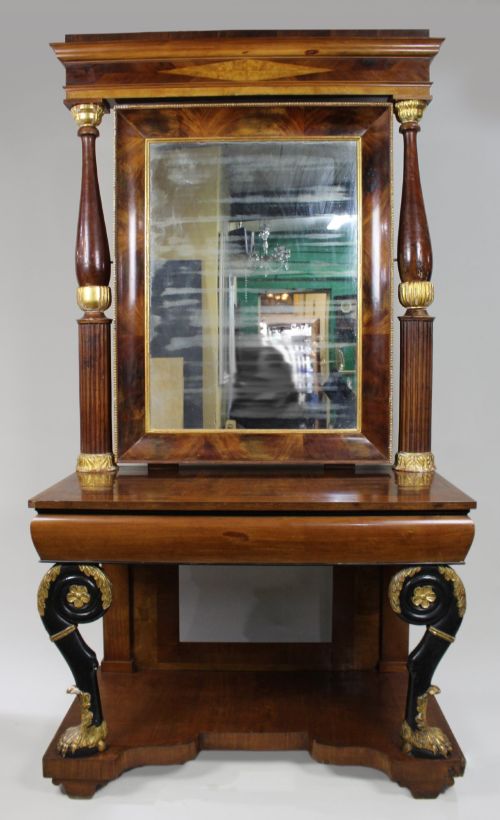
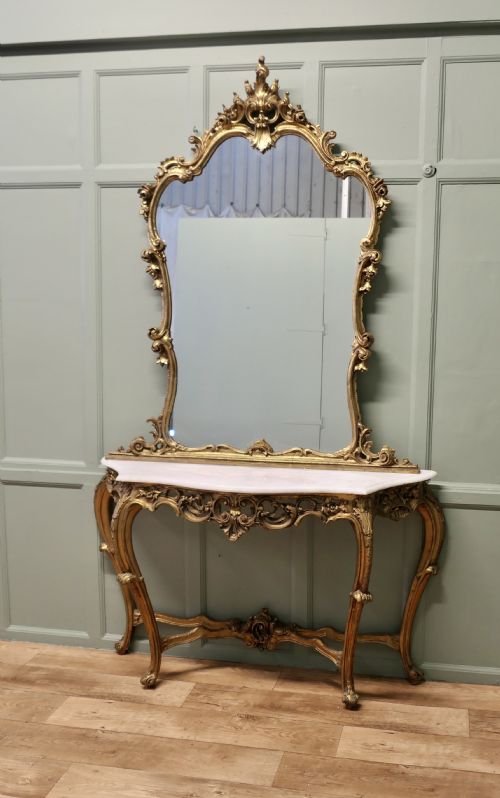
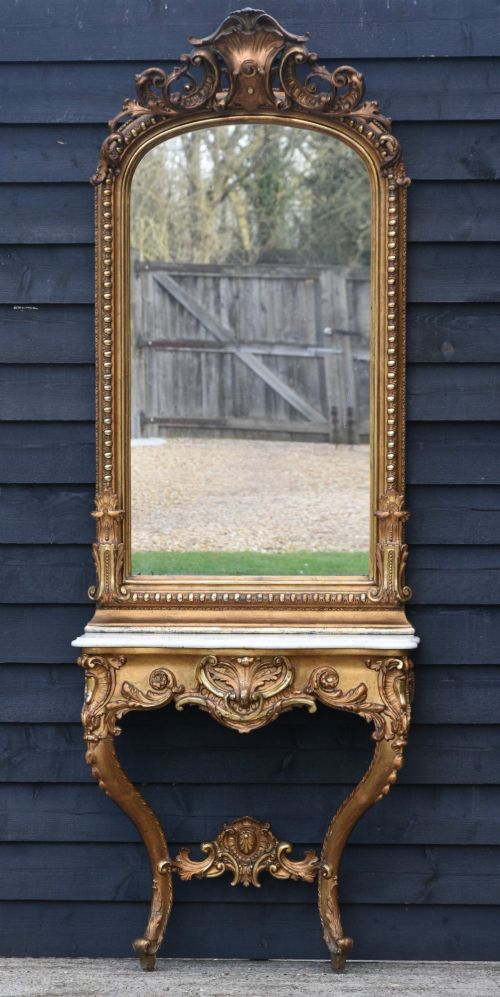
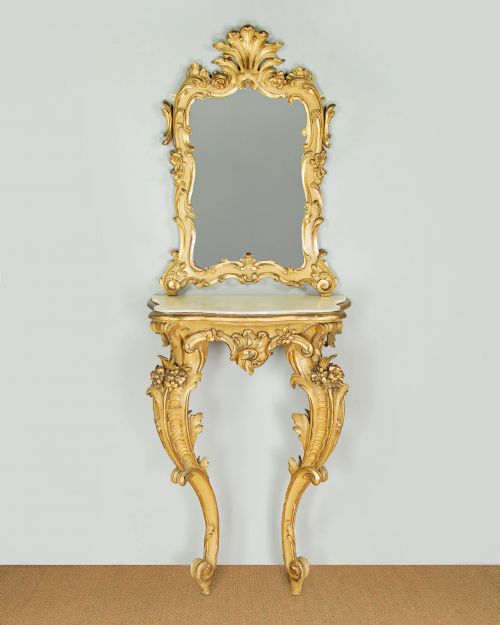
The console tables frequently feature figured marble or marquetry tops supported by carved wooden frames, while the accompanying mirrors extend upward to reflect light and interior space. Many surviving examples manifest revival idioms such as Rococo, Neoclassical, and French Empire, demonstrating how nineteenth-century makers drew inspiration from earlier court aesthetics.
How they were made
Cabinetmakers constructed the foundational frames from dense timbers including mahogany, walnut, and rosewood, often applying giltwood and gesso to create luminous gilded surfaces. Parcel-gilt highlights frequently accent dark woods, contrasting metallic sheen against rich natural grain.
Table tops utilise heavy slabs of polished marble, fitted precisely to the wooden rails below. Silvered mirror glass is integrated into both console backs and tall wall frames, secured securely within carved wooden rebates.
Certain console tables manage to look perpetually dressed for a ball, even when holding nothing more than a stray set of keys.
What varies in quality
The caliber of these pieces rests upon the depth and crispness of the wood carving, where hand-tooled gesso ornament displays distinct artistic fluency rather than mechanical repetition. Superior examples maintain integrated harmony between the console base and the mirror frame, indicating they were conceived as a single commission.
Materials dictate upper tiers of execution, marked by thick slabs of figured marble and heavy, unblemished mirror plates reflecting age through gentle patination. Finer workshops employed meticulous parcel-gilt techniques, balancing exposed rosewood or mahogany with carefully burnished gold leaf.
The Gilt Pier Mirror Table Glossary
- Pier glass
- A tall mirror specifically designed to hang on the narrow wall space between two windows. It often stands directly above a matching console table.
- Gesso
- A plaster-based mixture applied to wood frames to provide a smooth surface for gilding. Skilled artisans carved intricate relief details directly into this dried preparation.
- Parcel-gilt
- A decorative treatment where only specific portions of a wooden object receive gilding, leaving the underlying grain of woods like mahogany or rosewood visible. This technique highlights particular carved motifs.
- Trumeau mirror
- A decorative wall mirror featuring an upper glass plate alongside a lower painted or carved panel. These originate predominantly from French traditions.
- Console table
- A wall-mounted or freestanding table supported by front legs or brackets, historically designed to sit flush against a flat surface.
Gilt Pier Mirror Table: Frequently Asked Questions
How do I style a pier mirror table?
Position the console table centrally against a suitable wall space with the matching mirror secured directly above at the correct eye level. The arrangement works effectively in grand hallways or principal reception rooms where reflected natural light enhances the interior.
Keep surface decoration on the marble or wooden top minimal to allow the carved giltwood frame and proportions of the console to remain the visual focus of the room.
Are the mirror and table always sold together?
Many surviving sets preserve the original pairing commissioned by the cabinetmaker, uniting the console base and wall mirror through matching carved motifs and gilding styles. Some pieces demonstrate independent origins where tables and mirrors from similar periods have been matched together later.
Examine the construction methods, wood species, and wear patterns on both pieces to determine if they share a unified history from the nineteenth or early twentieth century.
Which woods are found beneath the gilding?
Cabinetmakers utilised dense foundational timbers including mahogany, walnut, and rosewood beneath gesso and gold leaf applications. Parcel-gilt examples deliberately leave these rich woods exposed to contrast against bright gilded ornament.
Secondary woods visible on unpainted interior or underside surfaces often help indicate the regional origin and likely period of manufacture.
How do I distinguish Regency pieces from later revivals?
Regency items date from the early nineteenth century, exhibiting distinct classical restraint, rosewood veneers, and precise parcel-gilt detailing. Later nineteenth-century and early twentieth-century revival pieces frequently adopt bolder Rococo or Baroque ornamentation with heavier gesso and carved wood.
Look closely at the construction joints, backboards, and plate glass characteristics to help ascertain whether a piece belongs to the original Regency era or subsequent revival movements.