




Regency Mahogany Mirror Console
These regency mahogany mirror console pieces combine rich timber frames with reflective glass, offering both a functional surface and a sense of expanded interior space.
Regency Mahogany Mirror Console
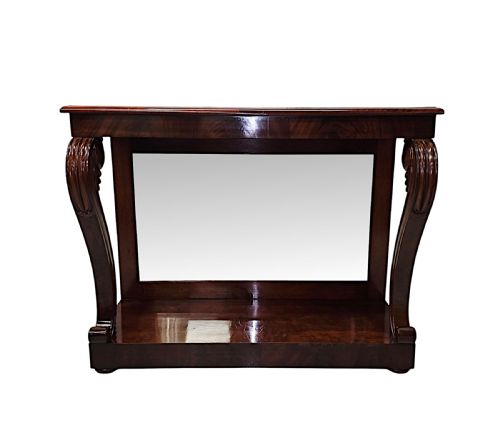
A regency mahogany mirror console brings together a heavy timber base with a vertical glass back, designed to stand flat against a wall in a formal interior. These furnishings serve as decorative focal points while bouncing light across a room through their integrated mirror plates.
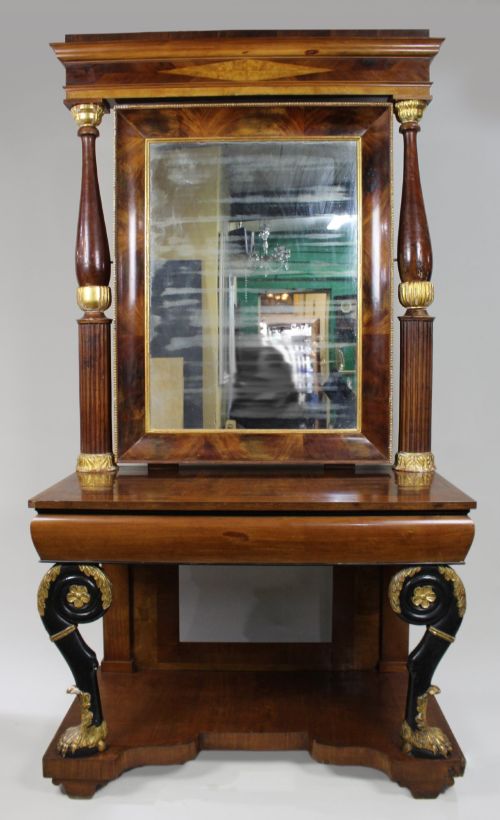
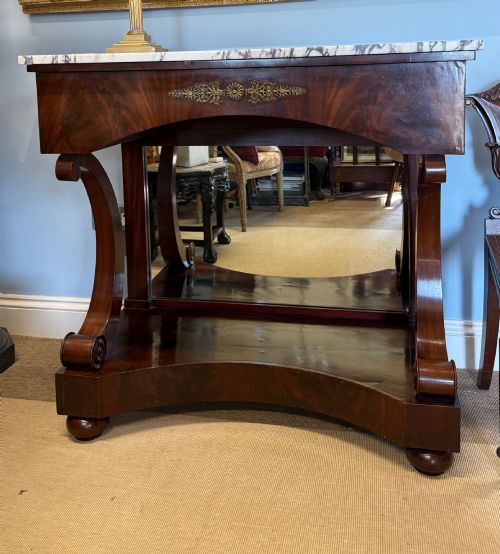
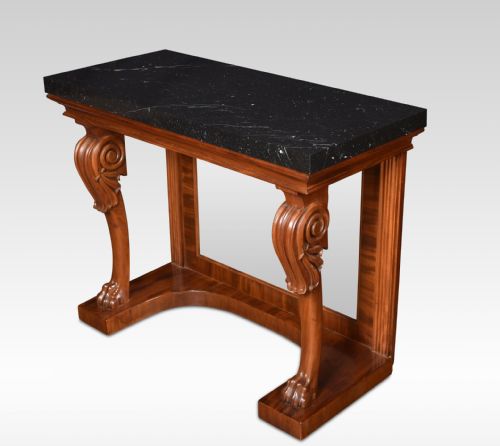
The versions most commonly met on this page date from the nineteenth century and span styles including Regency, William IV, and Victorian. Many examples incorporate distinct architectural traits such as marble tops and parcel gilt detailing alongside the primary dark wood structure.
Materials and construction
Makers utilised dense timber foundations, often selecting flame mahogany for its striking grain patterns, which give the flat surfaces deep visual movement. Ebonised timber and brass elements frequently appear alongside the primary wood to create sharp tonal contrasts.
Heavy stone surfaces such as marble provide durable tops for these tables, while giltwood accents and parcel gilt carving highlight architectural mouldings. Large mirror plates are fitted securely into wooden frames behind the console base, reflecting the room ahead.
One exceptional nineteenth-century table enlists carved wooden dolphins to support its flame mahogany top, bringing a marine creature right into the drawing room.
Evaluating craftsmanship and design
Finer examples distinguish themselves through the selection of particularly dramatic flame mahogany veneers and the crisp execution of parcel gilt carving. The integration of solid marble tops and substantial mirror plates also separates more ambitious pieces from simpler forms.
Regional variations and stylistic influences, such as Irish Regency or Italian Empire characteristics, introduce distinct sculptural details like dolphin motifs. The complexity of the structural joinery and the purity of the timber selection ultimately define the upper tier of these furnishings.
Gillingtons of Dublin
The Regency Mahogany Mirror Console Glossary
- Console table
- A table designed to be fixed against a wall, often supported by front legs or brackets while relying on the vertical surface for stability.
- Flame mahogany
- A veneer cut from the fork of the mahogany tree, producing a distinctive flickering flame pattern across the timber surface.
- Pier mirror
- A tall looking glass specifically manufactured to hang on the wall space between windows, frequently paired with a matching console table below.
- Parcel gilt
- A decorative technique where specific carved details or mouldings are partially gilded with gold leaf while the surrounding wood remains exposed.
Regency Mahogany Mirror Console: Frequently Asked Questions
Where should a mirror console be placed?
These pieces suit entrance halls, drawing rooms, or dining spaces where a wall surface allows the tall mirror to reflect light and interior details.
Positioning them opposite a window maximises the amount of natural illumination they throw back into the room.
How do you maintain marble top tables?
The stone surfaces require gentle cleaning with mild, non-abrasive solutions to protect the polished finish from dulling over time.
Avoid placing acidic liquids directly onto the marble to prevent etching on the polished top.
How do I identify nineteenth century pieces?
Examination of the timber construction, backboards, and mirror silvering techniques helps determine the age of the structure.
Tool marks, timber shrinkage, and the method of securing the mirror plate provide clear indicators of period manufacture.