
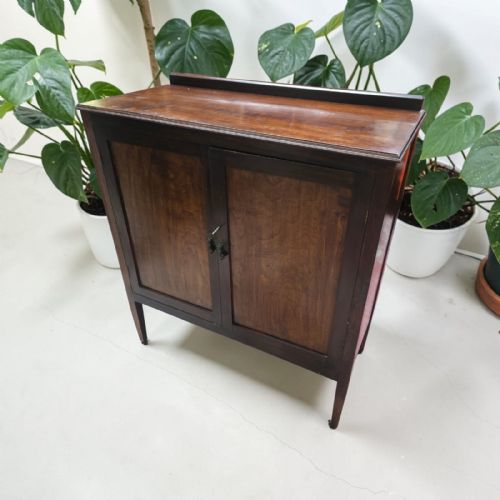
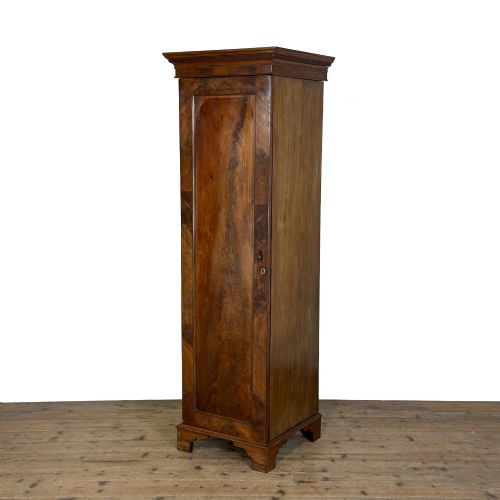
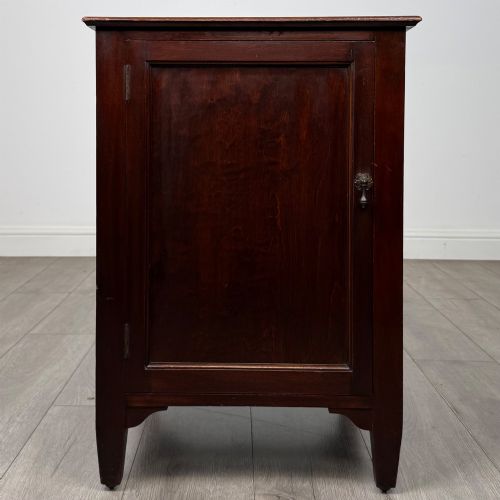
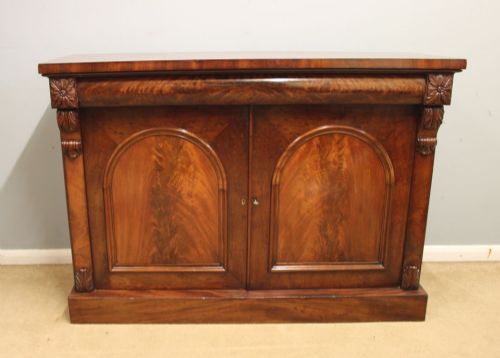


Vintage Mahogany Hall Cupboard
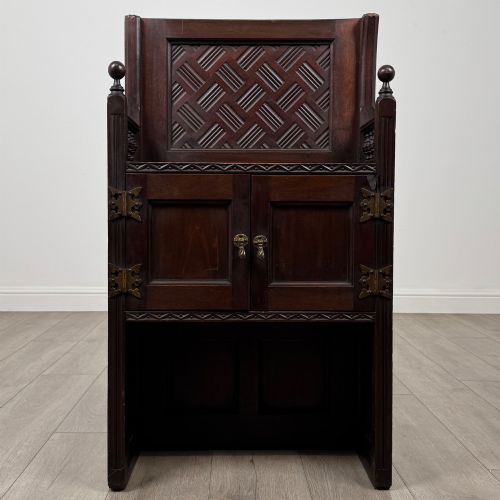
These vintage mahogany hall cupboard pieces offer practical storage and rich timber grain, serving as traditional narrow furniture for entranceways.
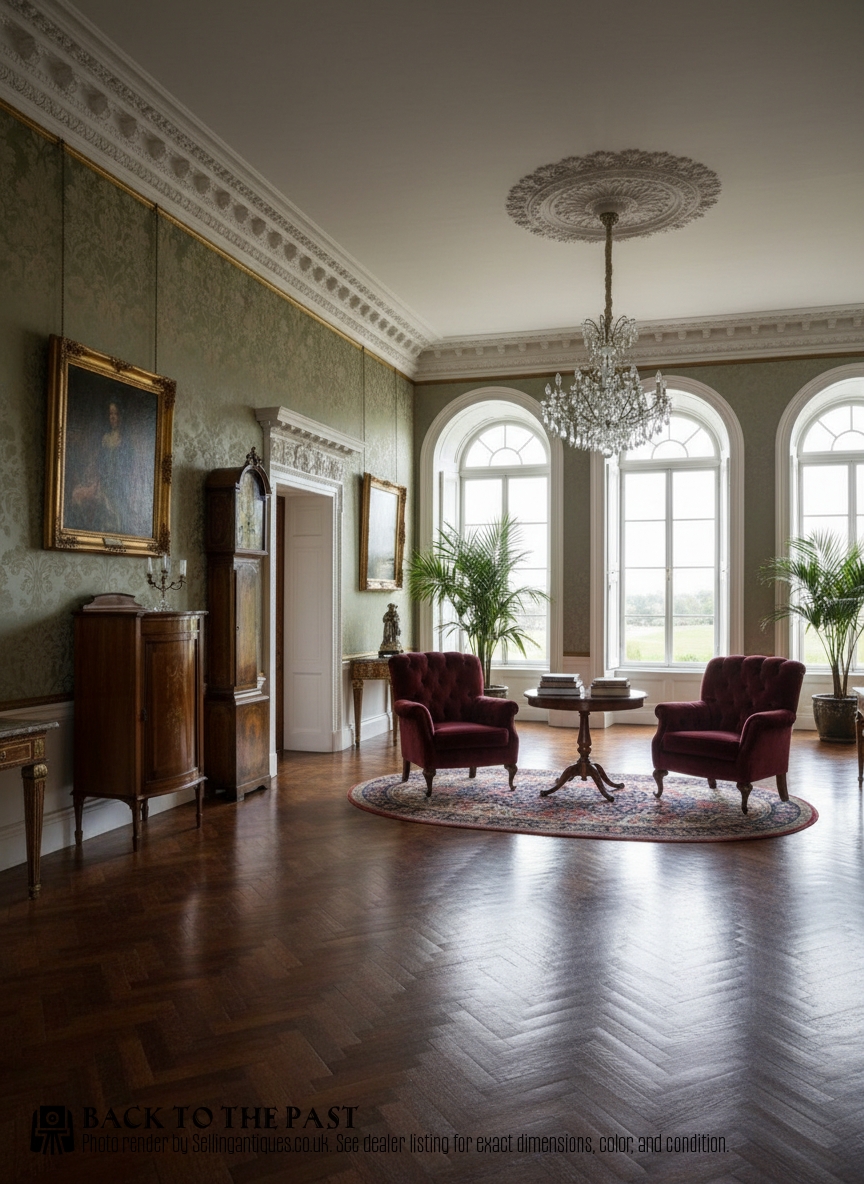
Vintage Mahogany Hall Cupboard
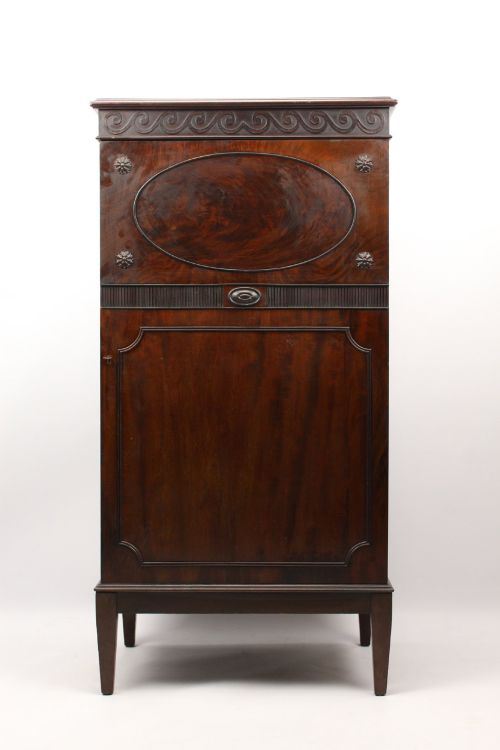
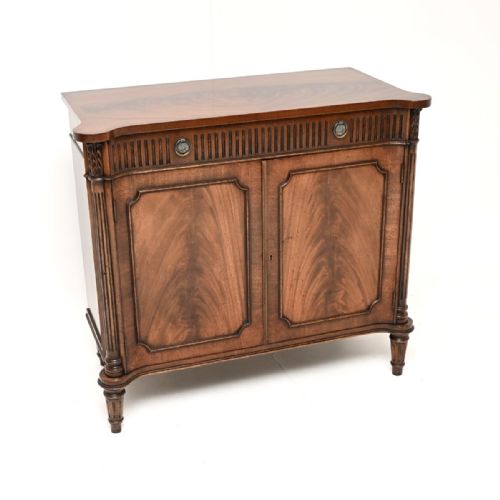
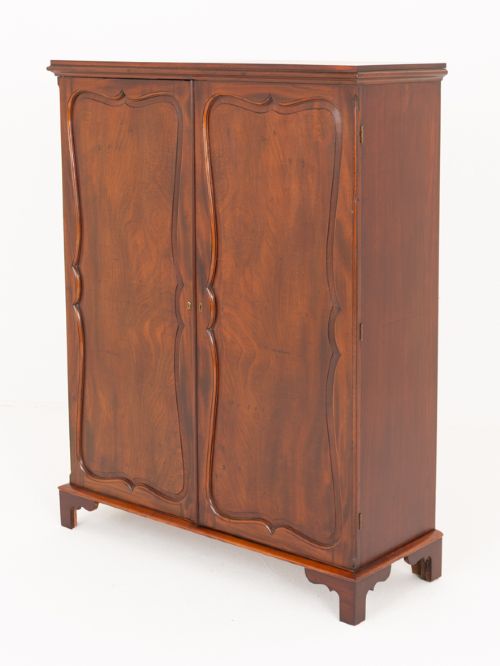
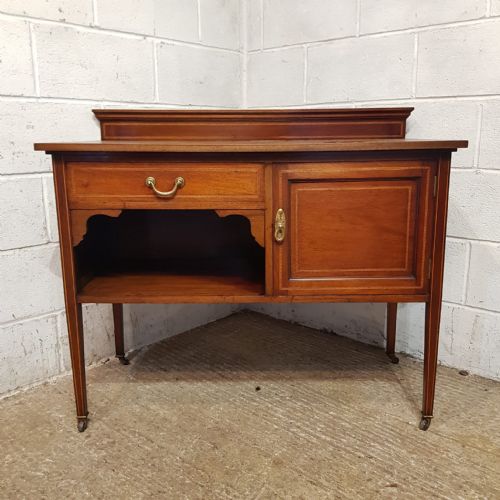
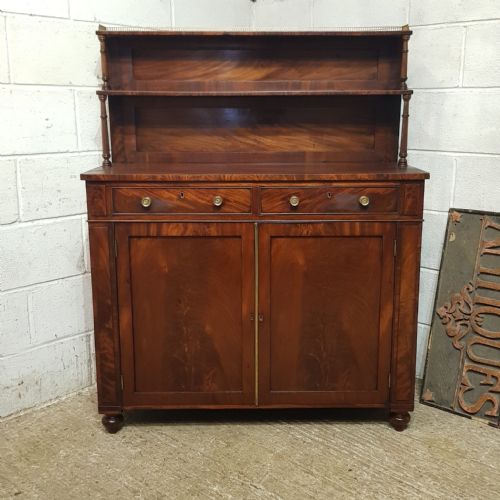
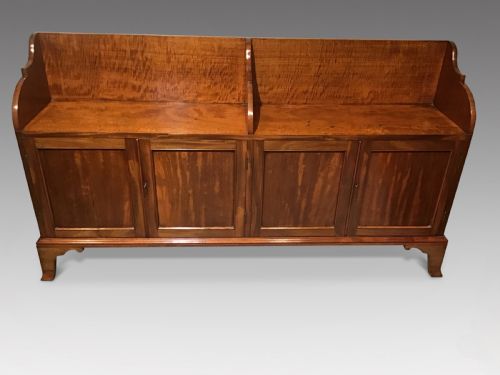
When you search for a vintage mahogany hall cupboard, you encounter a selection of compact storage furniture spanning the Victorian, Edwardian, and Regency periods. The forms include narrow two-door side cabinets, pedestals, washstands, and small hall robes built to fit entranceways.
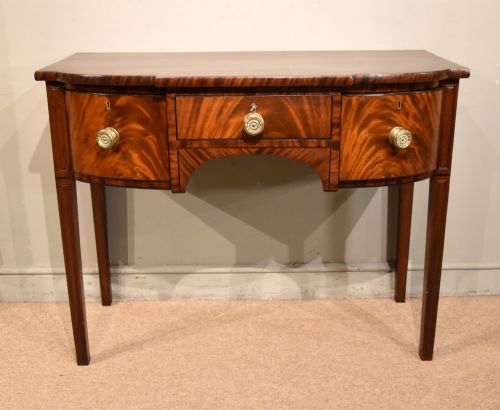
You are most likely to meet Edwardian and Victorian versions on this page, alongside Georgian and Regency pieces. These items often feature flame mahogany veneer, satinwood inlay, and brass hardware to suit narrow domestic corridors.
How they were made
Cabinet makers utilised solid mahogany and mahogany veneer applied over secondary timbers, often accentuating the grain with flame mahogany figures. Selected pieces incorporate contrasting satinwood inlay or brass handles to frame the doors and drawers.
Construction methods range from traditional cabinet joinery found in Georgian and Victorian workshops to simpler utilitarian building in later Edwardian examples. Internal fittings vary from simple shelving to fitted interiors with drawers and hanging space.
Some Edwardian hall robes managed to pack hanging space, shelves, and clothes hooks into a footprint smaller than a modern coat rack.
What varies in quality
The standard of timber selection separates finer examples from standard production, particularly the depth and figure of flame mahogany veneer. Superior pieces display thoughtful matching of wood grain across doors and panels rather than random application.
Joinery execution and the crispness of inlaid satinwood or brass fittings distinguish workshop-made items from simpler utility pieces. The integrity of the internal structure and original hardware also dictate the overall standing of an individual cabinet.
Denby and Spinks
The Vintage Mahogany Hall Cupboard Glossary
- Flame mahogany
- A highly figured timber veneer showing a distinctive flame-like pattern across the surface. This cut was selected for prominent door panels and drawer fronts.
- Satinwood
- A pale, hard timber used for contrasting stringing and inlay work on Edwardian cabinets. It creates decorative borders against the darker mahogany background.
- Demi-lune
- A half-moon shape used for the footprint of console and side cabinets designed to sit flat against a hallway wall. This curved form saves floor space in narrow areas.
- Chiffonier
- A small sideboard featuring enclosed lower cupboards, sometimes surmounted by a shelf or gallery back. These developed during the Regency and Victorian periods for dining and hallway storage.
- Pedestal cabinet
- A single-door freestanding cabinet designed to occupy narrow spaces beside doors or in hallways. They provide compact vertical storage for household items.
Vintage Mahogany Hall Cupboard: Frequently Asked Questions
What is a hall cupboard?
A hall cupboard is a compact piece of furniture designed for entranceways to store everyday items out of sight. They provide practical storage while maintaining a narrow footprint suitable for corridors.
These pieces typically include small two-door cabinets, pedestals, or hall robes made from mahogany during the eighteenth, nineteenth, and early twentieth centuries.
How do I date a mahogany cabinet?
Dating involves examining the construction techniques, hardware, timber preparation, and stylistic details of the piece. Georgian and Regency items display different carcass construction and proportions compared to Victorian and Edwardian examples.
Secondary woods, drawer linings, and the type of veneer or inlay provide further clues to the manufacturing decade.
Are these cabinets suitable for small hallways?
Many of these pieces are specifically built with shallow depths and narrow widths to fit entranceways and corridors without obstructing movement. Demi-lune shapes and flat-backed side cabinets hug the wall effectively.
Internal configurations range from simple shelving to hanging space in small hall robes, accommodating coats and hats.
How do I care for mahogany veneer?
Mahogany furniture requires protection from direct sunlight and excessive humidity to prevent timber movement and fading of the polished surface. Regular dusting with a dry, soft cloth preserves the finish.
Occasional application of appropriate wax polish maintains the moisture and lustre of the timber grain without building up heavy residues.