



Vintage Mahogany Extendable Table
A vintage mahogany extendable table offers a practical centrepiece for dining rooms, combining rich timber grains with mechanisms designed to host large gatherings.
Vintage Mahogany Extendable Table
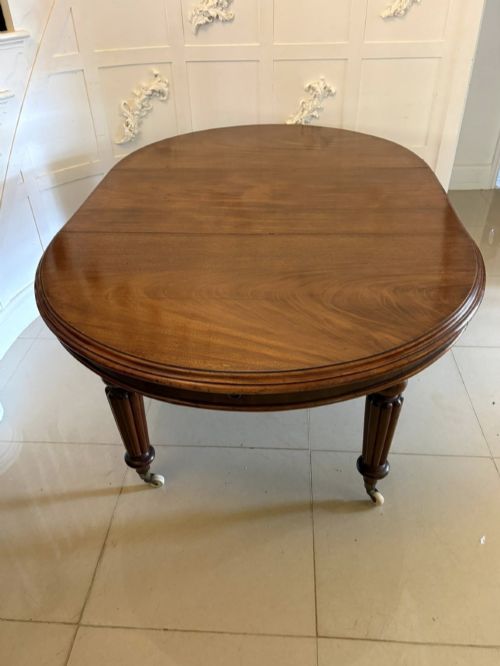
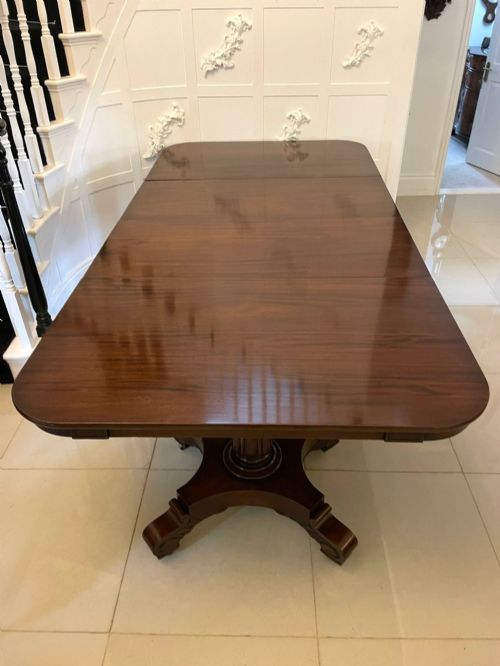
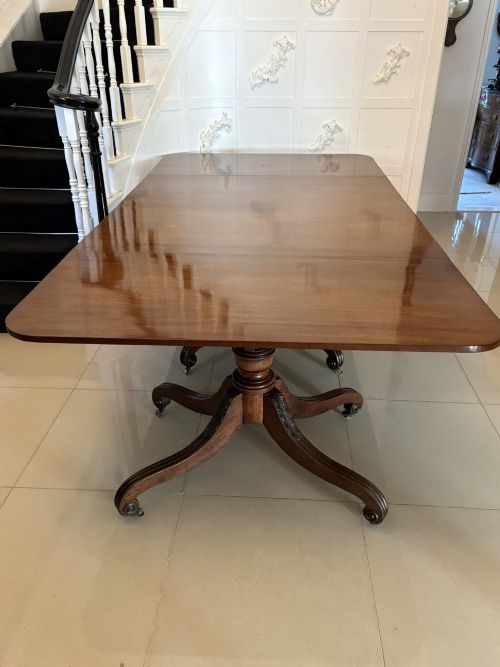
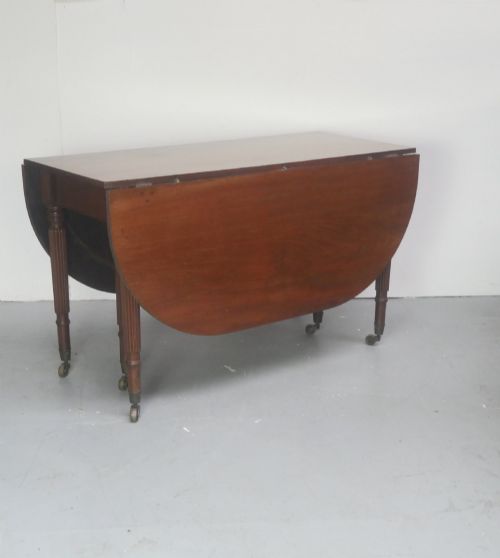
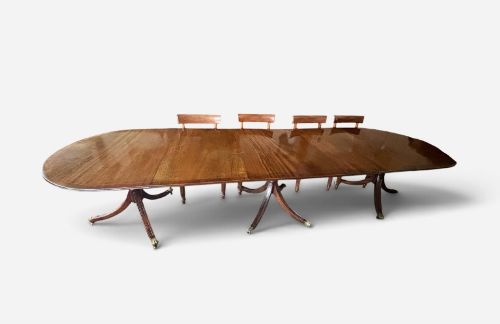
A vintage mahogany extendable table brings together centuries of British dining furniture, ranging from formal Georgian and Regency multi-pillar designs to later Victorian draw-leaf and wind-out formats. Buyers search for these pieces to accommodate family dinners while retaining traditional craftsmanship and deep timber tones in their homes.
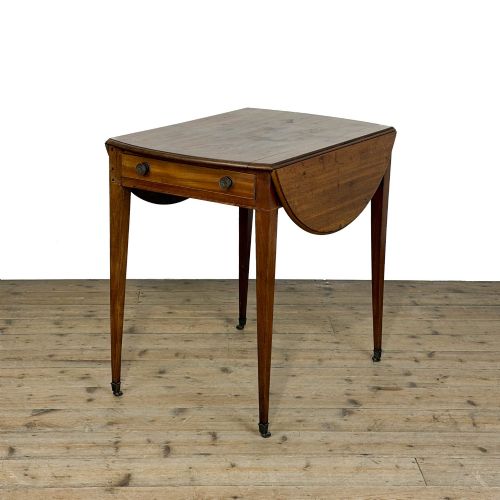
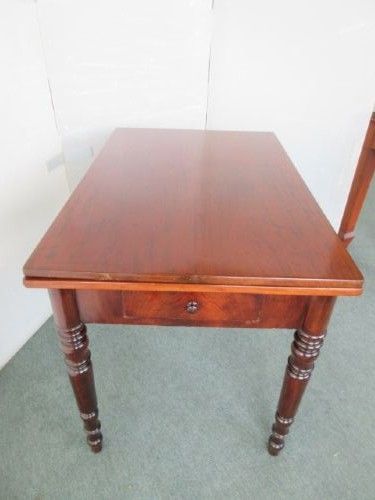
The options here span multiple eras including the 19th century, Edwardian period, and 1920s revivals, alongside smaller Pembroke and drop-leaf formats. Tables with multiple pedestals and removable leaves dominate the larger selections, offering flexible seating capacity for various room sizes.
Materials and construction
These tables rely primarily on solid and veneered mahogany, frequently selected for its deep reddish-brown grain and durability, sometimes enhanced by contrasting satinwood inlay or flame mahogany figuring. Supporting frameworks incorporate brass fittings, such as castors and winding mechanisms, alongside steel components that facilitate the extension of heavy leaves.
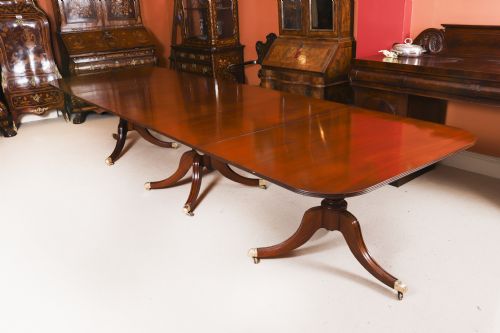
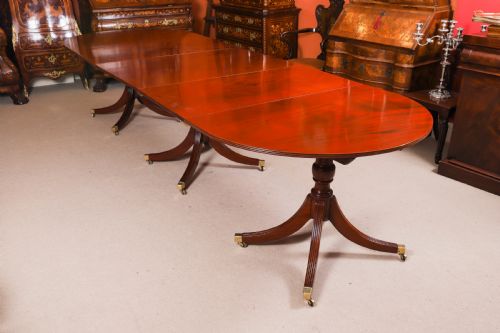
Secondary materials like ceramic appear in specific hardware details, while structural frames utilise traditional joinery suited to supporting multiple heavy leaves. Pedestal bases often feature carved wooden supports, sometimes resting on brass castors to allow smooth movement across flooring.
Listings feature examples spanning the Georgian, Victorian, and Edwardian periods, constructed primarily in mahogany with brass and satinwood inlay.
Assessing craftsmanship
Quality in these tables rests upon the selection of timber figures, such as plum pudding mahogany or flame patterns, and the precision of the extension mechanism. Superior examples feature robust winding systems, well-fitted leaves that match the grain of the main top, and stable pedestals without excessive play.
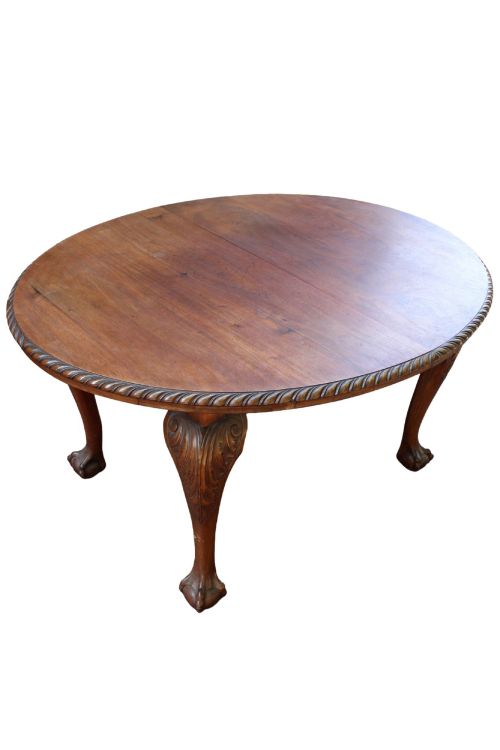
The refinement of carved details, including claw and ball feet or subtle inlay work, separates standard production pieces from exceptional workshop creations. A well-preserved finish that highlights the natural depth of the mahogany without obscuring the grain indicates superior historical care.
Whytock & Reid
The Vintage Mahogany Extendable Table Glossary
- Wind out
- A mechanical system utilising a handle and internal screw threads to part the table halves for insertion of extension leaves.
- Pedestal
- A central column support, often branching into multiple legs, used to hold up the main dining surface.
- Drop leaf
- A table top configuration featuring hinged side flaps that lower when not in use to save space.
- Draw leaf
- An extension mechanism where auxiliary leaves slide out from beneath the main surface.
Vintage Mahogany Extendable Table: Frequently Asked Questions
How do wind out tables operate?
These tables use an internal metal screw mechanism operated by a removable handle inserted into the side apron. Turning the handle drives the two halves apart smoothly to create a gap for extra leaves.
Once the leaves drop into place, the mechanism winds back in to secure the timber tightly together. This ensures the surface remains level and stable during meals.
Can I seat twelve people comfortably?
Large triple pillar and multi-leaf examples easily accommodate ten to twelve diners when fully extended. The absence of corner legs on pedestal formats provides extra legroom for guests.
Checking the length and leaf count helps confirm how many place settings fit along the sides without crowding.
How do I care for mahogany surfaces?
Maintaining mahogany requires regular dusting with a soft cloth and occasional treatment with quality beeswax to nourish the timber. Avoiding direct sunlight and excessive heat prevents the polished finish from fading or cracking.
Using mats under hot dishes and glasses protects the wood from moisture rings and thermal shock.
What is a D-end dining table?
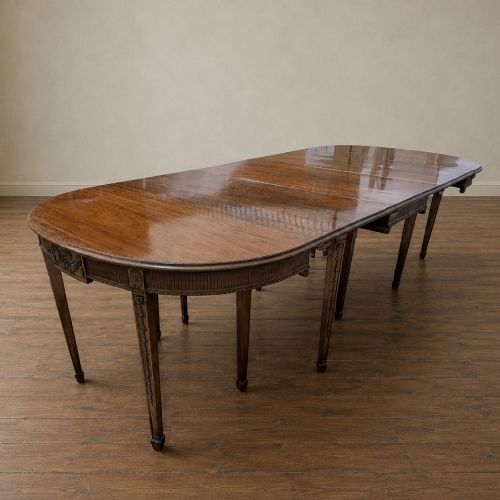
A D-end table consists of a central section and two semi-circular end pieces that resemble the letter D in outline. When pushed together without leaves, they form a compact oval or circular table.
Inserting rectangular leaves between the D-sections transforms the piece into an extended dining surface for larger groups.
How do I identify Regency style features?
Regency pieces often display classical architectural influences, including reeded legs, brass inlay, and robust pedestal bases with carved paw feet. The timber selection emphasises dark, richly figured mahogany with minimal superfluous ornament.
proporción and clean geometric lines define the aesthetic of this period and its later revivals.