
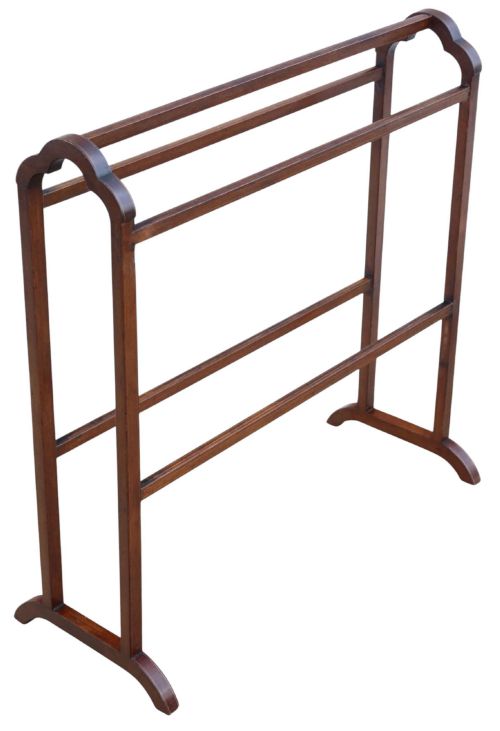
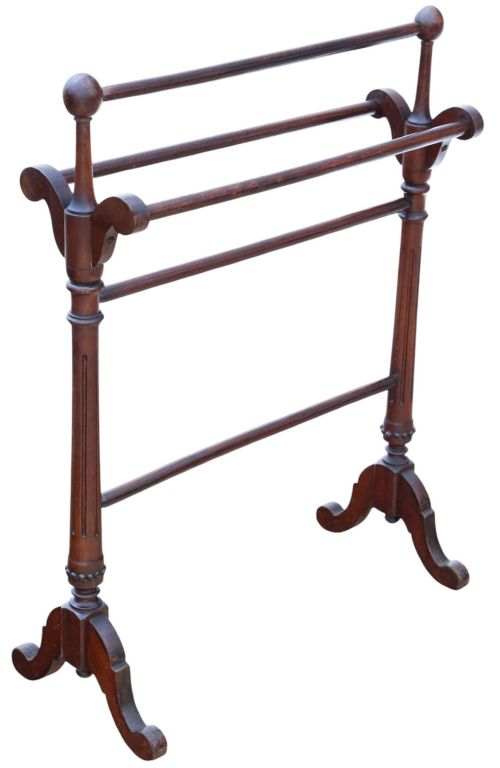
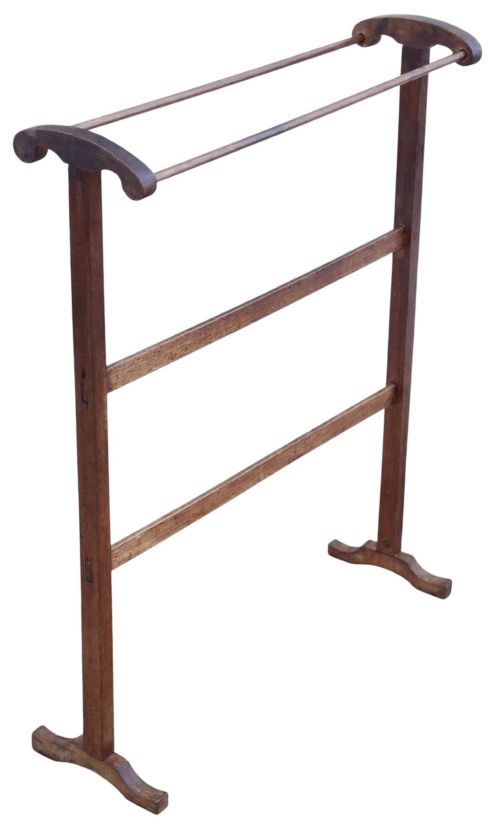
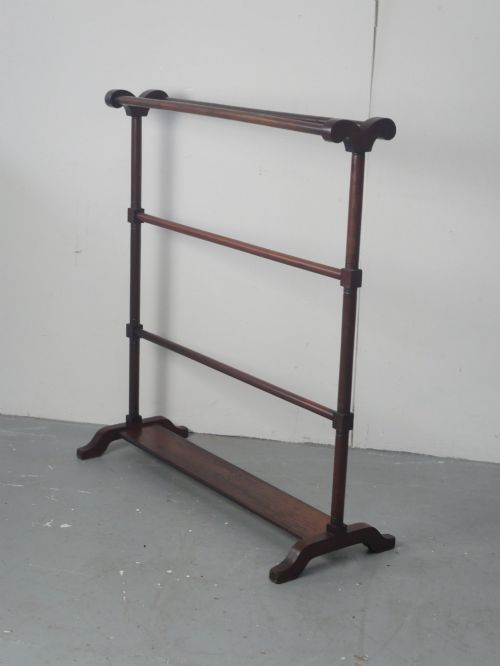

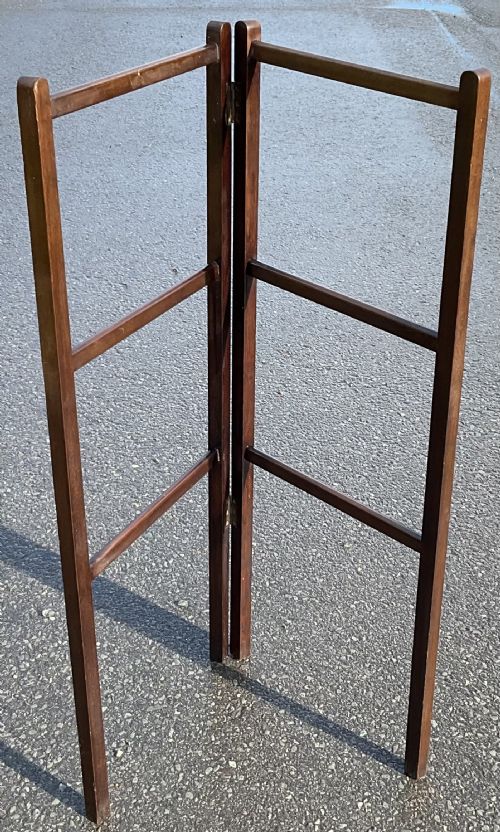


Vintage Mahogany Airer
A vintage mahogany airer provides practical drying space while bringing rich timber warmth into the home.
Vintage Mahogany Airer
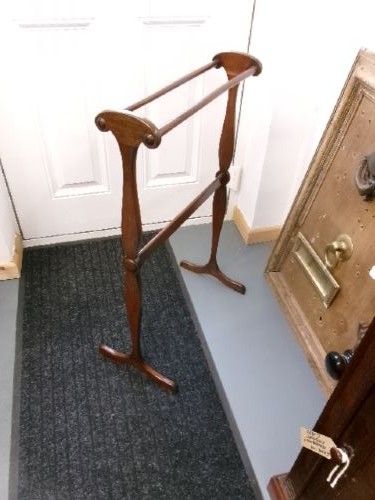
A vintage mahogany airer is primarily a towel rail designed for freestanding or hanging use in domestic spaces. These pieces appear most frequently in Edwardian and Victorian iterations, spanning the nineteenth century up to the early twentieth century.
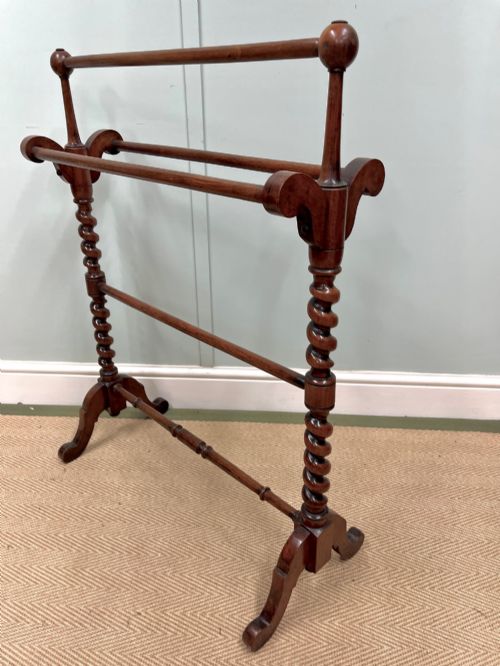
The standard forms on this page include standing frames, folding cheval designs, and multi-bar configurations. Buyers searching for a vintage mahogany airer will encounter both simple utility pieces and larger, more decorative examples from the Regency and Edwardian eras.
Materials and construction
Makers utilised solid mahogany and mixed hardwoods, occasionally combining oak with mahogany or incorporating boxwood and satinwood inlay for decorative contrast. Brass fixtures frequently appear on folding and hanging models to facilitate movement.
Joinery methods reflect the standard cabinet-making practices of the nineteenth and early twentieth centuries, producing sturdy frames with multiple horizontal bars designed to support damp textiles without warping.
Some larger rails provide generous proportions for clothes as well as towels, accommodating the laundry needs of a bustling Victorian household.
Judging quality in design and finish
Quality rests upon timber selection and the presence of considered details such as satinwood inlay rather than plain utility construction. Generous proportions and balanced proportions distinguish finer examples from standard washstand accessories.
The integrity of the joints and the crispness of turned or shaped uprights dictate the overall structural success of each rail. Pieces featuring clever folding mechanisms or hanging configurations demonstrate higher ambition in design.
The Vintage Mahogany Airer Glossary
- Cheval airer
- A standing towel rail supported by swinging side frames that allow the piece to fold or adjust in angle. This design offers stability and generous hanging capacity.
- Satinwood inlay
- A contrasting light wood veneer set into the darker mahogany surface to create decorative borders or motifs. It signals a more refined Edwardian or Regency manufacture.
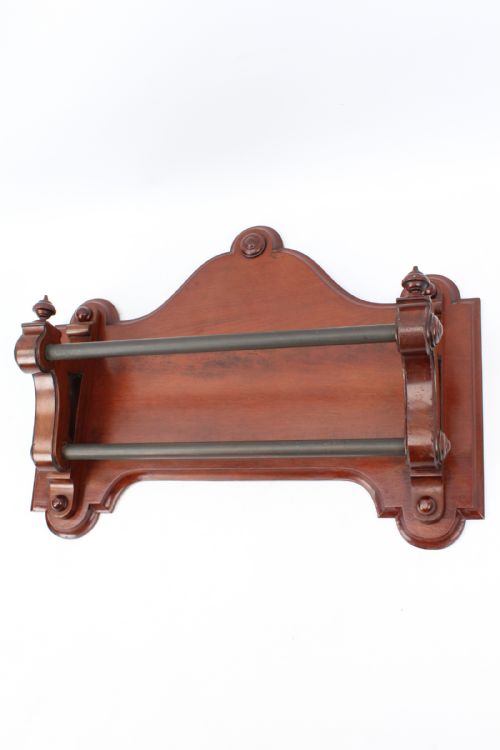
- Hanging double towel rail
- A wall-mounted or suspended fixture featuring parallel rails to hold multiple towels in limited floor space. These pieces utilise brass brackets for secure attachment.
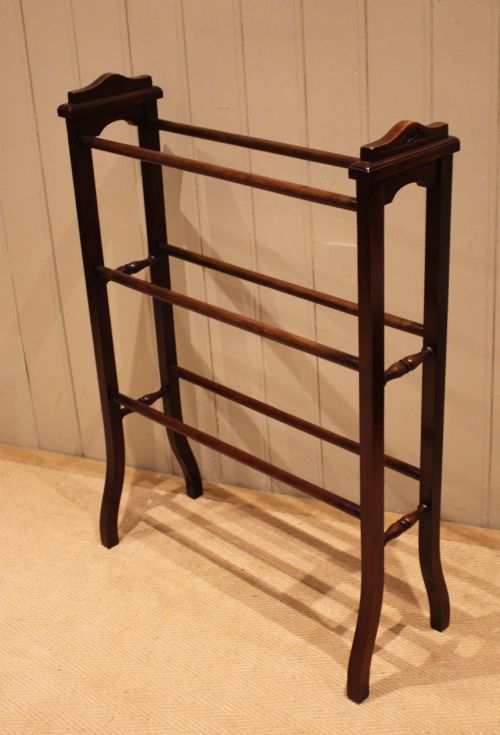
- Five bar towel rail
- A standing frame containing five horizontal rungs for drying textiles. This configuration maximises capacity within a standard domestic footprint.
Vintage Mahogany Airer: Frequently Asked Questions
How do I use a vintage airer today?
These pieces function well in bathrooms or utility rooms for airing linens and displaying towels. Their slim profiles allow them to sit flush against walls or fold flat when not in use.
They also serve in bedrooms as decorative storage for blankets and throws, adding period character to contemporary interiors without sacrificing everyday utility.
How do I date a mahogany rail?
Dating relies on stylistic clues and construction methods observed across the nineteenth and early twentieth centuries. Regency and early nineteenth-century examples often display simpler, heavier proportions.
Edwardian pieces frequently introduce satinwood inlay or lighter five-bar frames. Victorian models bridge this gap with robust turned uprights and practical folding mechanisms.
Are these rails strong enough for daily use?
Solid mahogany construction provides the natural strength required to support damp towels and heavy linens. The dense grain of the timber resists sagging under normal domestic loads.
However, historic joints require gentle treatment. Placing excessive weight on a single bar or forcing stiff folding hinges can compromise the original timber.
What is the difference between standing and folding rails?
Standing rails maintain a fixed, rigid frame with vertical supports that offer permanent stability. They suit larger spaces where floor area is not restricted.
Folding rails utilise hinges or pivoting sections, including cheval formats, allowing the frame to collapse for storage or adjustment. This mechanical flexibility makes them adaptable to smaller rooms.