

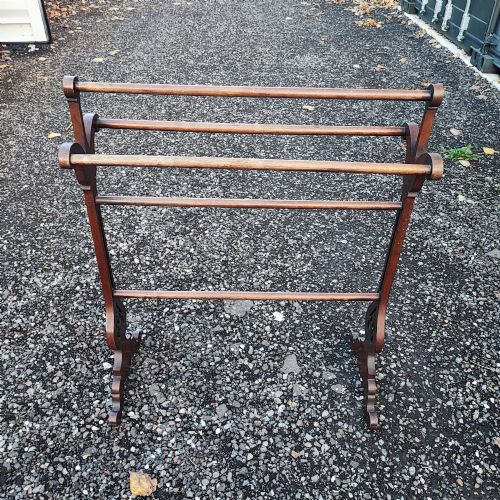
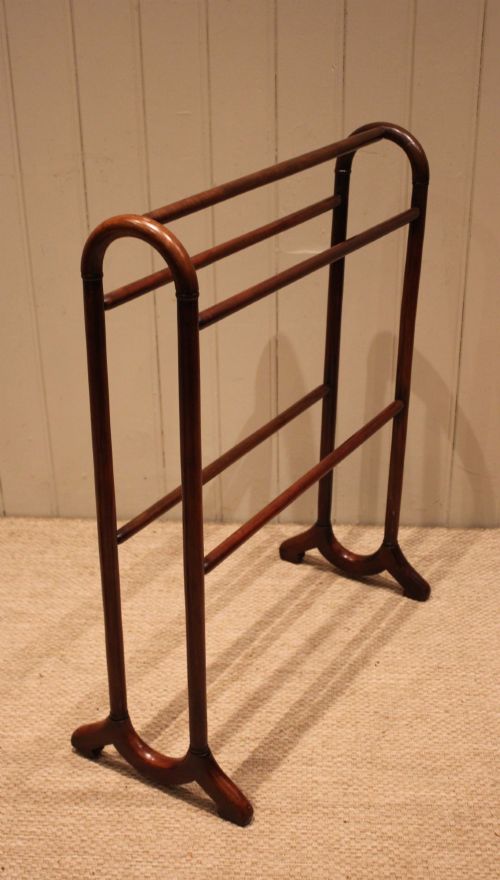
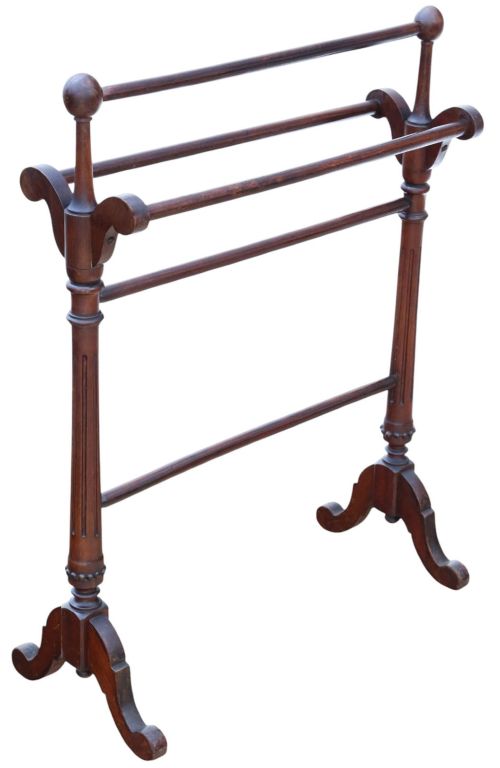
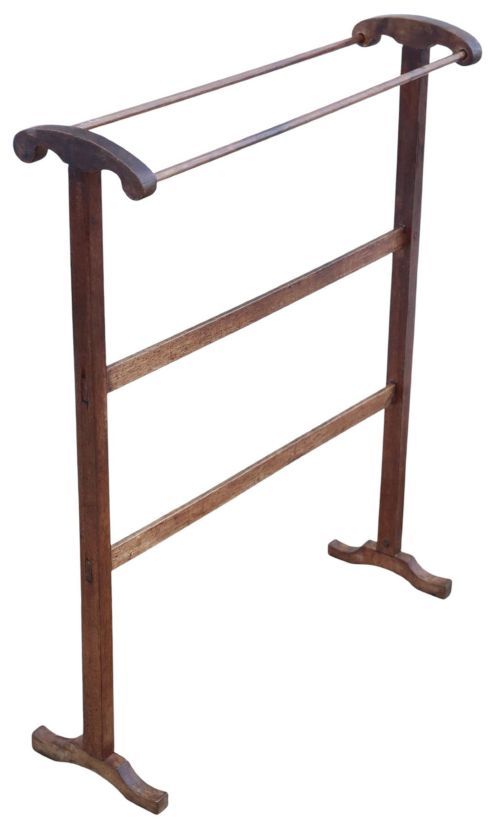


Edwardian Mahogany Towel Horse
An edwardian mahogany towel horse is a practical bedroom furnishing that brings period warmth and upright timber grain to your dressing space.
Edwardian Mahogany Towel Horse
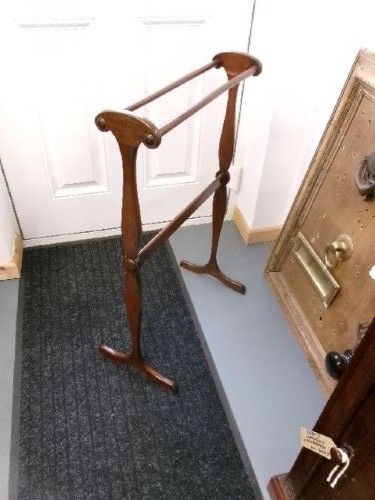
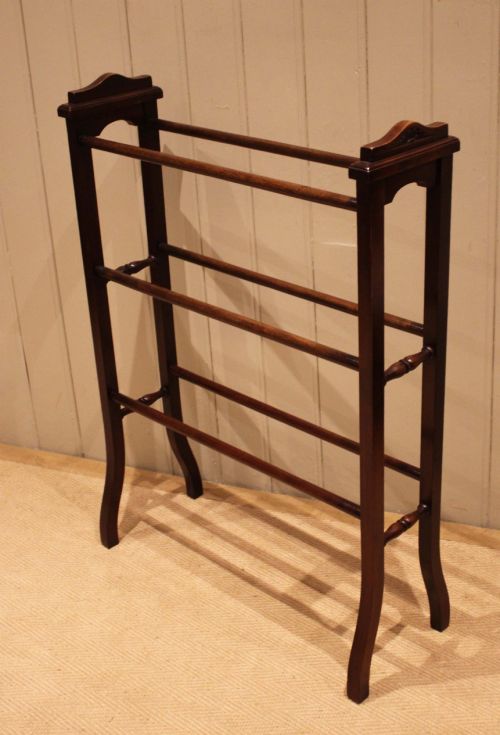
When you search for an edwardian mahogany towel horse, you are looking at freestanding timber frames designed to hold linens and garments in bedrooms. The version you are most likely to meet on this page is the Edwardian rail, typically constructed around nineteen hundred.
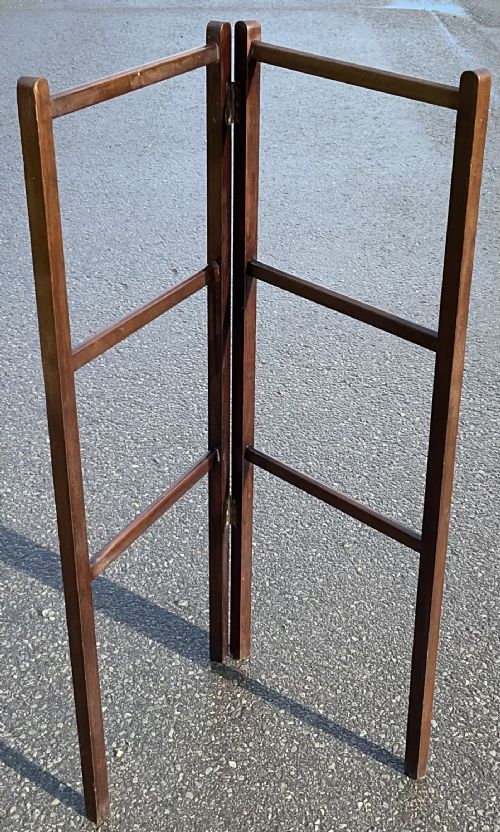
The evidence shows forms ranging from small Victorian examples to large Regency and Edwardian pieces. Standing towel rails and folding designs dominate the selection, offering multiple bars for hanging textiles.
How they were made
These items rely on solid mahogany and mixed hardwoods, occasionally paired with oak or accented by boxwood and satinwood inlay. Brass fittings appear on selected pieces to join or hinge the timber sections.
Joinery methods create folding frames, such as gate action mechanisms, alongside sturdy standing structures designed to bear the weight of damp linens.
Edwardian Mahogany Towel Horse Retail Price Guide 2026
Typical asking prices for edwardian mahogany towel horse among the pieces listed under this phrase on Sellingantiques today, from the lower quarter to the upper quarter. They describe what is for sale here now, not the wider market.
Listings span periods from Regency and Victorian eras through to Edwardian production around nineteen hundred.
What varies in quality
The distinction between standard utility items and finer examples lies in the selection of timber and decorative detail. Pieces incorporating satinwood inlay, boxwood stringing or superior mahogany grain command greater attention.
Proportion and scale also separate the items, with larger standing rails and multi-bar configurations showing more ambitious cabinet-making than simple single-rail frames.
The Edwardian Mahogany Towel Horse Glossary
- Edwardian
- Dating roughly from the death of Queen Victoria in nineteen hundred to the First World War. Furniture from this period often lighter in proportion than Victorian equivalents.
- Mahogany
- A durable tropical hardwood prized for its reddish-brown colour and fine grain. It forms the primary material for the majority of these listings.
- Satinwood inlay
- A contrasting light-coloured wood inserted into recesses in the mahogany surface to create decorative patterns. It adds a refined decorative touch to Edwardian pieces.
- Gate action
- A pivoting hinge mechanism allowing folding rails to swing open like a gate. This construction saves space when the frame is not in use.
Edwardian Mahogany Towel Horse: Frequently Asked Questions
What is an edwardian mahogany towel horse used for?
These pieces were originally designed for hanging and drying towels or garments in bedrooms and dressing rooms. Today they serve a similar practical function while adding period character to domestic interiors.
Collectors also utilise them in bathrooms and spare rooms to display quilts, blankets or vintage textiles without fixing hardware to walls.
How do I identify an Edwardian towel rail?
Edwardian pieces typically date from around nineteen hundred and feature lighter framing than earlier nineteenth-century furniture. They often incorporate subtle satinwood inlay or boxwood stringing into the mahogany surface.
Earlier Victorian or Regency examples tend to show heavier proportions and simpler turned uprights without the delicate inlay work common in the Edwardian era.
Are folding towel rails stable?
Folding versions, including gate action designs, rely on hinged timber frames that expand to stand securely on the floor. When properly manufactured from hardwood, they provide reliable balance for everyday textile storage.
The stability depends largely on the condition of the hinges and the precision of the original joinery connecting the folding sections.
What materials are used besides mahogany?
While mahogany is the dominant timber across the listings, makers occasionally combined it with oak or other hardwoods. Brass fittings and hinges frequently appear on folding or multi-bar configurations.
Decorative elements also introduce contrasting light timbers such as satinwood and boxwood for inlaid stringing and banding.