




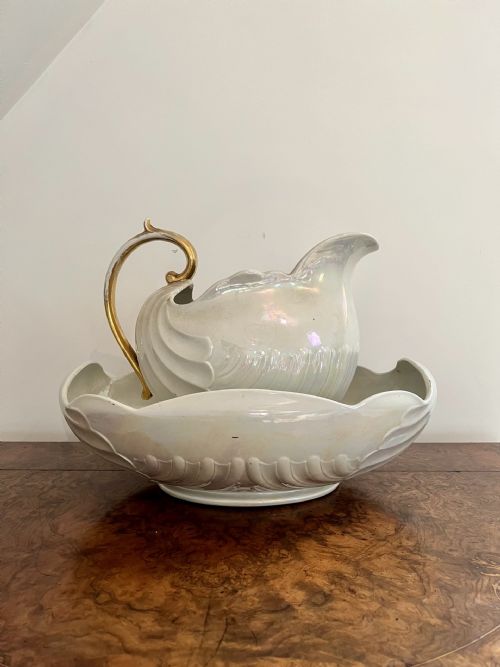


Vintage Lustre Art Pottery
These vintage lustre art pottery pieces bring shimmering metallic iridescence and rich decorative scenes straight into your home.
Vintage Lustre Art Pottery
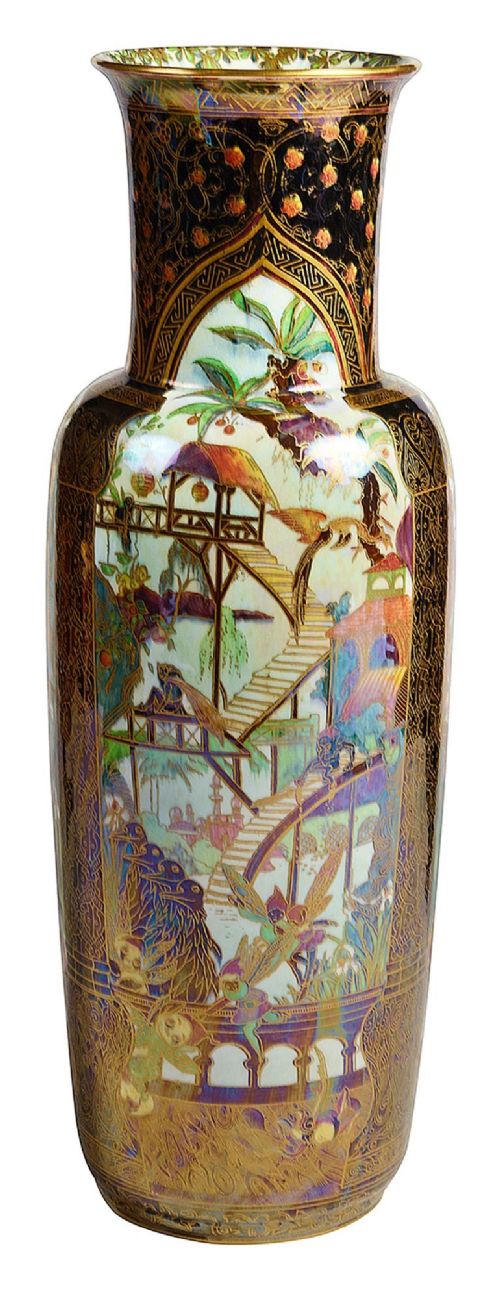
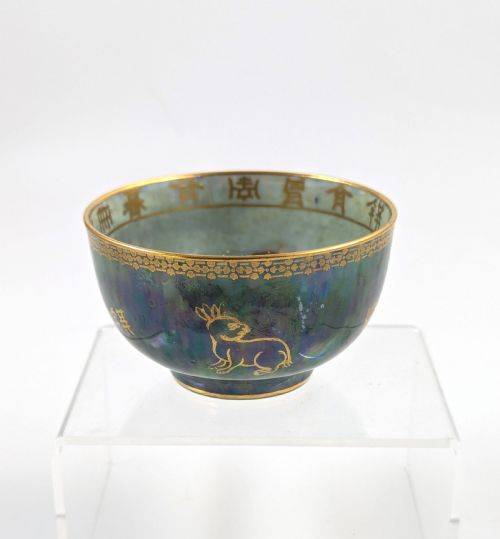
When searching for vintage lustre art pottery, collectors encounter decorative bowls, vases, and jars created primarily during the Edwardian period and the 1920s and 1930s. The selection on this page centres heavily on striking ornamental bowls and vases featuring complex imagery.
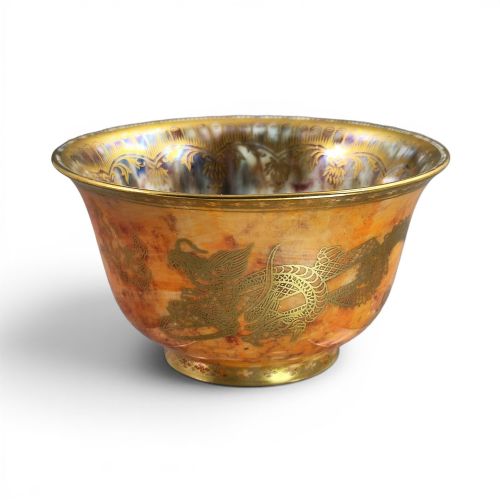
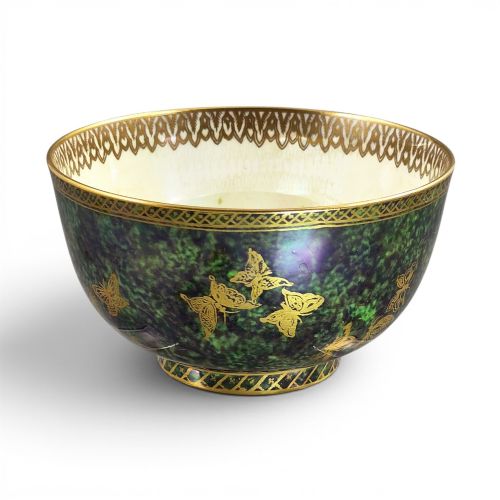
The most common forms discovered here include striking pattern bowls and tall vases originating from English factories. Makers utilised rich surface designs ranging from fairy tales and dragons to natural motifs like butterflies and fruit.
Art Deco and Art Nouveau styles dominate the aesthetic, bridging turn-of-the-century craftsmanship with bolder twentieth-century geometric forms. Buyers find pieces ranging from miniature bowls to large octagonal display vessels.
How they were made
Potters shaped these vessels from earthenware, bone china, and porcelain before applying specialised metallic glaze layers. Firing these chemical compounds in reduction kilns created the characteristic shimmering surface sheen.
Many items received additional hand-enamelled details and applied gold leaf or gilt highlights over the fired lustre glaze. Artisans painted intricate patterns including butterflies, birds, and mythical creatures directly onto the ceramic body.
Vintage Lustre Art Pottery Retail Price Guide 2026
Typical asking prices for vintage lustre art pottery among the pieces listed under this phrase on Sellingantiques today, from the lower quarter to the upper quarter. They describe what is for sale here now, not the wider market.
Materials recorded across current items include porcelain, earthenware, bone china, glaze, enamel, gold leaf, and gilt.
What varies in quality
Quality rests in the complexity of the narrative design and the depth of the metallic iridescence across the ceramic surface. Superior examples display dense, multi-layered iconography with precise hand-painted enamel work.
The crispness of the transfer printing combined with meticulous hand-gilding separates standard production pieces from master-designed studio works. Finer items maintain intense colour saturation and brilliant light reflection within the glaze.
Wedgwood·Minton·Maling·Royal Lancastrian·Shelley·Charlotte Rhead
The Vintage Lustre Art Pottery Glossary
- Lustre Glaze
- A type of ceramic glaze containing metallic salts that produce an iridescent, reflective surface upon firing. This technique creates the signature rainbow sheen found on decorative art pottery.
- Bone China
- A soft-paste porcelain incorporating animal bone ash for added strength and whiteness. Makers utilised this refined ceramic body to achieve delicate, thin-walled vessels.
- Earthenware
- Porous pottery fired at lower temperatures than stoneware or porcelain. It serves as the sturdy base material for many traditional decorated bowls and vases.
- Gilt
- A thin layer of gold applied to the surface of the ceramic for decorative ornamentation. Artisans used this technique to accentuate rims, handles, and painted motifs.
- Enamel
- Opaque glassy composition fused to the ceramic surface through heat. Hand painting with enamel added vivid, permanent colour details over the base glaze.
Vintage Lustre Art Pottery: Frequently Asked Questions
How do I care for lustre pottery?
Clean these delicate ceramic pieces gently using a soft, dry cloth to remove dust without harming the metallic surface.
Avoid using water, chemical cleaners, or abrasive sponges, as moisture and harsh scrubbing can damage the delicate glaze and gold leaf details.
What periods do these pieces date from?
The items span from the Edwardian era through the Art Deco movements of the 1920s and 1930s.
Production heavily concentrates around the interwar years when English potteries embraced bold metallic glaze experiments.
How are different patterns identified?
Makers frequently stamped or painted specific pattern numbers and factory marks directly onto the base of each vessel.
Reference numbers correspond to particular decorative schemes, such as specific butterfly, dragon, or floral motifs designed by studio artists.
Where were these ceramics manufactured?
English potteries produced the vast majority of these decorative vessels during the early twentieth century.
Renowned factories and studios employed leading designers to create distinct ranges of art pottery for domestic display.