




Vintage Livestock Canvas Art
Vintage livestock canvas art brings rural history onto your wall, capturing cattle, sheep, and horses in pastoral settings.
Vintage Livestock Canvas Art
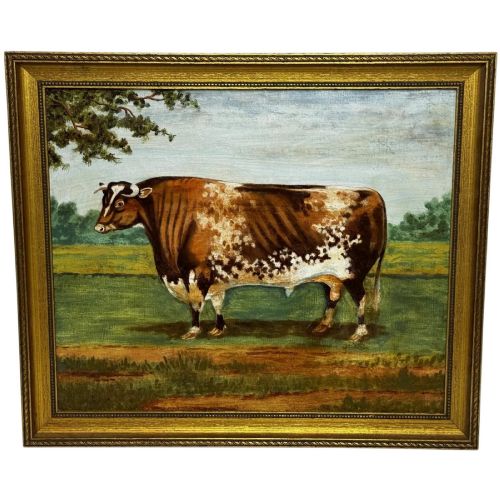
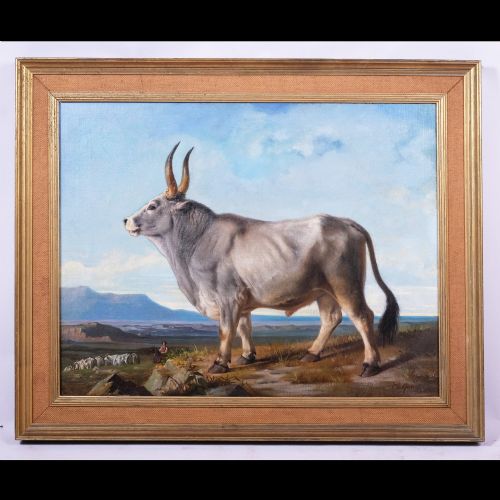
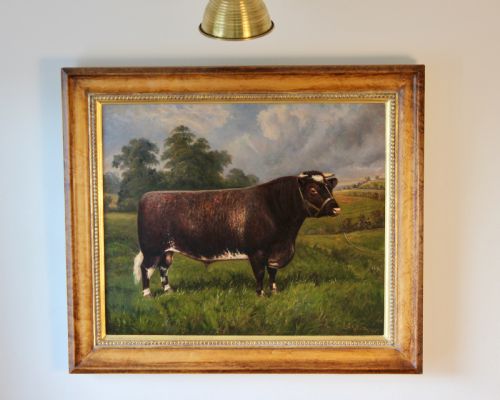
Vintage livestock canvas art encompasses oil paintings depicting farm animals within pastoral and coastal landscapes. These works record prize bulls, working horses, and grazing sheep across British and European countryside settings.
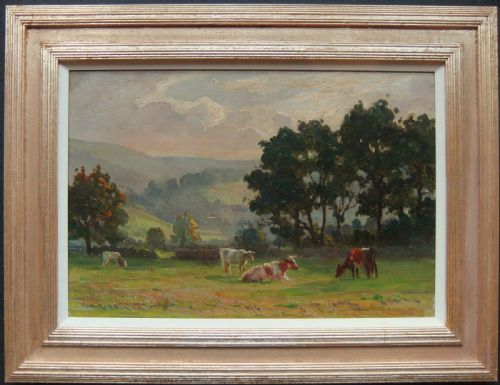
The pieces on this page span from the nineteenth century into the early twentieth century. You will encounter Victorian pastoral scenes, British Impressionism, and English Country School compositions rendered in traditional media.
How these artworks were produced
Painters applied oil paint directly onto stretched canvas surfaces using bristle brushes to build texture and depth. Wooden stretchers and occasional gesso frames provide the underlying structure and housing for the painted cloth.
Giltwood frames frequently accompany these works, adding ornamental borders that complement the traditional subjects. The combination of oil pigments, canvas, and timber reflects standard nineteenth and early twentieth century studio practices.
Several canvases record livestock lingering near rivers and coastlines, proving that nineteenth-century farm animals enjoyed seaside views just as much as humans.
What separates the finest examples
Quality rests in the anatomical accuracy of the animals and the atmospheric depth of the surrounding landscape. Master painters render fur, muscle, and light with precision, whereas simpler works rely on formulaic background foliage and rigid animal postures.
Condition of the canvas and the originality of the frame also influence the piece. Intact oil layers without excessive retouching preserve the artist's original touch and the historical integrity of the painting.
A M Gauci·Eugene Joseph Verboeckhoven·Claude Cardon·W A Clark·William Sidney Cooper·Ernest Higgins Rigg·Owen Bowen·Thomas E Francis
The Vintage Livestock Canvas Art Glossary
- Canvas
- A heavy woven fabric stretched across a wooden frame to serve as a stable support for oil painting.
- Giltwood
- Timber carved and coated with a thin layer of gold leaf or metallic gilt, commonly found on traditional picture frames.
- Pastoral Realism
- An artistic style focusing on authentic, detailed depictions of rural life and agricultural scenes without romantic exaggeration.
- Gesso
- A plaster-like mixture applied to wooden frames to create a smooth surface for gilding and ornamentation.
Vintage Livestock Canvas Art: Frequently Asked Questions
How do I care for vintage oil paintings on canvas?
Keep the canvas away from direct sunlight and damp environments to prevent pigment fading and fabric degradation. Dust the surface gently with a soft, dry brush without applying pressure to the painted layer.
Avoid using liquid cleaners or chemical solvents on the oil surface. Professional conservators should handle any cleaning or canvas tension adjustments.
How can I tell a Victorian painting from an Edwardian one?
Victorian livestock paintings often feature dramatic pastoral realism with deep chiaroscuro and heavily detailed prize animals. Edwardian works frequently lean towards British Impressionism, utilising lighter brushstrokes and brighter atmospheric tones.
Examining the canvas texture, stretcher construction, and framing style provides additional clues to the era of creation. Signatures and dates recorded on the canvas or stretcher bars offer definitive markers.
Were these paintings created as records of prize animals?
Many nineteenth century agricultural paintings served as portraits of specific prize-winning livestock owned by prominent farmers and breeders. Commissioned works documented the physical perfection of shorthorn bulls and prized rams for agricultural societies.
Other canvases captured broader rural scenes where animals formed part of an idealized country landscape. Both commemorative portraits and general pastoral scenes reflect the rural economy of the period.
What is the English Country School style?
The English Country School designation groups regional artists who painted rural life, farmyard animals, and local landscapes. These painters focused on authentic representations of British countryside activities rather than grand historical narratives.
Their palettes typically emphasise natural earthy tones, greens, and browns suited to depiction of pastures and rivers. The works capture the everyday rhythm of agricultural life before mechanization.