
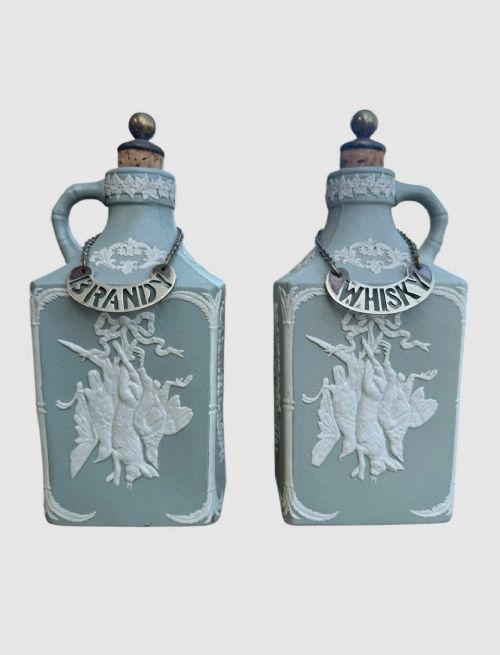


Vintage Liquor Decanter Bottles
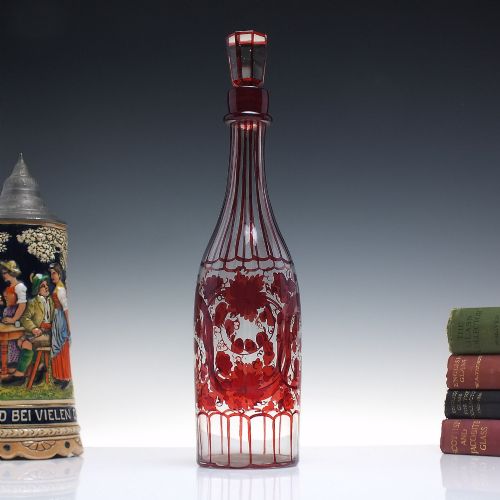
These vintage liquor decanter bottles range from heavy Georgian spirit flagons to Edwardian ruby glass and Art Deco sets designed to hold and pour fine spirits with style.
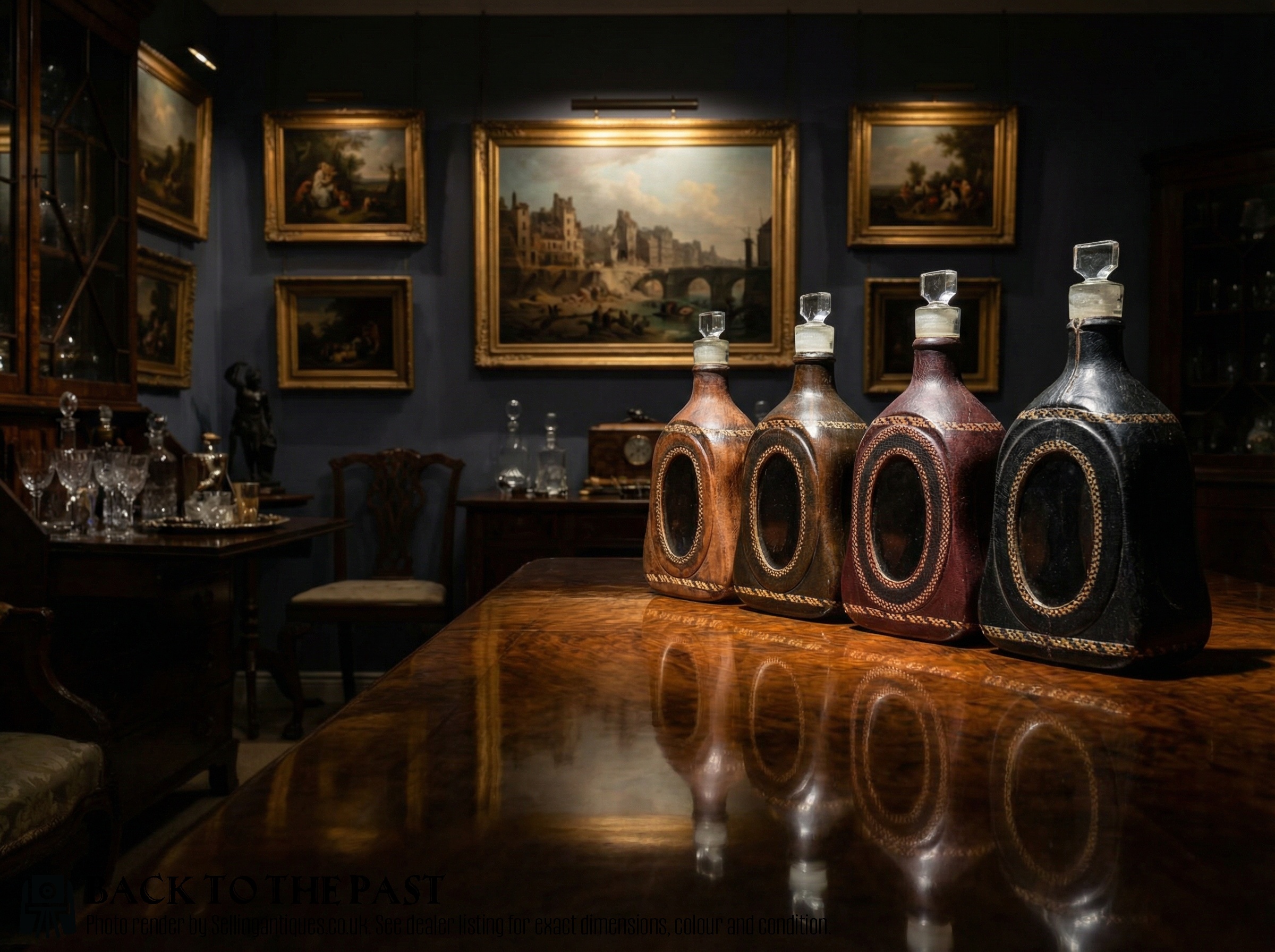
Vintage Liquor Decanter Bottles
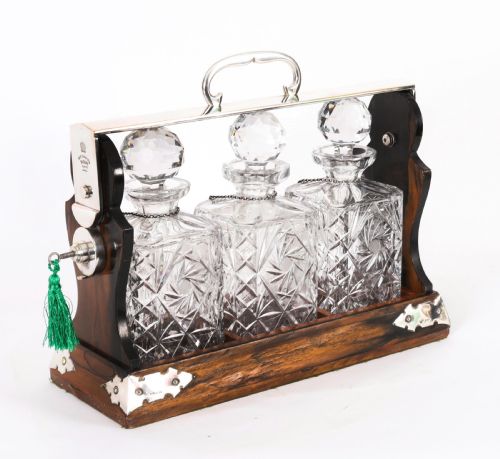
When you search for vintage liquor decanter bottles, you examine receptacles designed to store and serve alcohol, alongside related barware such as silver labels, stands, and locking tantalus frames. The selection spans centuries of design, reflecting changing social habits from formal Georgian dining rooms to Edwardian drawing rooms and Art Deco cocktail hours.
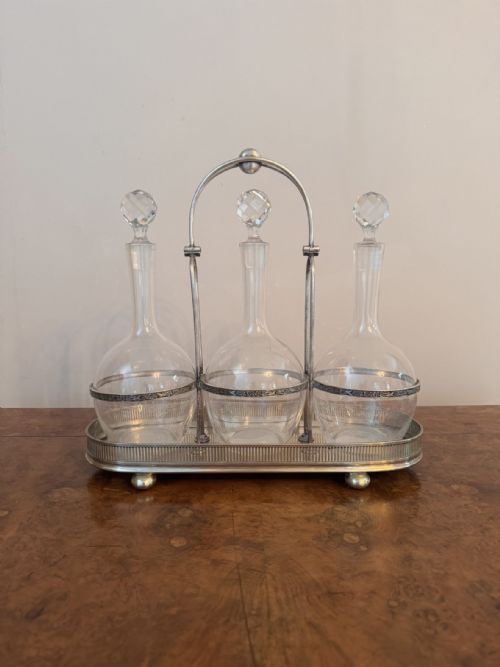
You are most likely to meet Edwardian and Victorian glass decanters on this page, often formed in cut glass, lead crystal, or coloured glass like ruby and cranberry. These frequently appear alongside silver-plated stands, brass-mounted oak frames, or individual spirit bottles fitted with silver collars and engraved labels.
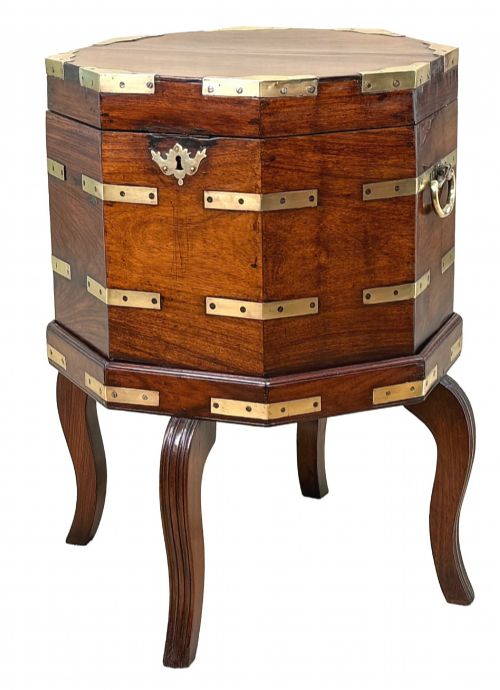
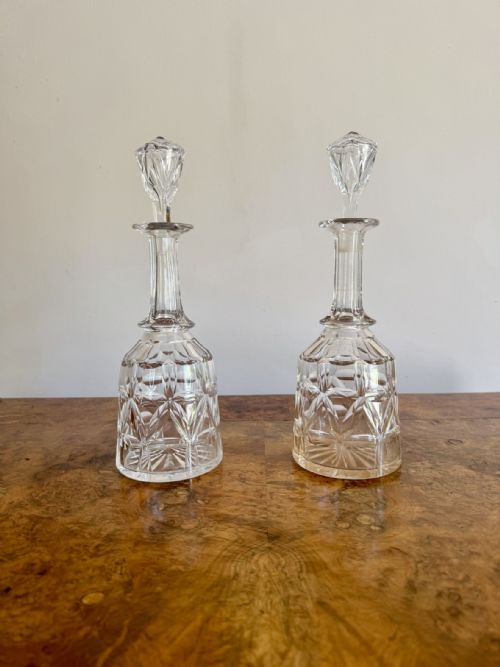
The objects also encompass specialised items like cellarettes, wine coolers, and matching decanter sets complete with glasses. Period pieces range from simple bell-shaped vessels to elaborately enamelled or hand-painted serving bottles intended for rum, whisky, sherry, and brandy.
Materials and construction
Makers utilised clear glass, lead crystal, and coloured glass, shaping them through techniques such as heavy cutting, optical blowing, hand painting, and enamel decoration. Many glass bodies are paired with sterling silver collars, silver plate, or Old Sheffield Plate mounts.
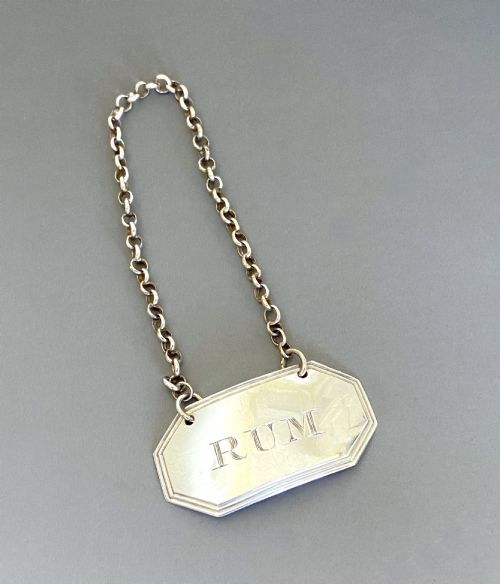
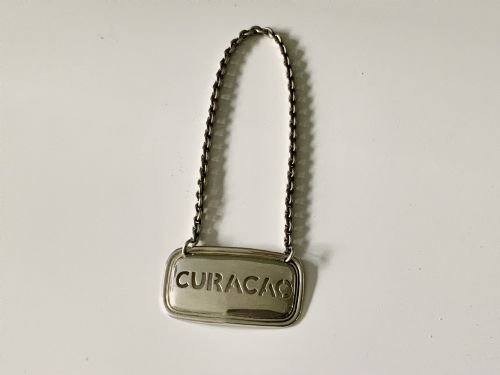
Enclosures and accompanying hardware involve timber frames in oak, coromandel, and padouk, frequently embellished with brass mountings, marquetry stringing, and locking mechanisms for security. Labels are fashioned from solid silver or silver gilt, often bearing hand-engraved spirit titles and hallmarks.
Some Victorian decanters feature cheeky labels specifically designated for unusual spirits, ensuring guests poured exactly what the host intended.
Markers of distinction
Quality rests in the crispness of the glass cutting, the weight and clarity of the lead crystal, and the depth of colour in ruby or green glass vessels. Superior pieces exhibit precise hand-engraving on glass or silver labels and balanced proportions in the bottle profile.
The sophistication of accompanying framework separates standard items from exceptional ones, seen in the joinery of coromandel or oak tantalus boxes, the intactness of working locks with functional keys, and the presence of fully hallmarked sterling silver mounts rather than basic plating.
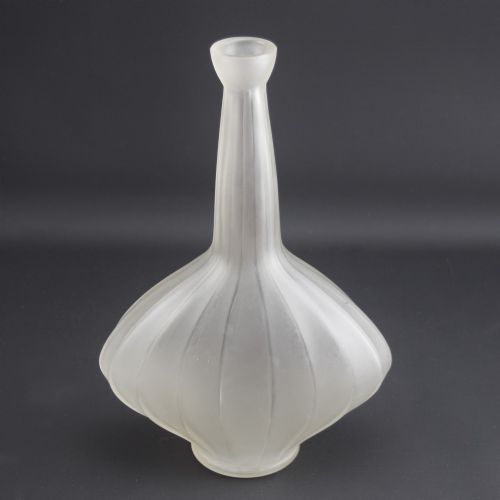
Elizabeth Morley·Tiffany·Betjemann·Rene Lalique·James Powell·Elkington·Freeman and Son Ltd
The Vintage Liquor Decanter Bottles Glossary
- Tantalus
- A locking wooden frame that holds decanters securely to prevent servants or guests from accessing the contents without a key. The bottles cannot be lifted out until the top bar is unlocked.
- Decanter label
- A small tag suspended by a chain around the neck of a bottle to identify the spirit inside. These are frequently made of silver and engraved with names like rum, brandy, or sherry.
- Old Sheffield Plate
- A composite material made by fusing a thin sheet of silver to a thicker copper base. It was widely utilised for cruet frames and mounts before electroplating became common.
- Lead crystal
- A heavy variety of glass containing metallic oxide that increases brilliance and refractive index. It allows for deep, sharp wheel-cutting.
Vintage Liquor Decanter Bottles: Frequently Asked Questions
What is a decanter tantalus?
A tantalus is a locking wooden stand that holds two or three decanters in place with a metal bar across their stoppers. This design prevented the unpermitted consumption of spirits while keeping the bottles displayed on a sideboard.
Most examples use woods like oak or coromandel and feature brass mounts, working locks, and silver-plated or crystal bottles.
How do I identify a Georgian decanter?
Georgian decanters generally feature heavier lead crystal, distinct prismatic or fluted cutting around the neck, and heavy mushroom or target stoppers. They were built for durability and steady placement on dining tables.
They often appear alongside hallmarked silver labels naming specific contents like Madeira or gin.
Are antique decanter stoppers original?
Stoppers were individually ground to fit the neck of each specific bottle during manufacture, meaning they are matched pairs or single units. Checking the ground glass surfaces for matching wear helps confirm originality.
Replacements are common because stoppers were easily dropped and broken during routine washing.
What drinks were antique decanters used for?
Decanters held fortified wines such as port, sherry, and Madeira, alongside spirits like whisky, rum, brandy, and gin. Specific spirit names often appeared on silver neck labels hung by chains.
Larger flagons and ewers served water or claret during formal Victorian and Edwardian dining occasions.
How should I clean an antique glass decanter?
Cleaning requires warm water and mild detergent, avoiding sudden temperature changes that can crack old glass. Stubborn internal residue is traditionally cleared using non-scratch methods rather than harsh chemical agents.
Silver collars and mounts should be polished separately to prevent cleaning solutions from damaging the glass or timber frames.