


Vintage Library Bookends
These vintage library bookends range from Black Forest carvings to Regency mahogany slides, holding shelves steady with genuine character.
Vintage Library Bookends
Vintage library bookends encompass functional desk accessories designed to keep volumes upright on shelves or tables, spanning various decorative traditions. Buyers exploring vintage library bookends encounter matching pairs fashioned from carved timber, brass, and bone across multiple historical periods.
The selections on this page feature traditional forms such as standard heavy blocks and extending book slides. Examples extend from nineteenth-century Gothic designs to early twentieth-century animal carvings and sporting motifs.
Originating largely from British and continental workshops, these items reflect the tastes of private studies and institutional libraries alike. Common styles include Black Forest woodwork, Victorian Gothic revivals, and Art Deco metalwork.
How they were made
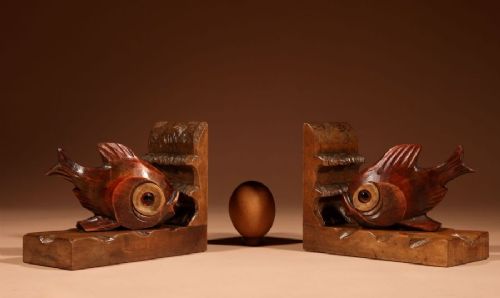
Makers utilised solid timbers including oak, mahogany, ebony, and yew wood, often shaping them through hand-carving and careful joinery. Animal subjects like bears, elephants, and goldfish demonstrate detailed relief work and naturalistic texturing.
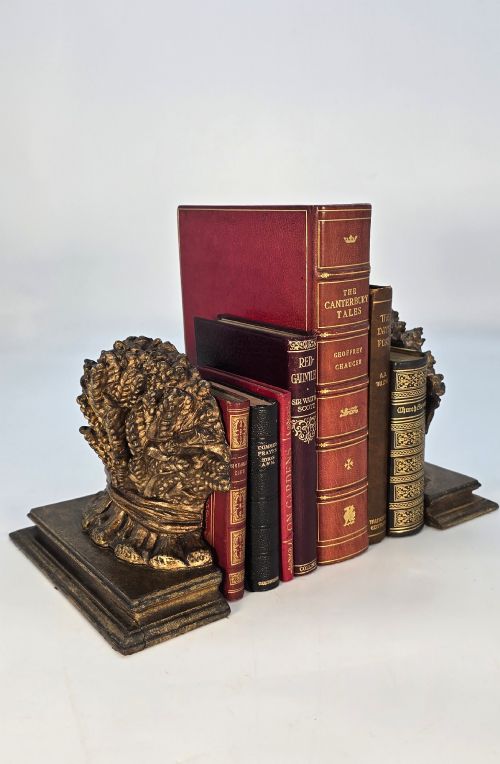
Metal components rely on cast brass and gilded metal, frequently finished with patination or mounted onto wooden bases for additional weight. Glass and bone also appear as decorative accents or primary structural elements within specific regional styles.
Materials represented across these listings include oak, mahogany, ebony, yew wood, bone, brass, glass, and gilded metal.
What varies in quality
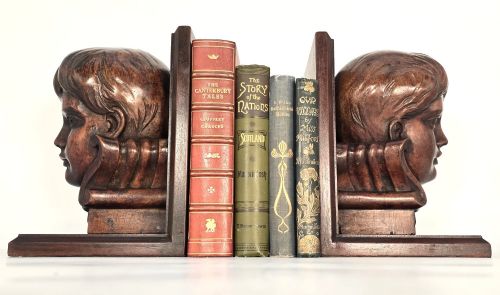
The distinction between standard examples and superior pieces rests on the depth and refinement of the hand-carved detail. Subtle expression in figural work, such as carved animals or cherubs, separates artisan execution from mass production.
Material selection and structural integrity dictate longevity, particularly in extending slides and heavy wooden blocks that endure regular pressure. Original patination and minimal alteration preserve the historical integrity of each piece.
Thornton Smith Co.
The Vintage Library Bookends Glossary
- Book slide
- An extending desk or shelf accessory designed to hold varying quantities of books upright between two adjustable ends.
- Black Forest
- A Swiss and German wood-carving tradition known for realistic depictions of animals, particularly bears and fish.
- Gothic Revival
- An architectural and decorative style drawing inspiration from medieval forms, featuring pointed arches and ecclesiastical motifs.
- Regency period
- An era of British design characterised by classical restraint, clean lines, and dark native or exotic timbers.
- Yew wood
- A dense, resilient timber prized by cabinetmakers for its rich grain patterns and warm reddish-brown colour.
Vintage Library Bookends: Frequently Asked Questions
How do I choose the right bookends for heavy books?
Heavy volumes require dense materials like solid mahogany, oak, or weighted brass bases to prevent slipping under pressure.
Extending book slides also offer sturdy support by distributing weight across a broader wooden base.
What is a book slide?
A book slide is an adjustable shelf accessory featuring a central extending mechanism flanked by two fixed or sliding ends.
Victorian libraries utilised these to manage shifting rows of octavos and quartos without needing separate blocks.
How do I care for wooden bookends?
Wooden pieces benefit from occasional waxing with traditional beeswax to nourish the grain and protect the surface.
Keep them away from direct sunlight and radiators to prevent the timber from drying out or splitting.