

Vintage Leather Seating
Vintage leather seating brings together chairs, stools and fenders from the Georgian period through to Art Deco, prized for the tactile warmth of aged hide.
Vintage Leather Seating
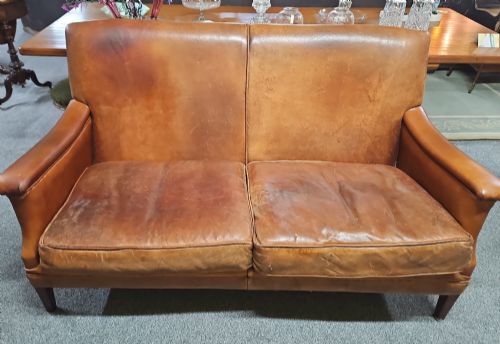
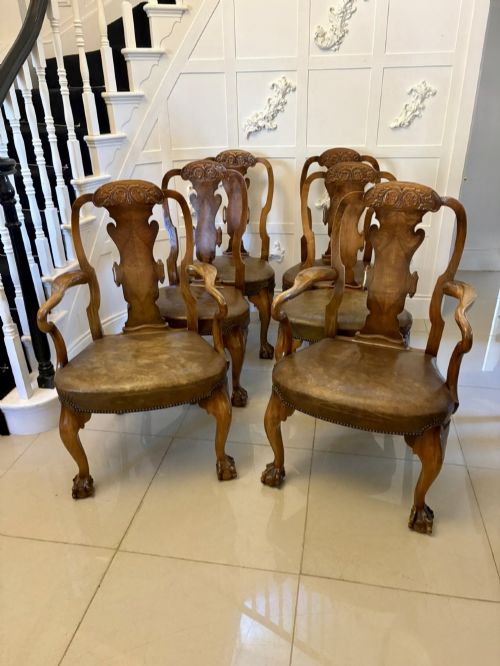
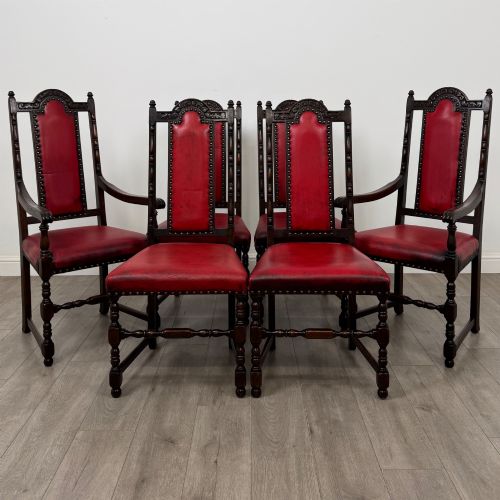
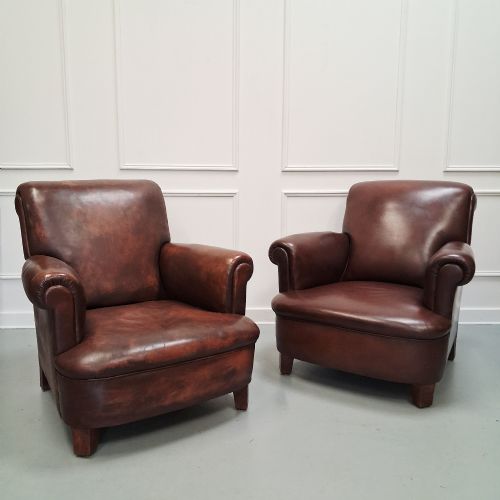
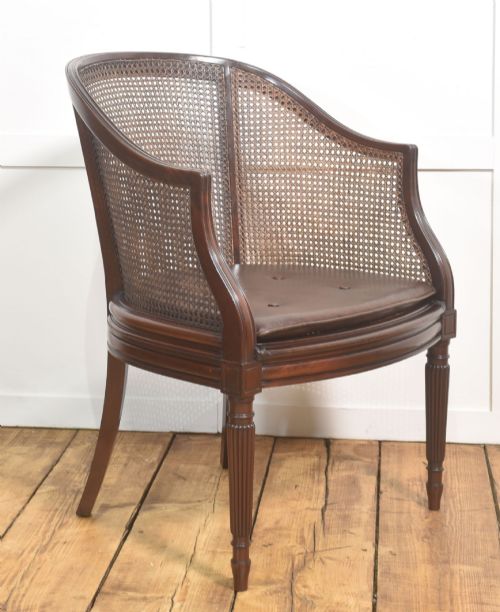
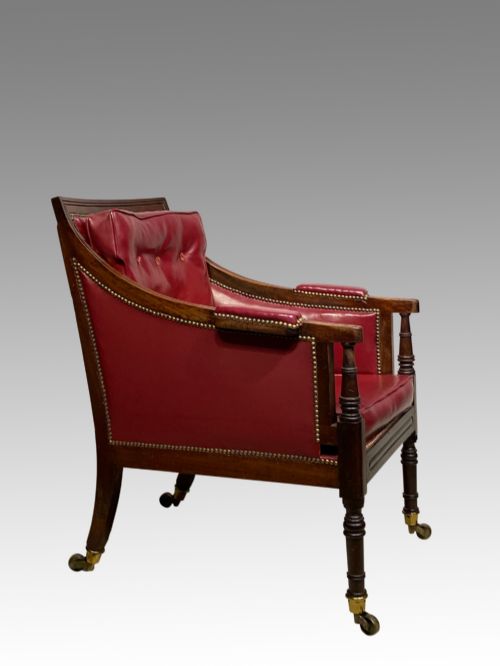
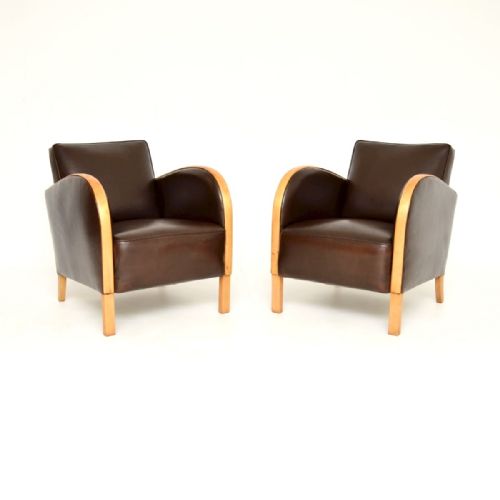
Vintage leather seating spans a wide range of domestic and office forms, from library armchairs and club chairs to revolving desk chairs, stools and club fenders. The selection on this page relies heavily on Victorian and Edwardian dining chairs alongside 1930s Art Deco club chairs and occasional seating.
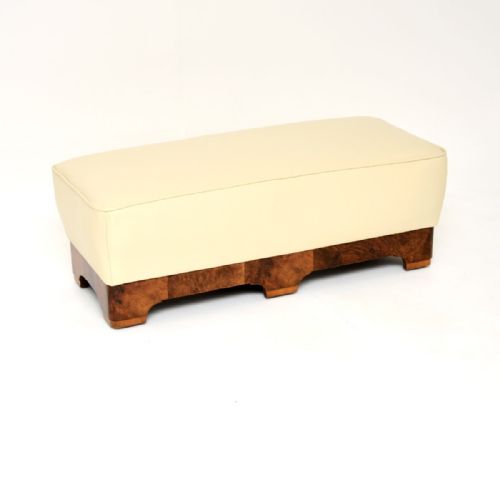
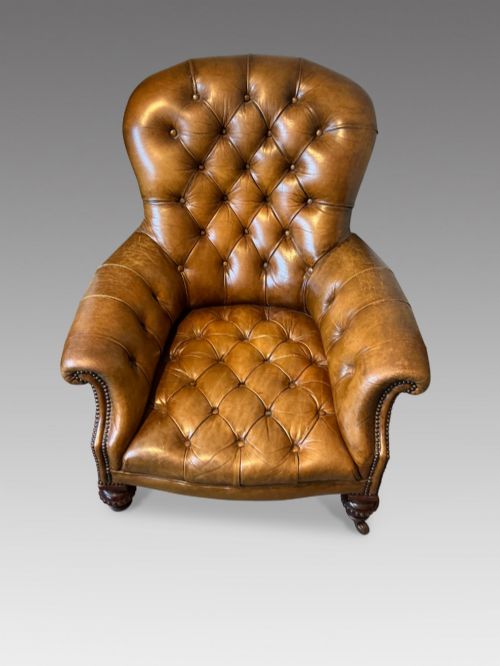
Armchairs and club chairs dominate the heavier domestic offerings, while swivel desk chairs, reading chairs and dressing chairs cater to studies and parlours. Stools, ottomans and footstools complete the domestic groups, often echoing the timber and upholstery styles of larger armchairs.
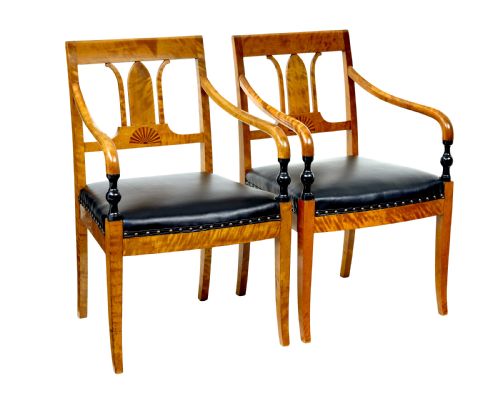
Origins stretch across English, French, Scottish and Scandinavian workshops, moving from mahogany and oak frames of the eighteenth and nineteenth centuries to the birch, satin birch and burr walnut favoured in later Art Deco designs.
Materials and construction
Frames rely heavily on traditional timbers such as mahogany, oak, walnut and burr walnut, joined using period methods appropriate to each century. Hardwoods and exotic veneers provide structural integrity for both heavy library chairs and lighter occasional seating.
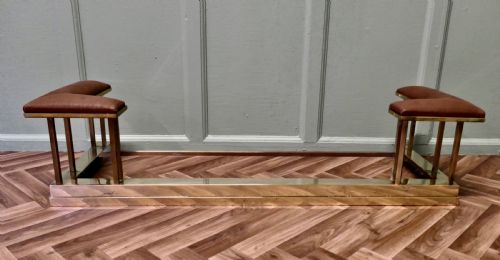
Hides are stretched over horsehair, wool or coil-sprung upholstery and secured with brass or iron fixings. Club fenders combine metal bases in brass and iron with leather-topped seating pads designed for fireside use.
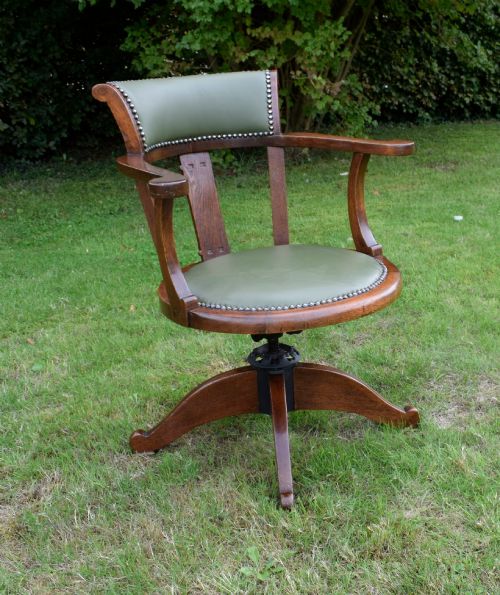
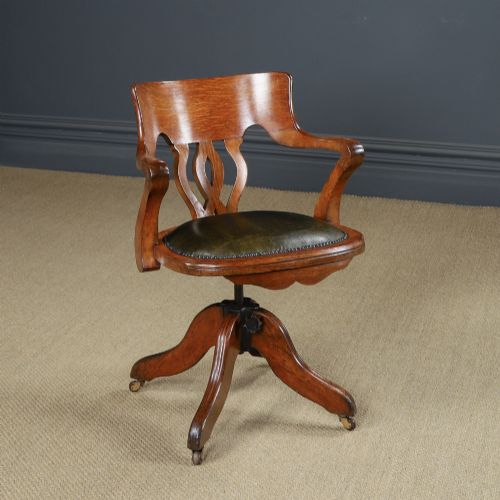
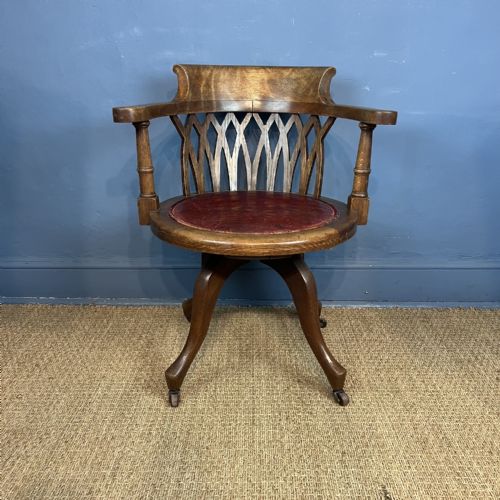
Machinist chairs bring industrial swivel action to the leather seating lineup.
Judging the range
Quality rests on the integrity of the timber frame, the skill of the carving and the depth of character in the leather. Pieces retaining their original hand-dyed hides and period joinery hold a distinct advantage over later replacements.
Proportion and the handling of secondary woods also separate standard production items from masterworks. Clean lines in Art Deco satin birch or crisp blind carving on Georgian mahogany frames indicate superior workshop origin.
Hille·Harry and Lou Epstein
The Vintage Leather Seating Glossary
- Gainsborough chair
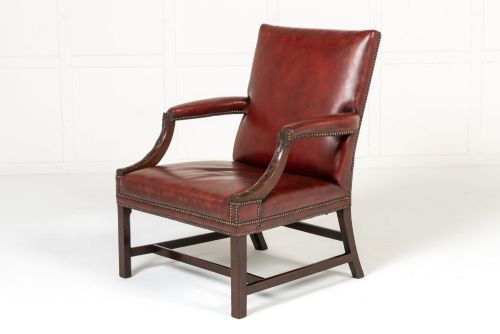
- An eighteenth-century English armchair with an upholstered back and seat, open padded arms and mahogany legs. They are frequently found grouped around desks or in libraries.
- Club fender
- A low fireside seat with upholstered leather pads surmounting a brass or iron frame. They originate from the Victorian period and allow people to sit directly around the hearth.
- Art Deco
- A design style spanning the 1920s and 1930s characterised by streamlined geometric forms, luxury veneers like burr walnut and satin birch, and smooth leather upholstery.
- Carver
- An armchair designed to match a set of dining chairs, typically placed at the head of a dining table. They share timber and upholstery details with the simpler side chairs in the set.
Vintage Leather Seating: Frequently Asked Questions
What is a club fender?
A club fender is a low, metal-framed seat designed to fit around a fireplace hearth, topped with leather cushions for fireside seating. These pieces combine structural brass or iron with durable hide.
They offer an architectural addition to a room, providing informal seating right by the fire without obstructing the warmth.
How do I date a desk chair?
Dating a desk chair involves looking at the timber species, the turning of the legs and the mechanism used for swivel or height adjustment. Victorian and Edwardian examples often feature oak or mahogany with robust revolving iron spindles.
Comparing the upholstery style and the joinery underneath helps place the piece within the nineteenth or early twentieth century.
Where were club chairs made?
Club chairs listed here appear in English and French workshops, alongside Scandinavian interpretations from the Art Deco period. French examples from the 1930s often lean towards deep, rounded forms upholstered in hand-dyed leather.
English variants tend to use traditional mahogany or walnut frames, reflecting local cabinet-making traditions of the era.
How should I care for vintage leather?
Vintage leather benefits from regular dusting and occasional feeding with specialist balms to prevent the hide from drying out. Keeping pieces away from direct heat sources preserves the natural oils in the leather.
Allowing a natural patina to develop maintains the historical character and appearance of the hide over decades of use.