

Vintage Leather Office Chair
A vintage leather office chair brings substance and character to a workspace, combining traditional craftsmanship with durable materials.
Vintage Leather Office Chair
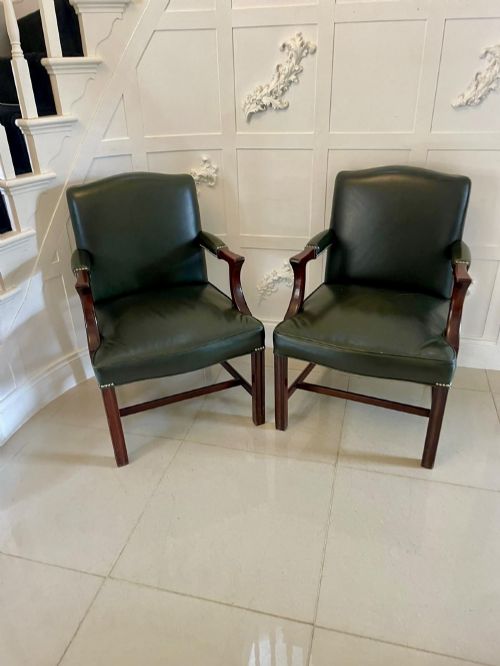
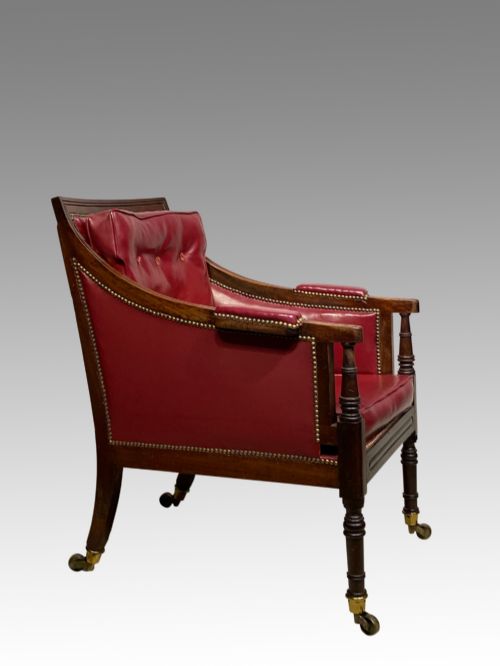
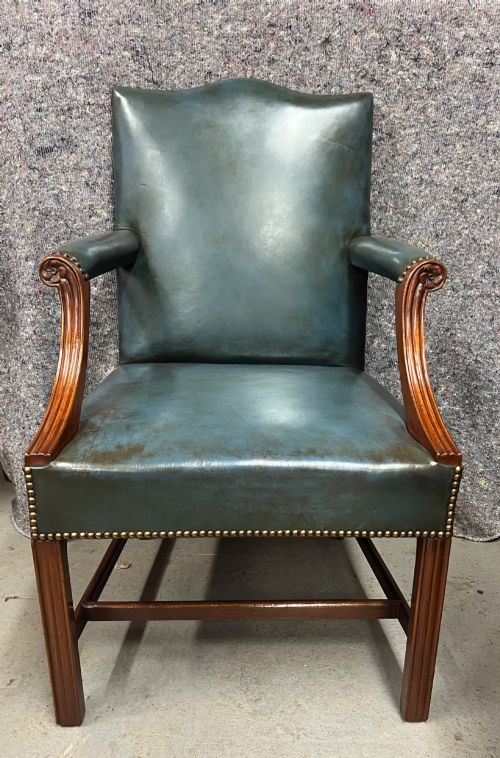
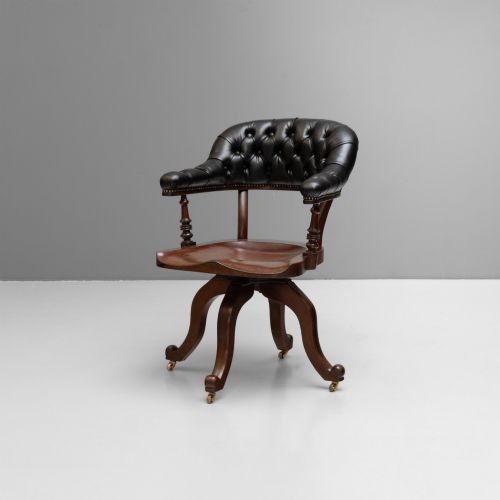
A vintage leather office chair provides a sturdy and functional seat designed for writing desks and studies. These pieces bridge the gap between utilitarian workshop seating and formal library armchairs.
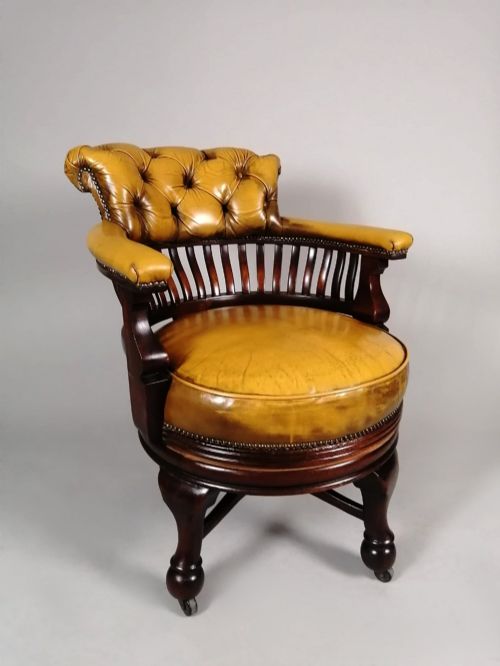
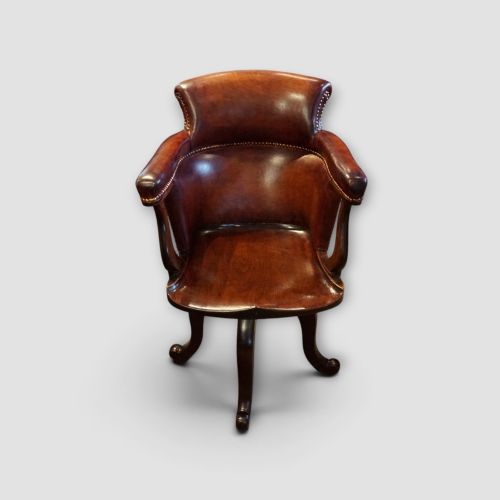
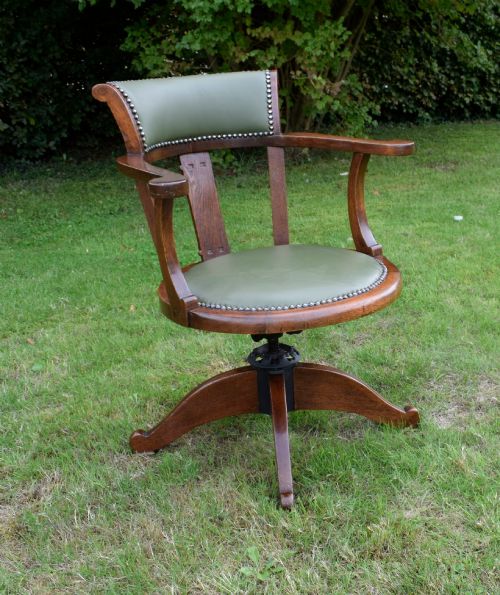
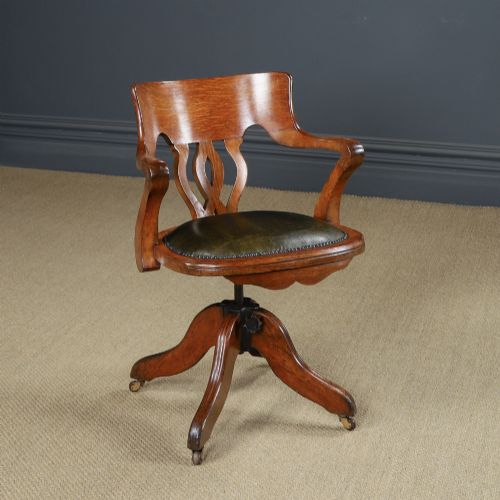
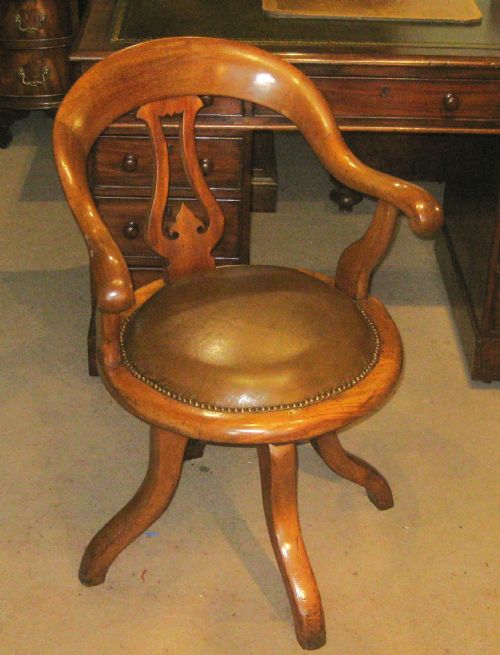
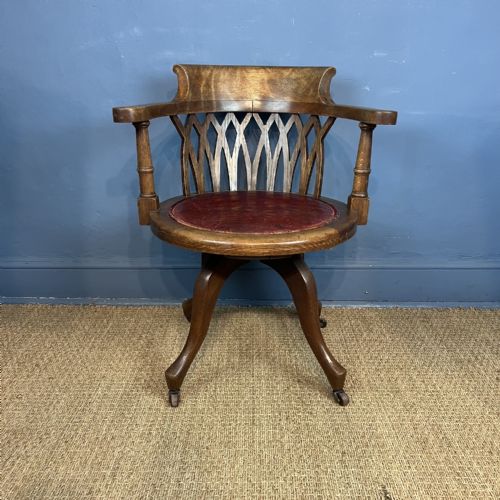
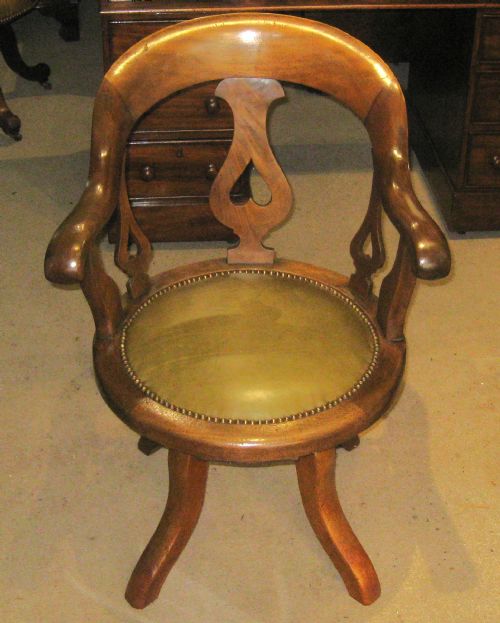
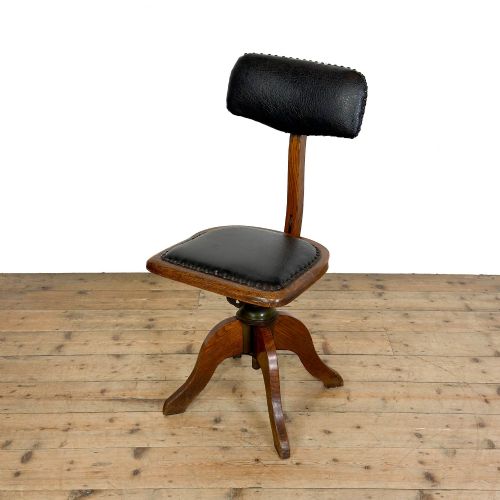
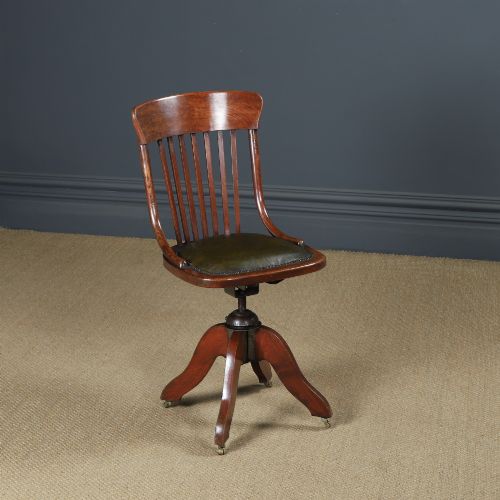
The selections available range from late nineteenth-century mahogany revolving designs to early twentieth-century oak swivel models. Buyers frequently encounter Edwardian oak examples alongside Victorian golden mahogany pieces.
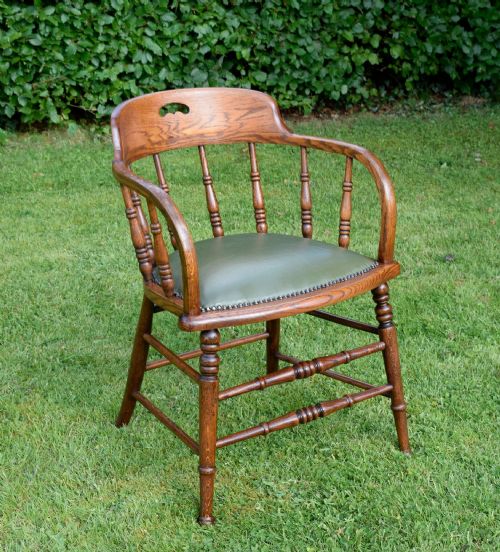
Makers utilised various traditional forms, including desk armchairs, swivel chairs, and smokers bows. Many incorporate leather upholstery paired with timber frames and adjustable height mechanisms.
How they were made
Frames rely upon dense hardwoods such as mahogany, oak, walnut, and beech, often shaped into curved backs or solid armrests. Joinery methods prioritise rigidity to support daily movement and swivelling actions.
Several heavy oak swivel chairs retain their original iron screw mechanisms, built to endure a lifetime of energetic spinning in dusty studies.
What varies in quality
The refinement of the timber carving and the complexity of the revolving mechanism distinguish simpler utilitarian seats from finely proportioned library chairs. Heavier gauge brass and cast iron parts indicate superior mechanical longevity.
The grade of the leather and the integrity of the original padding dictate the tactile experience of the seat. Hand-stitched detailing and well-preserved grain patination elevate the visual distinction of the piece.
The Vintage Leather Office Chair Glossary
- Revolving desk chair
- A seat featuring a central pivot mechanism allowing rotation above a fixed base. This design facilitates movement between different sections of a workspace.
- Bentwood
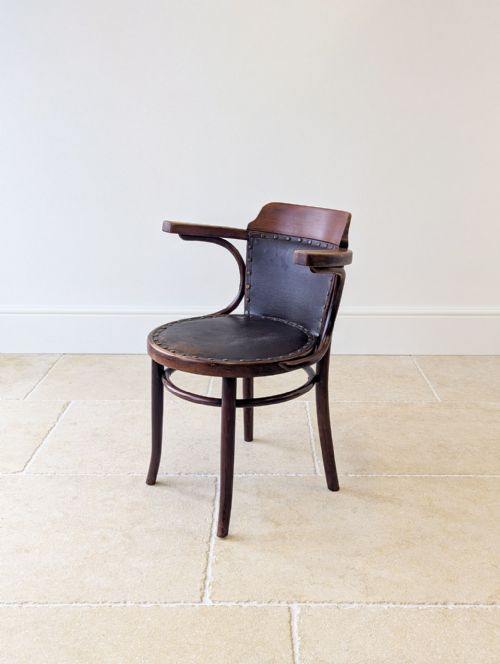
- Wood steamed and bent into curved shapes, commonly utilised for chair frames and backrests. This technique creates resilient and flowing structural lines.
- Smokers bow
- A sturdy low-backed wooden armchair with turned spindles, often adapted for office use. It provides robust support for continuous seating.
- Caned
- Woven rattan material used for chair seats or backs. It offers lightweight flexibility and visual lightness.
- Elbow chair
- An armchair with relatively short armrests designed to fit neatly beneath a desk. These pieces balance support with spatial economy.
Vintage Leather Office Chair: Frequently Asked Questions
How do I identify the period of a desk chair?
Examination of the timber species, joinery methods, and hardware provides the primary clues for dating a chair. Victorian examples often utilise golden mahogany, whereas Edwardian and early twentieth-century pieces frequently employ oak or beech.
Mechanical components also change over time, moving from heavy cast iron swivel assemblies to later adjustable steel configurations. Comparing the style of the legs and the turning of the spindles against established historical periods helps narrow down the decade of manufacture.
Are these chairs suitable for daily computer work?
Many vintage models include swivel actions and adjustable height mechanisms, making them adaptable for contemporary desks. Their robust timber construction ensures they handle regular use.
Buyers should verify seat heights and back support dimensions to match personal comfort preferences. While historical padding may feel firmer than modern foam, the ergonomic design of desk armchairs supports upright seated tasks.
What is the difference between a swivel and a stationary chair?
Swivel chairs incorporate a central spindle or mechanical pivot underneath the seat, allowing the user to rotate fully without moving the base legs. Stationary armchairs rely on fixed four-leg or caster arrangements.
Revolving models were engineered specifically for administrative tasks and office efficiency. Stationary library chairs prioritised stability and formal reading comfort.
How should I care for vintage leather upholstery?
Regular dusting with a dry cloth prevents dirt accumulation on the leather surface. Applying a suitable leather conditioner periodically maintains suppleness and prevents cracking.
Keeping the chair away from direct sunlight and heat sources preserves the natural moisture of the hide. Metal swivel and brass components benefit from occasional light lubrication to ensure smooth rotation.