


Vintage Leather Chesterfield
Vintage leather chesterfield seating brings deep buttoning, rolled arms, and rich patinated hides into a room.
Vintage Leather Chesterfield
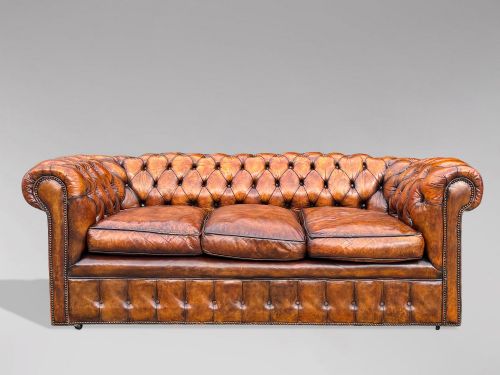
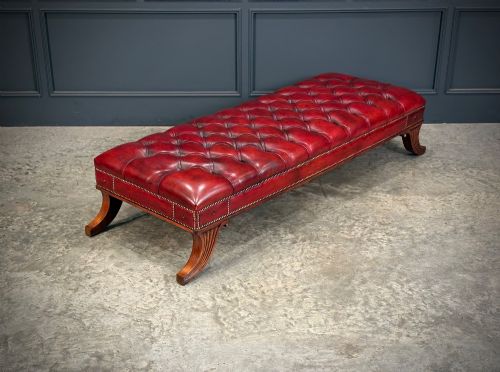
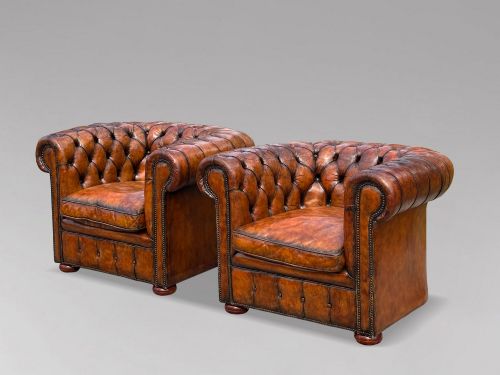
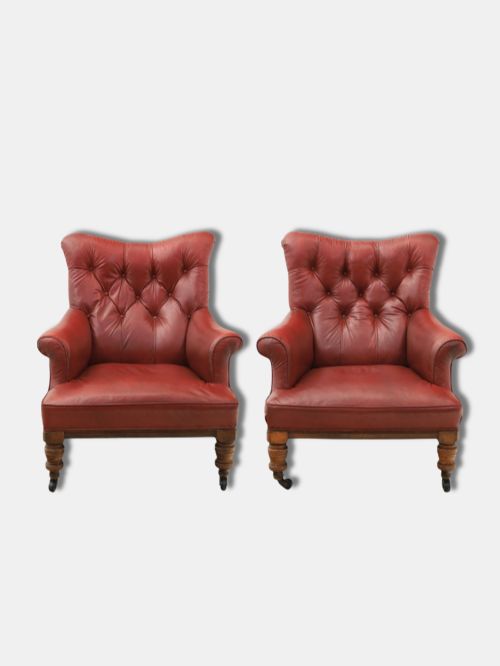
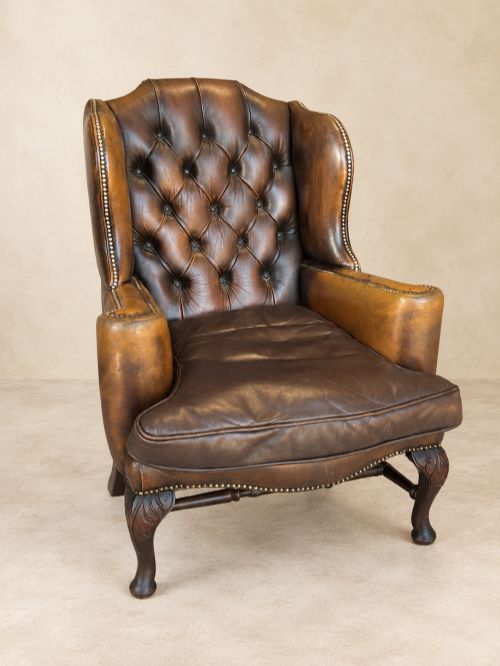
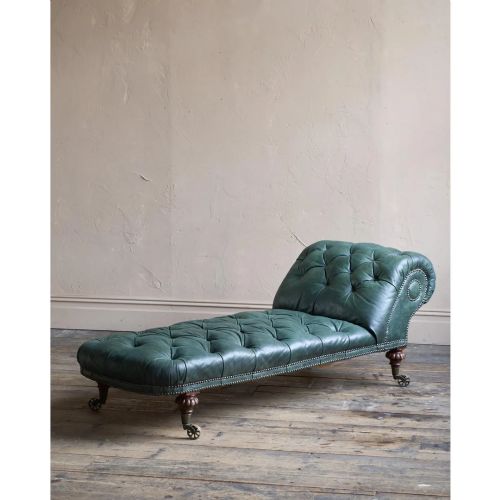
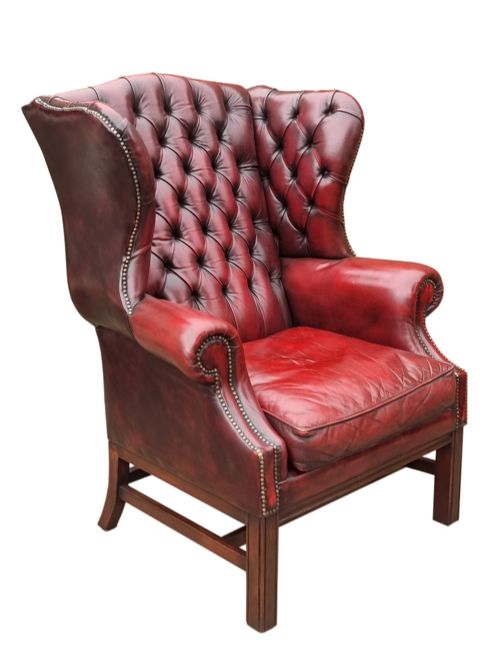
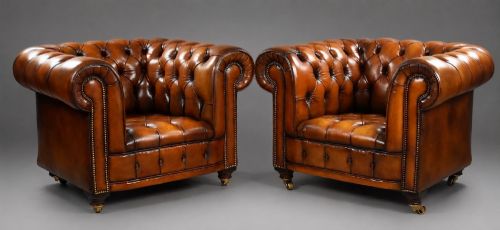
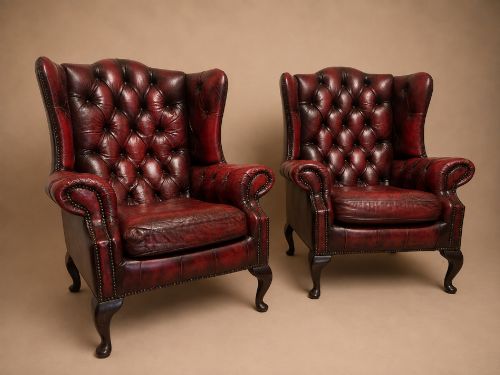
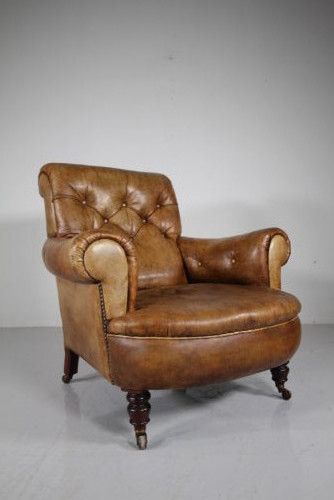
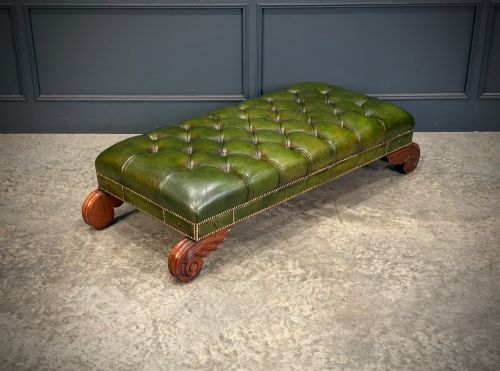
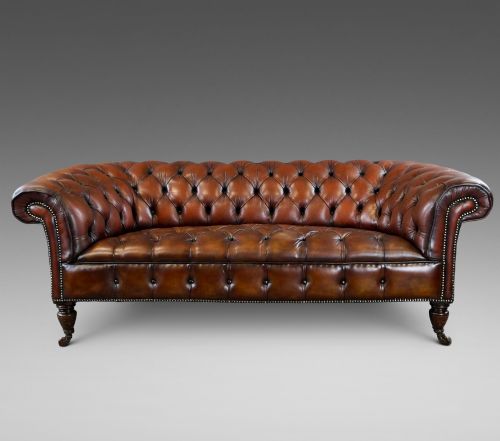
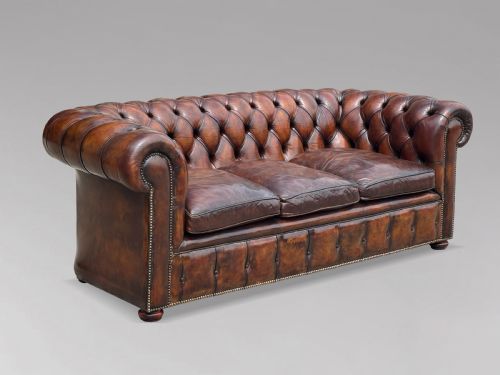
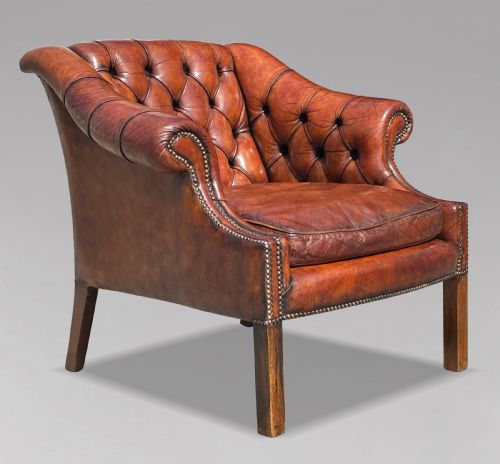
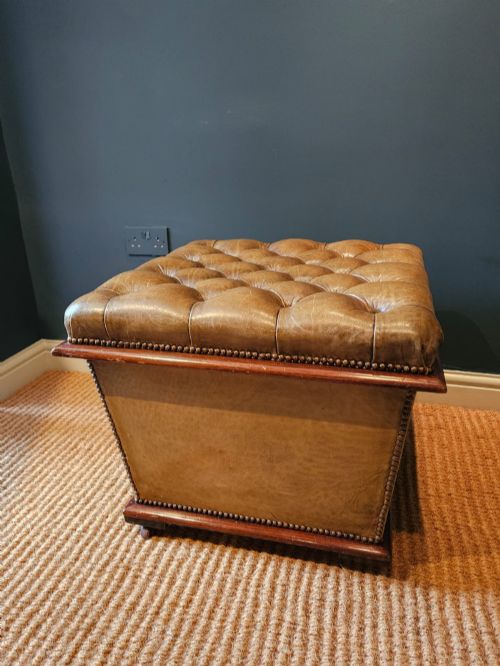
A vintage leather chesterfield search reveals a distinctive group of seating built around low backs, scrolling arms, and button-tufted upholstery. These items range from single armchairs and club chairs to long three-seater sofas, footstools, ottomans, chaise longues, and club fenders.
The pieces appearing most frequently span the Victorian era, the Edwardian period, and the early twentieth century, alongside traditional English styles and Georgian reproductions. Buyers encounter dark green, oxblood red, whiskey brown, and tan hides shaped into library chairs, office desk chairs, and spacious country house settees.
Materials and construction methods
Construction relies on sturdy timber frames built from mahogany, walnut, or mixed hardwoods to support heavy daily use. Traditional stuffing methods employ horsehair filling and fully loose coil springing beneath the leather surface.
Upholstery consists of cattle hide or sometimes Rexine, finished with deep buttoning and secured using brass nails. Hides are either hand-dyed to achieve deep brown and tan tones or left in raw leather states for custom colour finishing.
Vintage Leather Chesterfield Retail Price Guide 2026
Typical asking prices for vintage leather chesterfield among the pieces listed under this phrase on Sellingantiques today, from the lower quarter to the upper quarter. They describe what is for sale here now, not the wider market.
Listings feature Victorian, Edwardian, and Regency periods alongside 1920s and 1930s pieces in leather, brass, mahogany, and timber.
Factors that separate grades of quality
Quality rests in the depth and warmth of the leather hide's natural patina, where hand-dyed finishes show rich tonal variation rather than flat colour. Superior examples display careful hand-stitched detailing and secure buttoning that holds firm under weight.
Frame integrity distinguishes finer pieces, seen in substantial timber scaling and robust internal coil springing that maintains proper support. Original un-restored condition with well-preserved horsehair stuffing and solid wood structure commands greater attention from discerning collectors.
The Vintage Leather Chesterfield Glossary
- Chesterfield
- A traditional style of upholstered seating characterised by arms and back of the same height and deep button tufting. The design dates back centuries and remains a staple of British seating.
- Buttoned
- An upholstery technique where indentations are formed in the leather by pulling tufting cords down to the frame and securing them with buttons. This creates the characteristic diamond pattern across the back and seat.
- Club fender
- A low-seated metal frame placed around a fireplace hearth, fitted with upholstered leather pads for sitting. Brass is the typical metal framework material found in these items.
- Rexine
- A leathercloth material made from cotton fabric coated with nitrocellulose, oil, and pigments. It served as a durable alternative to natural hide during the early twentieth century.
- Chaise longue
- An upholstered long chair designed for reclining, featuring a backrest at one end and an extended seat. They appear in traditional English and Victorian forms.
Vintage Leather Chesterfield: Frequently Asked Questions
How do I care for vintage leather?
Feed the hide regularly with suitable leather balms to prevent drying and cracking over the decades. Keep the seating away from direct sunlight and strong heat sources to preserve the natural colour and suppleness.
Dust the deep buttoned crevices gently with a soft brush to prevent grit accumulation in the folds. Avoid harsh chemical cleaners that strip the original hand-dyed patina.
Are these sofas comfortable for daily use?
Traditional pieces built with horsehair gilling and coil springs offer a firm, supportive seat that softens gradually with use. The low back and scroll arms provide sturdy support for reading and relaxing.
Larger three-seater models and club armchairs give ample space for lounging, though sitting heights vary between older Victorian examples and later Edwardian iterations.
How can I tell a Victorian piece apart from a later one?
Victorian models frequently utilise heavier mahogany or walnut frames paired with darker oxblood or brown hides and deep buttoning. Construction from this era often shows denser horsehair stuffing and heavier timber scantlings.
Later Edwardian and 1920s examples sometimes introduce brighter tan dyes, alternative woods, or different spring arrangements. Examining the underside and tack work helps reveal the period of construction.
What is a club fender used for?
A club fender sits directly around the perimeter of a hearth to provide warm seating close to the fire. The polished brass framework elevates the padded leather top above floor drafts.
These pieces combine functional fireside seating with decorative metalwork typical of Edwardian drawing rooms.