
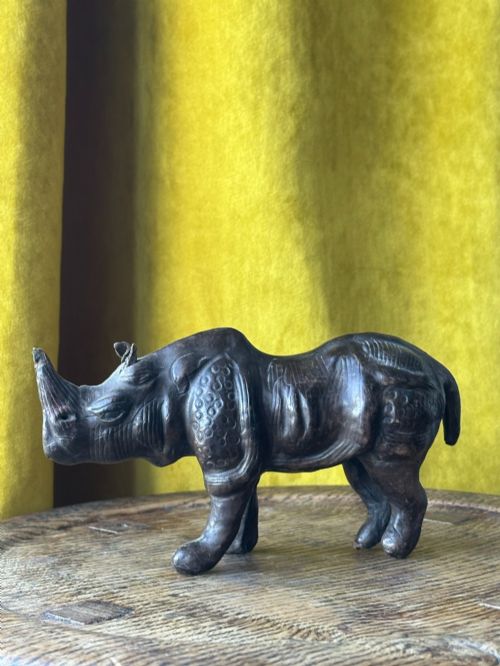


Vintage Leather Animal
A vintage leather animal brings tactile warmth to a room, offering sculptural form alongside practical charm.
Vintage Leather Animal
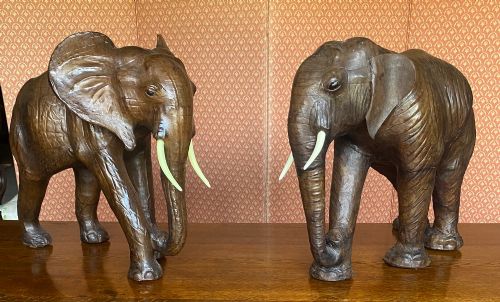
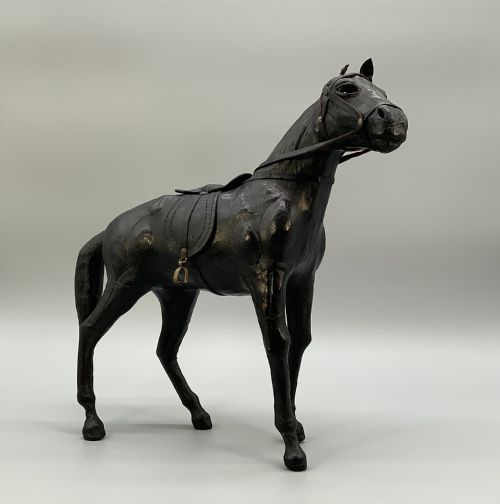
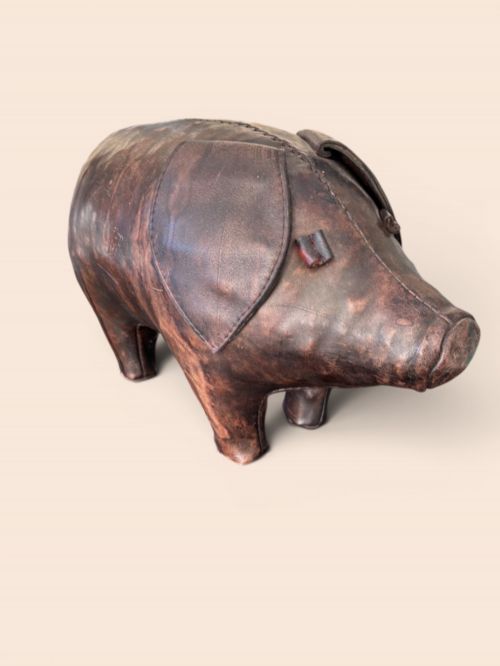
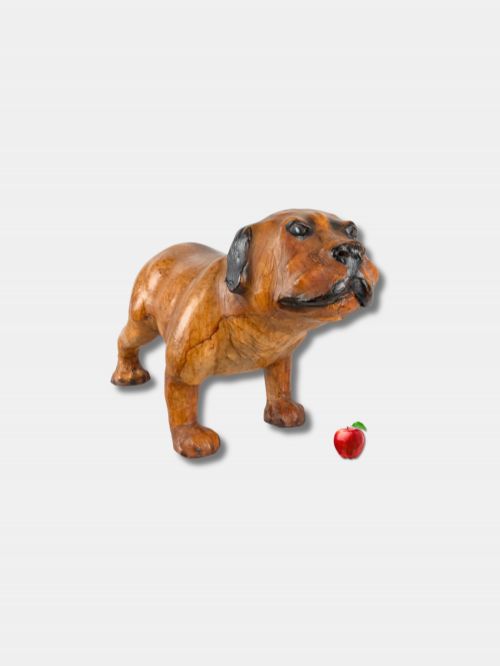
A vintage leather animal encompasses decorative sculptures, footstools and ottomans shaped as horses, pigs, dogs, rhinoceroses, and elephants. These pieces range from substantial life-size sculptures to desk ornaments and occasional seating.
You are most likely to meet footstools and sculptural models produced during the early twentieth century, particularly associated with Liberty & Co and the Omersa workshop. The selection also includes Arts and Crafts interpretations and Anglo-Indian seating.
The forms vary from realistic renderings of bulls and horses to decorative interpretations influenced by African tribal art and Anglo-Indian design. Their presence bridges decorative art and functional furniture in domestic interiors.
How they were made
Makers utilised moulded leather over rigid internal structures composed of wood, metal, steel, or wood wool to achieve durable anatomical forms. The outer hides were frequently bound, stitched, and finished by hand.
Detailing often incorporated brass fittings, glass eyes, or stamped maker signatures directly onto the hide. The combination of structural timber and supple leather created pieces capable of functioning as footstools while retaining sculptural fidelity.
A pig makes an excellent footstool, provided you do not mind resting your weary feet upon its snout.
What varies in quality
The distinction between standard production pieces and exceptional examples rests in the fidelity of the modelling and the integrity of the leather binding. Master workshops achieved convincing musculature and posture that simpler decorative models lack.
Signatures and stamps from established retailers or makers impart distinct provenance, while the richness of the patination on the outer hide reflects the quality of the original tanning and subsequent handling.
Liberty & Co·Omersa Workshop
The Vintage Leather Animal Glossary
- Wood wool
- A packing material made of fine wood shavings used to stuff and shape the interior of leather sculptures.
- Moulded leather
- Hide that has been shaped over a rigid core while damp to hold anatomical contours permanently.
- Footstool
- A low piece of furniture designed for resting the feet, frequently constructed in the form of an animal.
- Arts and Crafts
- A design movement valuing handcraftsmanship, traditional materials, and simple utilitarian forms.
- Patina
- The surface sheen and colour depth developed on leather through age, handling, and exposure to light.
Vintage Leather Animal: Frequently Asked Questions
What are vintage leather animals used for?
These pieces serve as decorative sculptures, desk ornaments, or functional footstools and ottomans within domestic spaces. Their dual nature allows them to act as both conversation pieces and practical furniture.
Larger models often occupy prominent floor space, while smaller examples sit comfortably on desks or side tables.
How do I care for leather sculptures?
Leather requires stable humidity and protection from direct sunlight to prevent the hide from drying and cracking over time. Occasional gentle dusting preserves the surface condition without disturbing the patination.
Avoid applying modern chemical cleaners that might alter the original finish or damage the stitched seams.
Who made these leather animals?
Production is closely linked to prominent English retailers and specialist workshops such as Liberty & Co and Omersa. Many additional pieces emerge from the broader Arts and Crafts tradition spanning the late nineteenth and early twentieth centuries.
Maker stamps or workshop marks can occasionally be found stamped directly into the leather hide.
How do I date a leather animal?
Dating relies on stylistic markers, construction techniques, and materials such as wood wool stuffing or moulded leather hides. Pieces span from the late nineteenth century through the mid-twentieth century, encompassing Arts and Crafts and Mid-Century aesthetics.
Comparative analysis of known retailer stamps and design blueprints helps narrow the decade of production.