
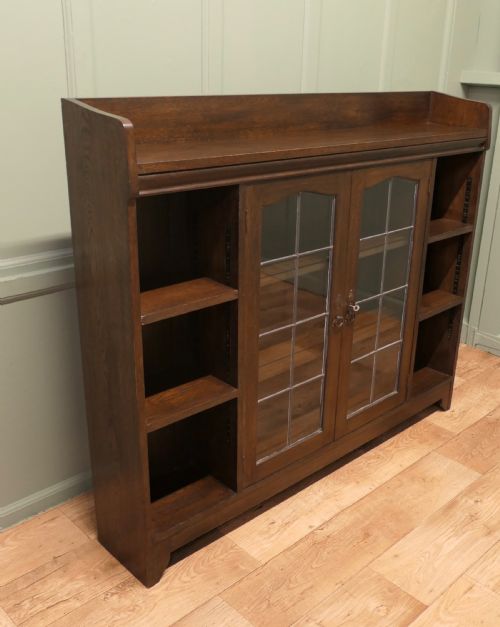
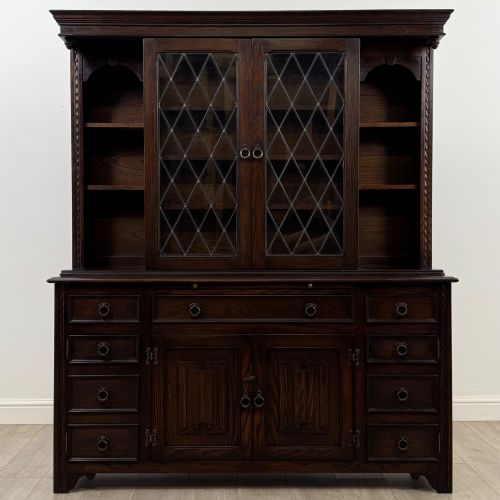
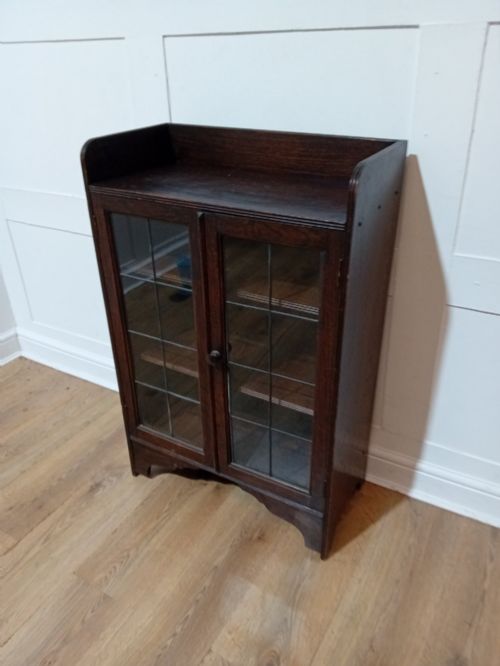
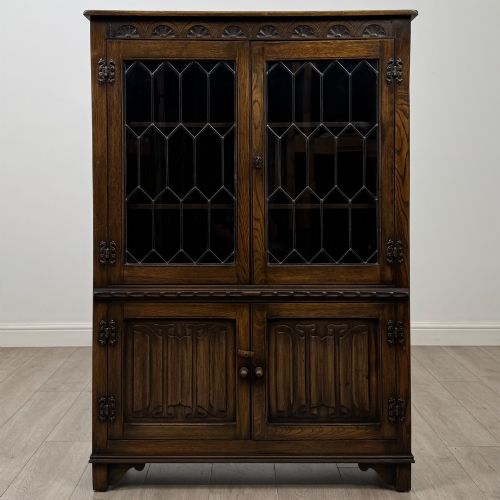
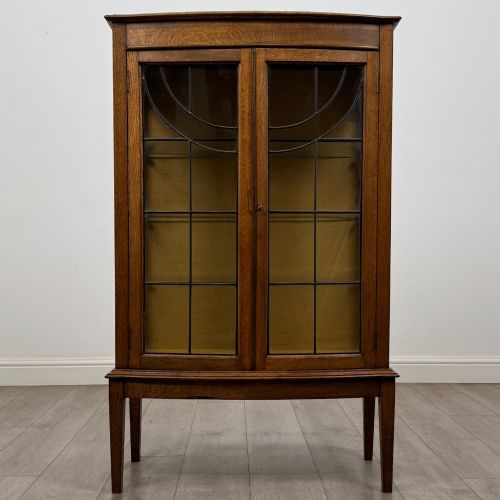
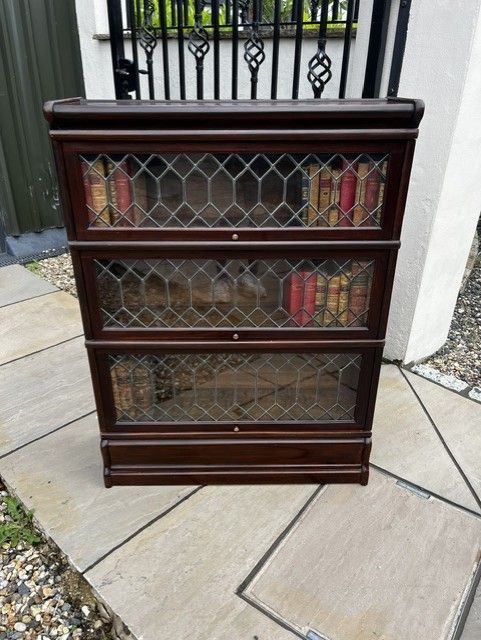


Vintage Leaded Glass Bookcase
A vintage leaded glass bookcase brings together timber and soldered panes to house a collection while catching the light.
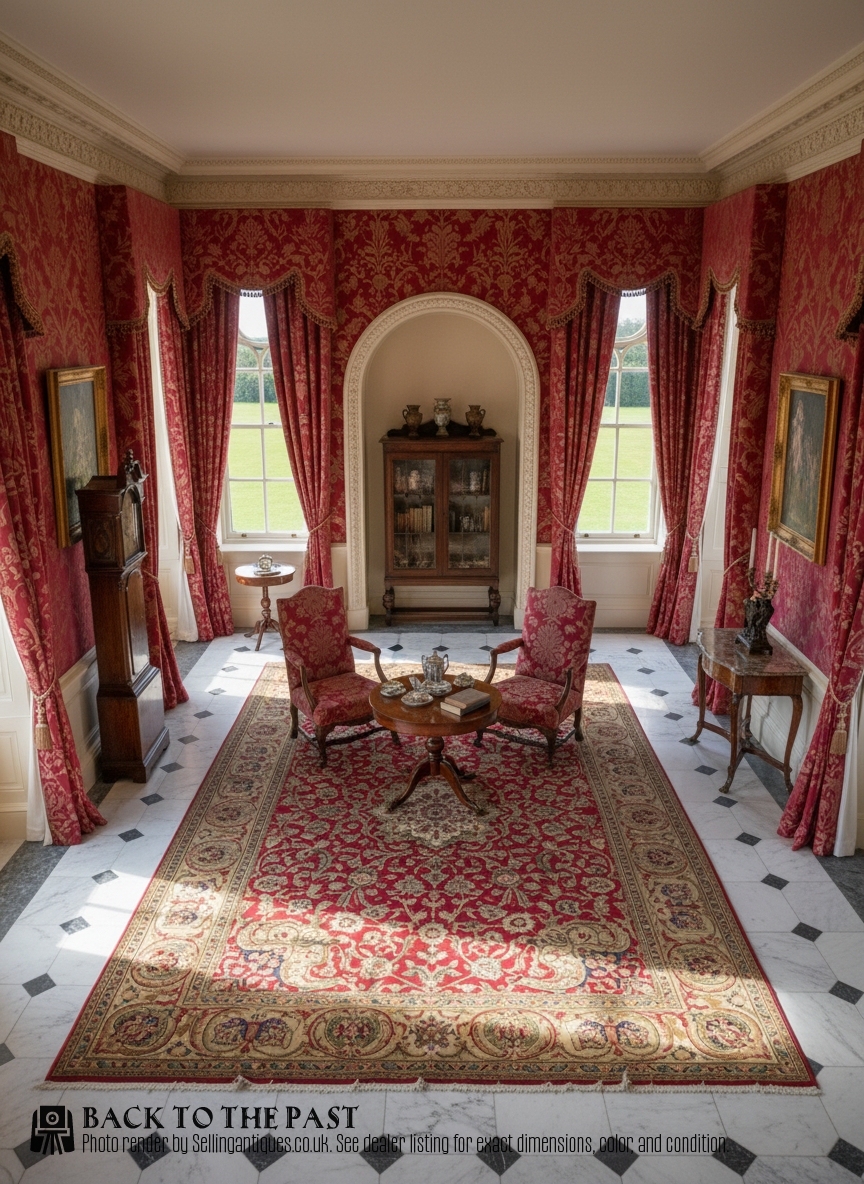
Vintage Leaded Glass Bookcase
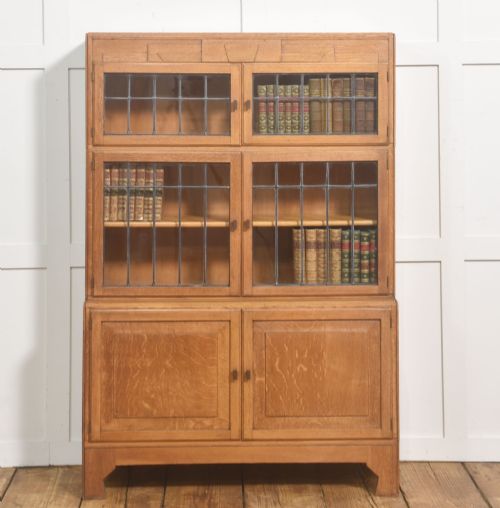
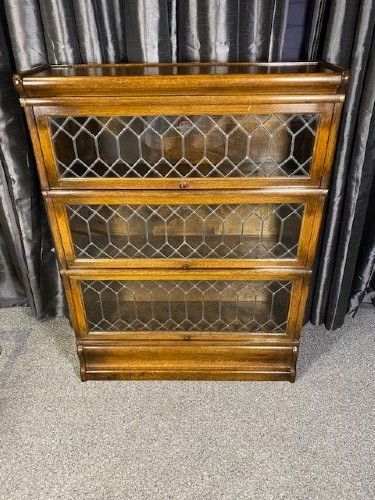
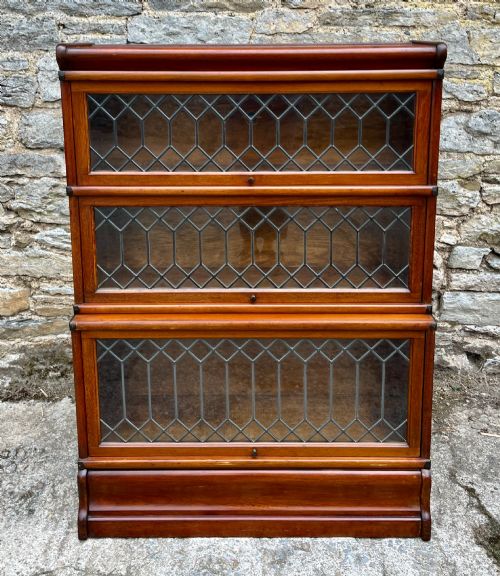
A vintage leaded glass bookcase serves as a functional piece for storing volumes while displaying bindings behind glazed doors. When you examine this selection, the predominant version you encounter is constructed from oak, often taking the form of a sectional barrister bookcase or a traditional glazed cabinet.
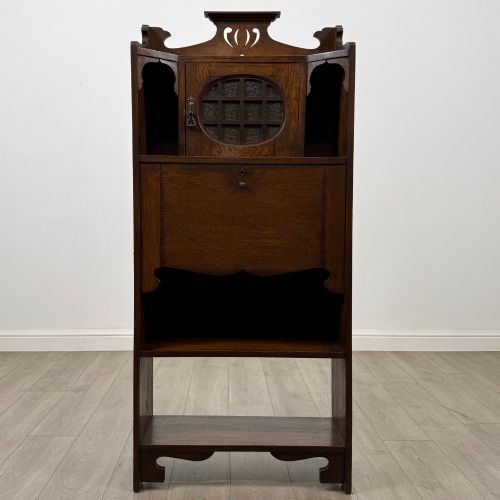
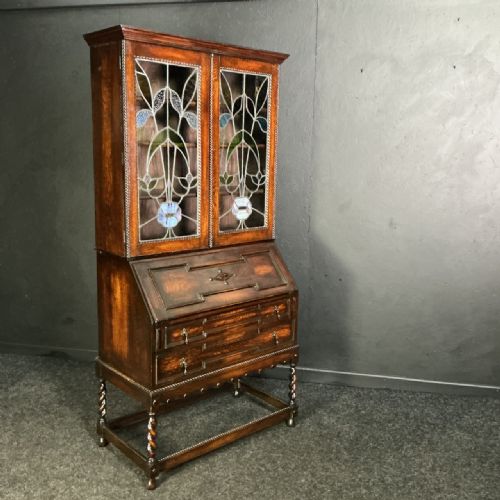
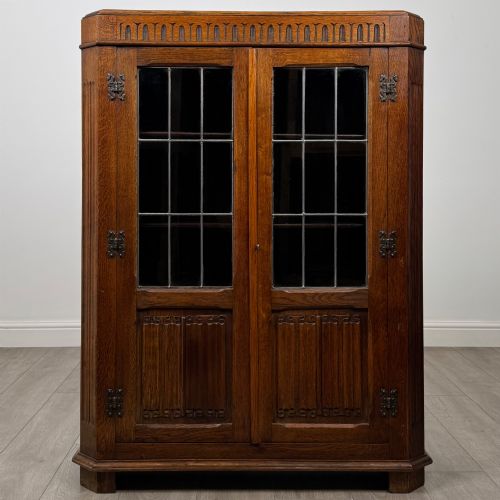
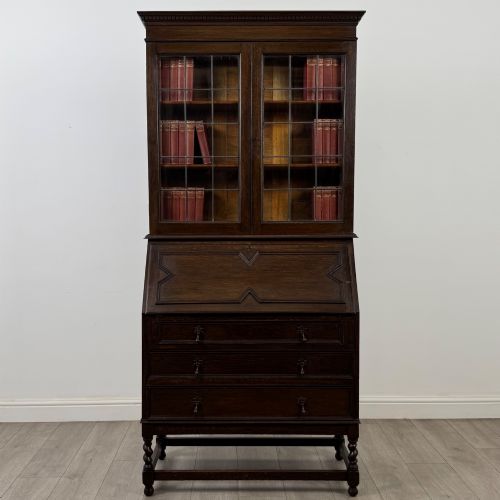
The objects span from the late nineteenth century through to the art deco period, taking influence from arts and crafts, jacobean revival and edwardian aesthetics. Forms range from dwarf cabinets and bureau bookcases to modular stacking tiers and tall display units.
Construction origins lean heavily toward English workshops, alongside American walnut variants and specific modular designs. Buyers find pieces ranging from simple glazed storage units to elaborately inlaid cabinets featuring decorative woodwork and brass hardware.
Judging quality and execution
Quality rests in the weight of the timber, the precision of the lead cames holding the glass panes, and the smooth operation of mechanical elements like barrister doors or sectional tiers. Superior examples display tight joinery and well-figured oak or mahogany grain rather than plain veneers.
The distinction between standard utility items and finer pieces often lies in secondary details such as inlaid banding, carved panel work, or attribution to known makers like Globe Wernicke or Minty. Original hardware and intact leadwork without sagging glass also elevate a piece.
Early lawyers clearly possessed an impressive upper-body strength to stack heavy mahogany bookcase tiers without dropping the glass.
Globe Wernicke·Minty·Lebus·Warwick·Liberty & Co
The Vintage Leaded Glass Bookcase Glossary
- Barrister bookcase
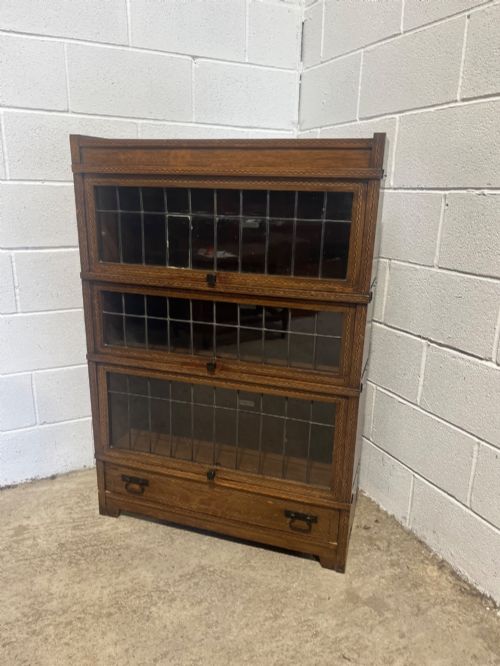
- A modular bookcase featuring glass doors that lift and slide inward above each shelf. These stacking units were designed for easy transport and reassembly.
- Leaded glass
- Individual panes of glass joined together by lead cames of varying widths. This technique creates geometric or decorative patterns across cabinet doors.
- Bureau bookcase
- A hybrid furniture form combining a sloping writing desk below with glazed shelving above. The desk section typically opens to reveal small pigeonholes and drawers.
- Linenfold
- A style of wood carving that mimics folded parchment or linen fabric. It appears frequently on panels of oak cabinets from the period.
- Sectional bookcase
- A modular shelving unit built in separate tiers that stack one upon another. Each tier has its own glass door and base frame.
Vintage Leaded Glass Bookcase: Frequently Asked Questions
What is a barrister bookcase?
A barrister bookcase is a modular shelving unit composed of stackable tiers, each fitted with a glass door that lifts and slides into the cabinet above the books. This design allowed legal professionals to transport their libraries securely.
Today, these pieces function well in living rooms or studies, offering adjustable storage capacity as a book collection grows or shrinks.
How do I care for leaded glass?
Leaded glass doors require gentle cleaning using a soft cloth and a mild glass cleaner sprayed onto the cloth rather than directly onto the panel. This prevents liquid from seeping behind the lead cames and degrading the putty.
Inspect the lead strips periodically to ensure they remain firm and do not push inward when gentle pressure is applied.
Are these bookcases modular?
Many examples from the early twentieth century, particularly stacking barrister designs, are fully modular and can be separated into individual tiers, a base, and a top cornice. This made them practical for moving between rooms.
When positioning a modular unit, ensure the floor is level so the stacking mechanism operates without binding the glass doors.
How do I date an oak bookcase?
Dating relies on stylistic clues such as hardware, construction methods, and prevailing design movements like arts and crafts or art deco. Edwardian and 1920s pieces often feature characteristic fumed oak finishes or subtle mahogany inlay.
Examining the backboards, interior drawer construction, and any maker stamps helps narrow down the decade of manufacture.