


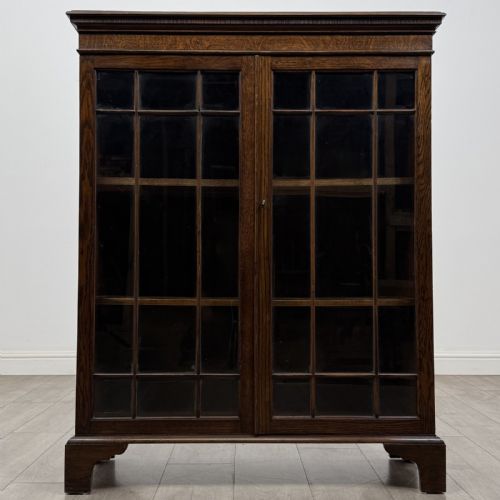
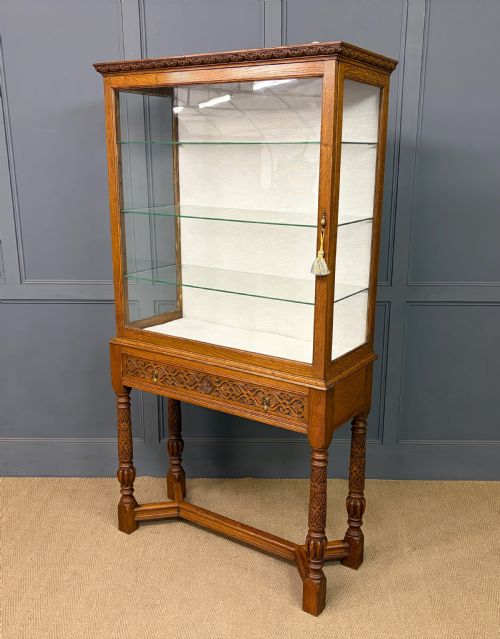

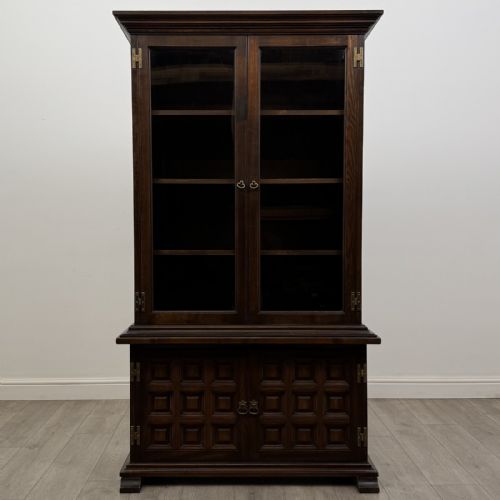
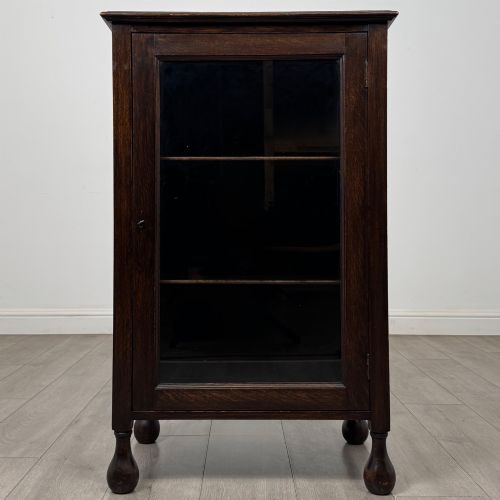
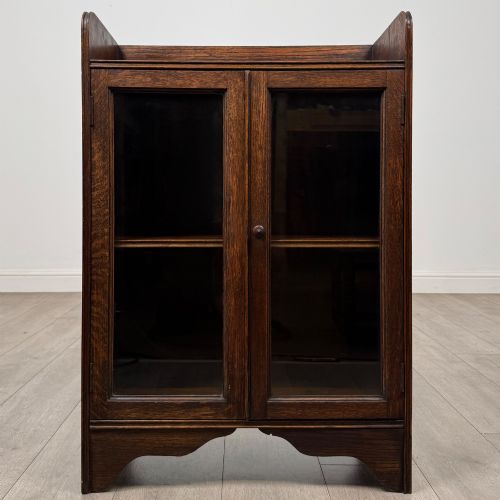
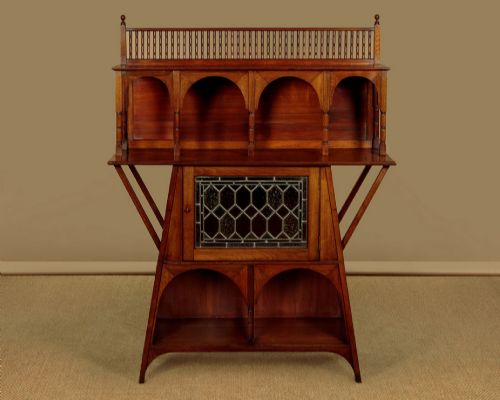
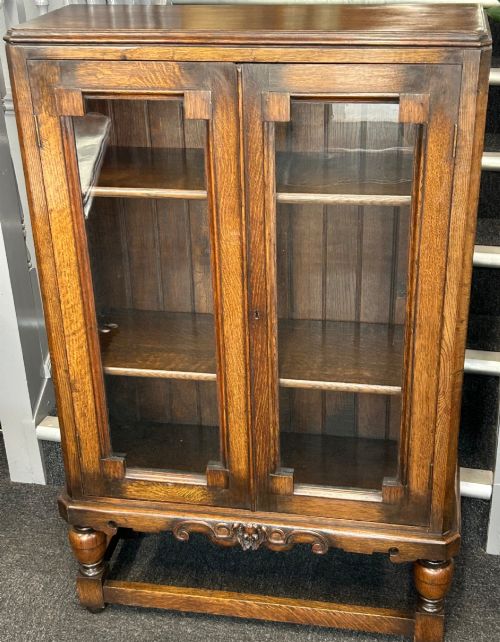


Standing Oak Glass Cabinet
These standing oak glass cabinet pieces offer sturdy shelving and clear panelling, making them practical for holding books and collections.
Standing Oak Glass Cabinet
A standing oak glass cabinet brings together solid timber frames and transparent doors to display contents safely. Buyers searching for a standing oak glass cabinet often encounter tall bookcases, display cabinets and side units from the Victorian and Edwardian eras.
The selections span distinct periods like the nineteenth century alongside later twentieth century iterations. Forms range from glazed bookcases with galleries to floor-standing cupboards with leaded or cut glass detailing.
Jacobean Revival, Arts and Crafts and Gothic Revival aesthetics frequently shape the carved details and brass mounted hardware found on these pieces. These variations provide functional storage while matching traditional interiors.
Materials and construction methods
Makers utilised solid oak alongside mahogany accents, framing the structure around fitted glass panels and cut crystal. Metal fixtures such as brass mounts, locks and hinges secure the doors and provide structural reinforcement.
Surface treatments incorporate marquetry stringing, heavy carving and decorative galleries to enhance the appearance of the timber. Lead is occasionally employed to hold smaller glass panes within the doors.
Standing Oak Glass Cabinet Retail Price Guide 2026
Typical asking prices for standing oak glass cabinet among the pieces listed under this phrase on Sellingantiques today, from the lower quarter to the upper quarter. They describe what is for sale here now, not the wider market.
Current listings feature oak as the primary timber across Victorian, Edwardian, and Art Deco styles.
Indicators of standard and execution
The refinement of the carving and the presence of marquetry stringing differentiate standard utility items from more elaborate workshop productions. Timber selection also plays a role, with golden oak and figured grain finishes displaying superior visual depth.
Hardware execution, from brass mountings to fitted locks on tantalus variants, demonstrates the original investment in the piece. Well-fitted doors and intact glass panels indicate careful preservation over the decades.
Liberty & Co.
The Standing Oak Glass Cabinet Glossary
- Marquetry stringing
- Inlay work using thin strips of contrasting wood to create delicate linear patterns on the surface. This technique highlights the skill of the cabinetmaker.
- Tantalus
- A locking beverage stand that holds decanters visibly while preventing unauthorized access to the contents. They often incorporate brass mounts and games compartments.
- Gallery
- A raised decorative border around the top shelf of a cabinet or bookcase. It prevents items from sliding off the surface.
- Glazed
- Fitted with glass panes to enclose shelves while keeping the contents visible. This protects books and collections from dust.
- Gothic Revival
- An architectural and decorative style drawing on medieval forms, featuring pointed arches and heavy carving. It appears frequently on nineteenth-century woodwork.
Standing Oak Glass Cabinet: Frequently Asked Questions
What periods do these cabinets represent?
The available pieces span from the nineteenth century through the Edwardian era and into the early twentieth century. Victorian and Edwardian examples predominate alongside Arts and Crafts designs.
Craftsmen during these periods utilised traditional timber construction methods, incorporating styles like Gothic Revival and Art Deco into standard domestic furniture.
How were tantalus units used?
A tantalus held decanters securely behind a locking mechanism while displaying the bottles to guests. They served as entertaining accessories in sitting rooms and studies.
Many examples combine the bottle storage with games compartments or stationery boxes, reflecting Victorian social habits.
Are these cabinets suitable for books?
Many of the tall standing cabinets function primarily as glazed bookcases or shelved cupboards. The glass doors protect volumes from dust while maintaining visibility.
Adjustable or fixed wooden shelving inside accommodates various book sizes and display collections.
What woods besides oak appear?
While oak forms the primary structural timber, some pieces incorporate mahogany accents or decorative marquetry stringing. Brass and metal components provide functional hardware.
Glass elements range from plain panes to cut crystal and leaded glazing.