
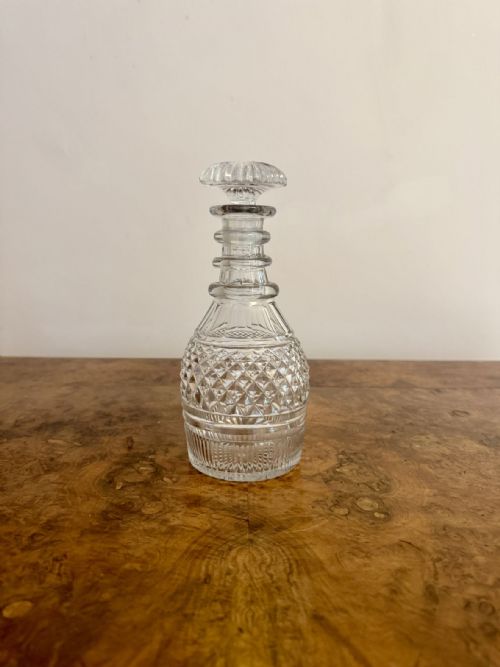
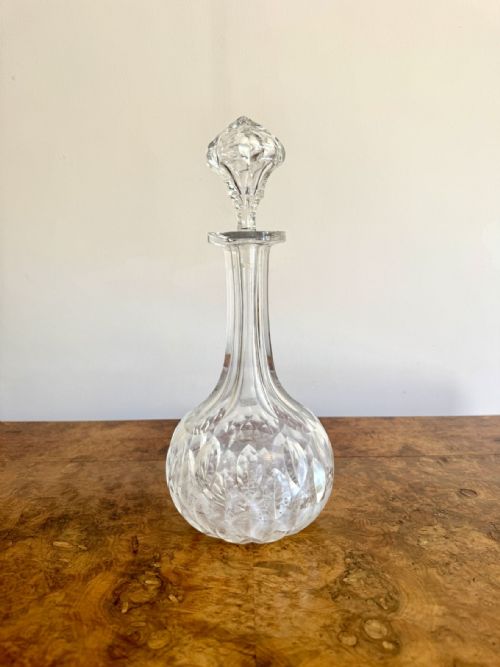


Vintage Lead Crystal Stopper
These vintage lead crystal stopper pieces complete fine period decanters and ewers, bringing authentic sparkle and functional balance to antique barware.
Vintage Lead Crystal Stopper
The pieces appearing here typically accompany cut glass and clear crystal decanters featuring distinctive forms like three-ring Prussian styles and whiskey vessels. Most examples date from the Victorian and Edwardian eras, reflecting the high period of British table glass production.
What varies in quality
Clarity and weight set the finer examples apart from simpler items, driven by the proportion of lead oxide in the glass mix. Superior pieces possess a ringing resonance and heavy feel.
Precision in the cutting of facets and the hand-finished fit within the decanter neck determine the overall refinement of each component.
Object forms include whiskey decanters, ewers, and three-ring Prussian style serving vessels.
The Vintage Lead Crystal Stopper Glossary
- Lead crystal
- Glass containing metallic oxide to increase weight, brilliance, and refractive index. This material allows deep, sharp wheel-cutting.
- Prussian style
- A decanter shape featuring horizontal neck rings originally designed to provide a secure grip for wet hands. The accompanying stoppers share this robust geometric aesthetic.
- Ewer
- A large jug with a wide spout used for water or wine, often fitted with a matching stopper. These serve a decorative and functional role on the dining table.
- Barware
- Vessels and serving pieces intended for the storage and dispensing of alcoholic beverages. This category includes whiskey decanters and spirit bottles.
Vintage Lead Crystal Stopper: Frequently Asked Questions
What fits a vintage decanter?
Each period decanter requires a stopper ground to match the specific taper and bore of its neck. Hand-ground glass elements seat securely when paired correctly with their original vessel style.
Matching the cut pattern and lead crystal density ensures visual continuity between the stopper and the main body.
How do I date cut glass?
Georgian and Regency pieces often display heavier lead content with simpler pillar cutting or three-ring necks. Victorian and Edwardian examples introduce more complex multifaceted designs and brighter crystal.
Examining the depth of the wheel cuts and the tint of the glass helps distinguish eighteenth-century work from later nineteenth-century production.
Are these stoppers handmade?
Traditional glasshouses produced these items through free-blowing or mould-pressing followed by extensive hand-cutting on stone wheels. Artisans polished the facets by hand to achieve a high gloss finish.
This labor-intensive manufacturing leaves subtle variations unique to period glassware.
How do I clean old crystal?
Warm water and a soft cloth maintain the surface without scratching the high-lead glass. Avoid harsh chemical detergents that dull the brilliance of historic crystal.
Store pieces securely away from edges to protect the delicate ground glass shanks.