

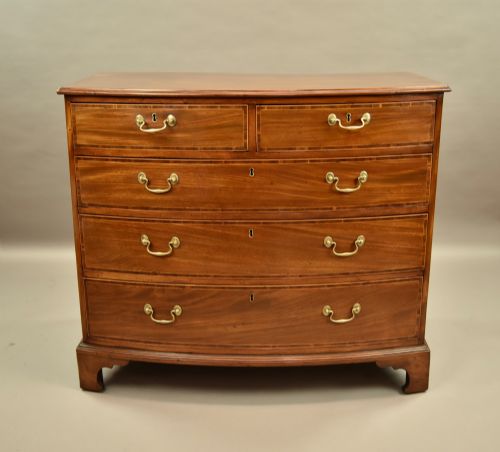
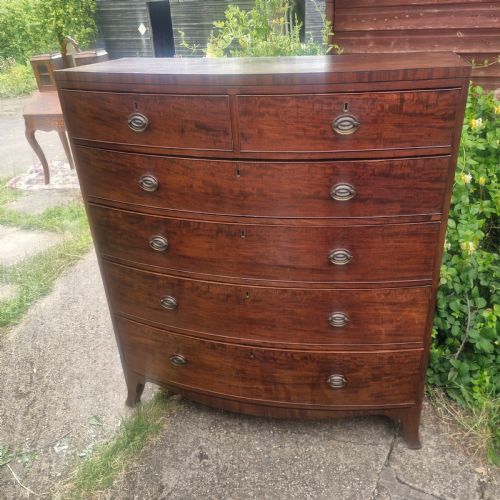


Vintage Large Mahogany Dresser
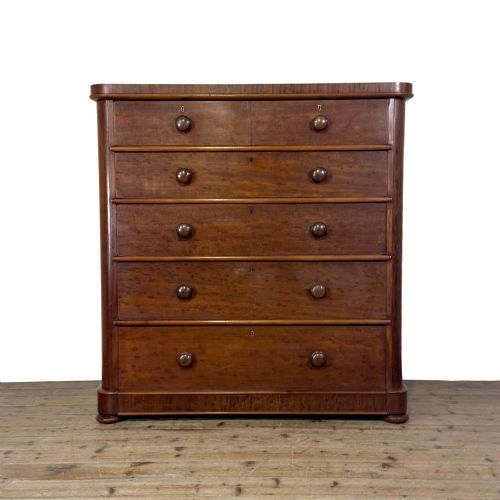
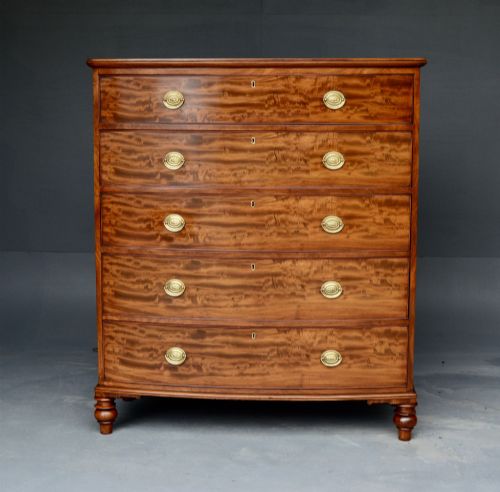
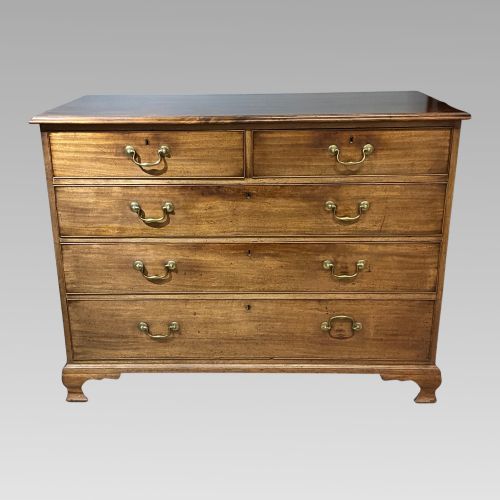
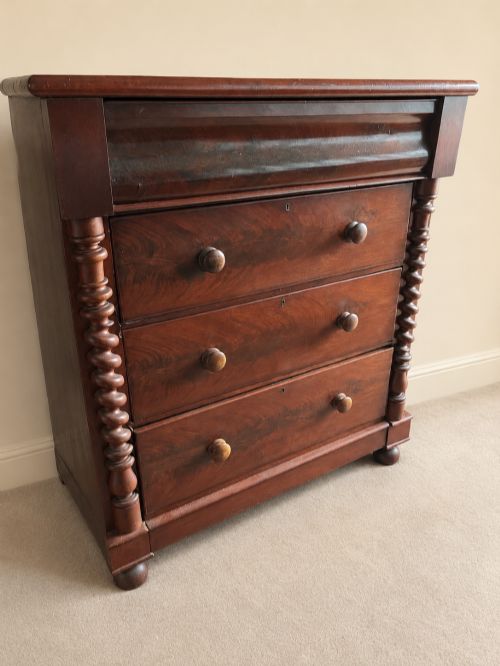
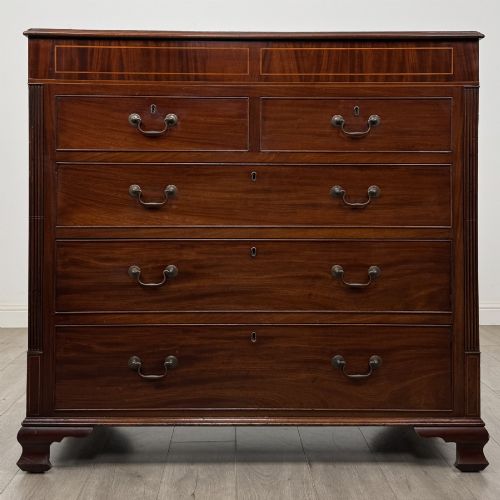
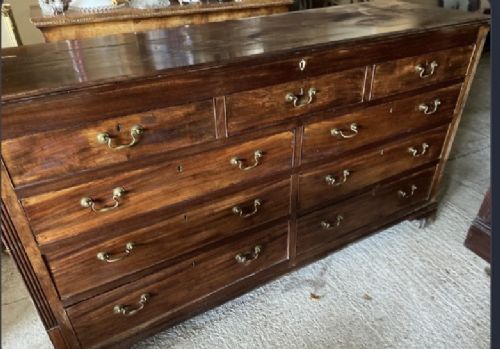
These vintage large mahogany dresser options bring grand proportions and rich timber to a room, offering substantial storage with genuine period character.
Vintage Large Mahogany Dresser
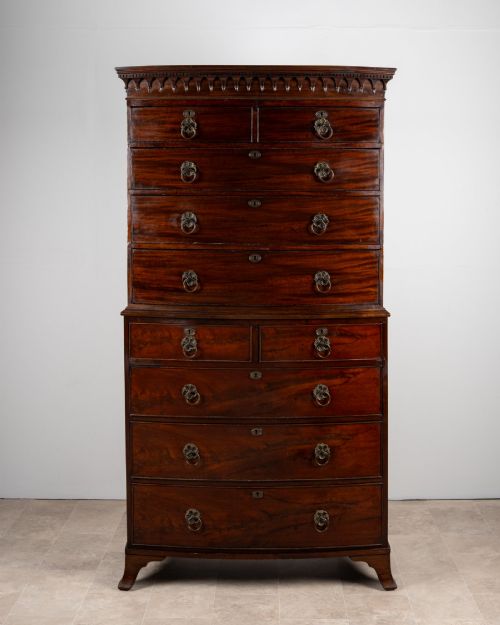
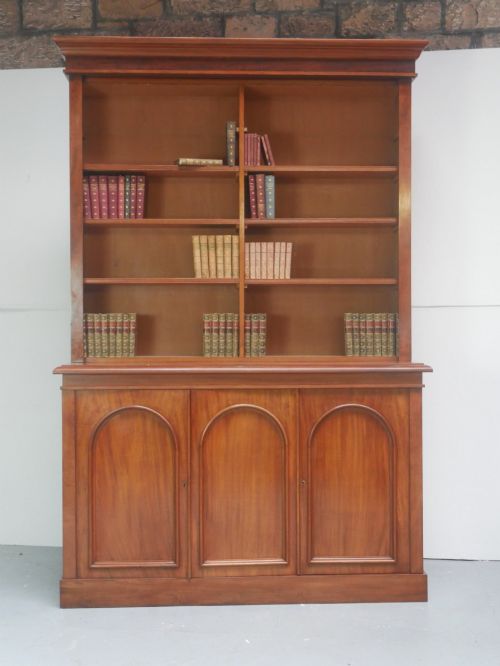
A vintage large mahogany dresser search reveals substantial storage items, most frequently encountered as chests of drawers, sideboards, and bookcases spanning the eighteenth century through to the Edwardian era. These substantial timber items range from Georgian banks of drawers and Regency bow fronts to Victorian storage units and Edwardian shop fittings.
Buyers looking for this phrase meet pieces built for serious domestic storage and display, appearing primarily in rich mahogany alongside occasional oak examples. The selection draws together diverse utilitarian and formal forms, from tallboys and campaign pieces to kitchen dressers and serpentine sideboards.
Materials and construction
Cabinet makers constructed these large pieces using solid mahogany and flame mahogany veneer over secondary timbers such as pine, applying careful wood inlay for decorative contrast. Structural hardware frequently incorporates brass fittings, particularly visible on campaign items and drawer pulls.
Glazing appears on tall bookcases and display cabinets, while structural framing relies on traditional joinery methods suited to proportions meant to carry heavy loads of books, linen, or dining silver.
Vintage Large Mahogany Dresser Retail Price Guide 2026
Typical asking prices for vintage large mahogany dresser among the pieces listed under this phrase on Sellingantiques today, from the lower quarter to the upper quarter. They describe what is for sale here now, not the wider market.
Listings include pieces from the 18th century, Regency, Victorian, and Edwardian periods, utilising mahogany, oak, brass, and glass.
Factors of quality
The distinction between ordinary and superior examples rests upon timber selection, notably the liveliness of flame mahogany veneer and the crispness of inlaid details. Cabinetmakers who spent time matching grain patterns across large drawer fronts achieved a visual harmony that lesser workshops ignored.
Proportion and structural integrity also separate fine pieces from standard ones, where well-balanced cornices, smooth drawer running, and original brass hardware elevate the standing of a sideboard or chest of drawers.
The Vintage Large Mahogany Dresser Glossary
- Bowfront
- A curved front facade curving outwards at the centre, commonly found on chests of drawers from the Regency and Victorian periods.
- Serpentine
- A shaped furniture front featuring a concave centre flanked by convex curves, typical of finer Georgian and eighteenth-century craftsmanship.
- Tallboy
- A tall chest of drawers built in two sections, stacking a smaller chest atop a larger base to maximise vertical storage.
- Campaign
- Portable furniture designed for military officers, characterised by brass corners, recessed handles, and sectional construction for ease of travel.
- Flame mahogany
- A veneer cut from timber where the branch meets the trunk, displaying a distinctive feather-like or flame pattern across large surfaces.
Vintage Large Mahogany Dresser: Frequently Asked Questions
What is a large mahogany dresser?
These pieces comprise substantial storage furniture built from mahogany, spanning chests of drawers, sideboards, and large bookcases.
They originate from periods ranging from the eighteenth century to the Edwardian era, designed for heavy domestic use.
How do I date a mahogany chest?
Dating relies on observing construction methods, drawer linings, hardware styles, and overall proportions characteristic of specific periods like Georgian or Victorian.
Secondary timbers and handling of the mahogany veneer also offer clear clues to the decade of manufacture.
Where should I place a large sideboard?
These imposing items require ample wall space and generous room dimensions to sit comfortably without dominating the floor plan.
Dining rooms and spacious hallways provide traditional settings where their storage capacity and display surfaces function best.
How do I care for mahogany furniture?
Maintain the timber by keeping pieces away from direct heat sources and sudden humidity changes that cause wood to split.
Apply natural beeswax occasionally and buff gently with a soft cloth to preserve the depth of the polished surface.