

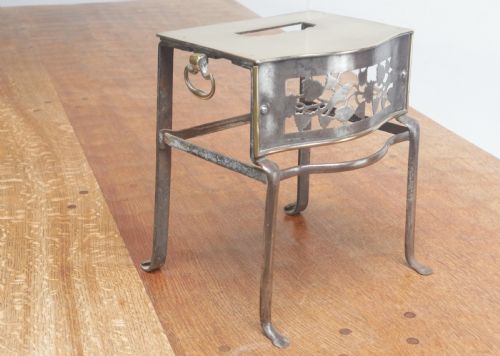
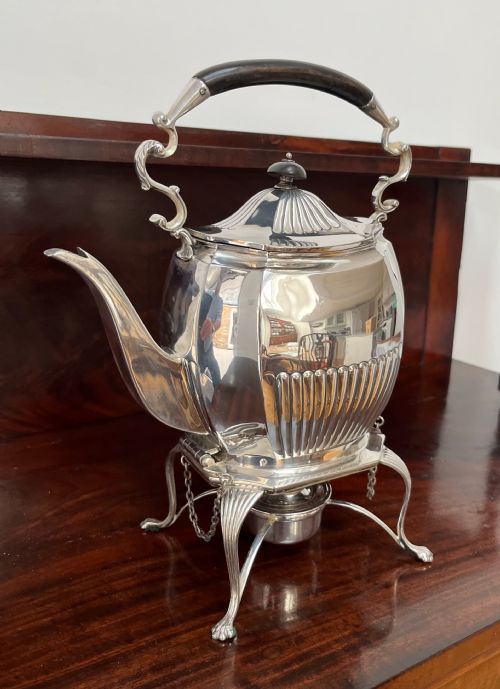


Vintage Kettle Stand
These vintage kettle stand pieces are practical hearth and tea accessories designed to hold hot vessels near the fire or tabletop.
Vintage Kettle Stand
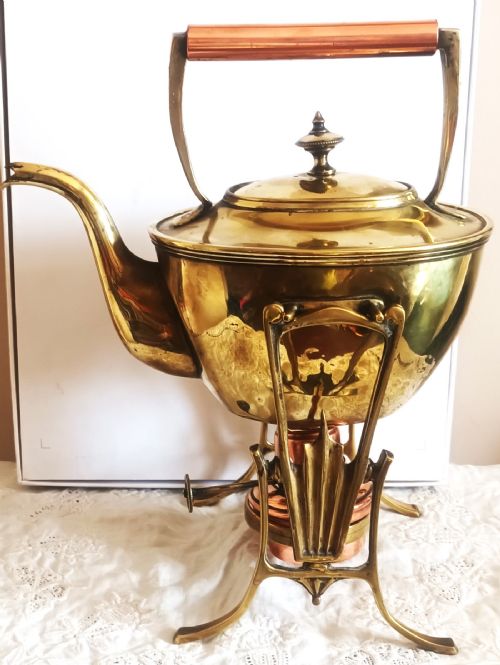
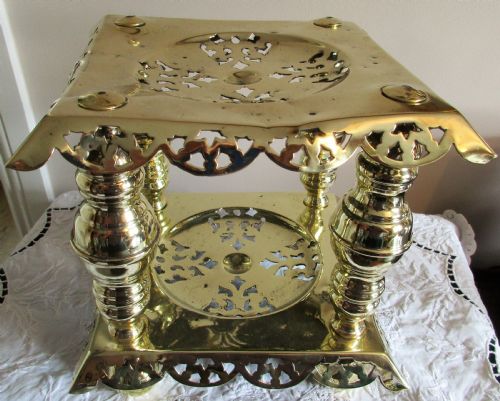
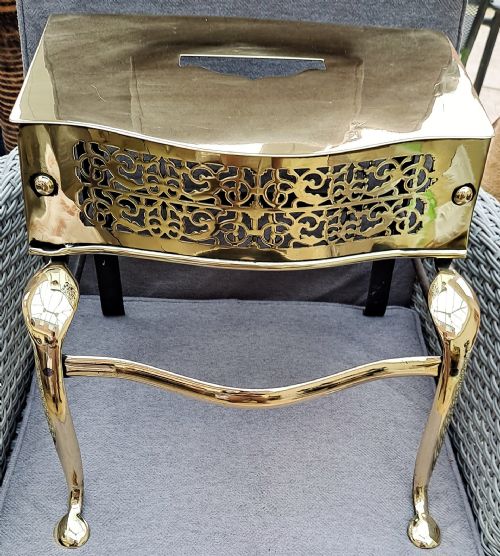
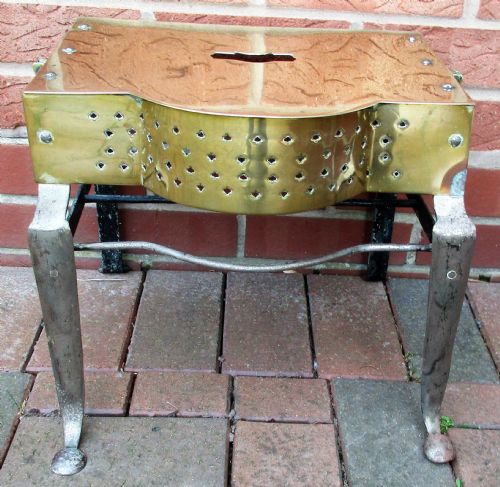
A vintage kettle stand encompasses various forms utilised for keeping tea and water warm, including spirit kettles on dedicated frames, hearth footmen, and occasional table stands. Buyers seeking a vintage kettle stand encounter items ranging from Georgian brass footmen to Edwardian silver plated spirit kettles with burners.
The selection includes two tier trivets, copper hanging kettles, and wooden occasional pieces from the nineteenth and early twentieth centuries. Many examples combine a fuel burning component with a stable base designed for domestic use in period rooms.
How they were made
Metalworking dominates these items, utilising brass, copper, silver plate, steel, and wrought iron shaped into stands, trivets, and footmen. Smiths and manufacturers combined cast brass components with forged steel or spun copper bodies to withstand daily heat.
Woodworking appears in select examples through walnut, satinwood, and ebony construction for occasional stands. Craft techniques range from traditional hand beating in copper to plated finishes over base metals in Edwardian production.
One remarkably honest hearth warmer is recorded simply as an antique cat stand, offering a mystery for the fireside.
What varies in quality
Construction weight separates standard utilitarian items from finer examples, with heavier gauge brass and substantial steel framing marking superior pieces. The presence of complete components, such as original burners with spirit kettles, distinguishes intact sets from altered items.
Decorative detail and material combinations influence the standing of each piece, from plain iron footmen to elaborate brass and copper creations with turned wooden elements or delicate piercing.
William Soutter & Sons
The Vintage Kettle Stand Glossary
- Spirit kettle
- A water vessel mounted on a metal stand above a small fuel burner used for heating water at the tea table.
- Footman
- An open metal hearth stand placed before a fire to keep food or water warm.
- Trivet
- A low metal support or stool raised on feet, designed to hold a hot kettle or dish.
- George III
- The British design period spanning the later eighteenth and early nineteenth centuries, known for classical proportions.
Vintage Kettle Stand: Frequently Asked Questions
What is a footman?
A footman is a metal hearth accessory equipped with legs and handles, designed to sit directly in front of an open fire.
These pieces served to keep kettles or dishes warm before the widespread adoption of modern kitchen ranges.
How do spirit kettles work?
A spirit kettle suspends a water vessel over a small burner fuelled by methylated spirits or alcohol.
This setup allowed Victorians and Edwardians to maintain boiling water for tea without returning to the kitchen.
Where were these stands placed?
Hearth accessories stood directly on the floor by the fireplace, while smaller trivets and table stands sat on sideboards or tea tables.
Their placement depended entirely on whether they relied on an open fire or an independent spirit burner.
How are different periods identified?
Periods are identified through material combinations, manufacturing techniques, and stylistic traits like Georgian symmetry or Edwardian silver plating.
Heavier wrought iron and simple brass point to earlier centuries, while refined silver plate aligns with the Edwardian era.